Yufuin Autumn Morning Mist: You Have to Sleep There
Yufuin's autumn morning mist clears before a Beppu day trip can reach it. Which ryokan are close enough to Lake Kinrin to catch it, and what a day trip misses.

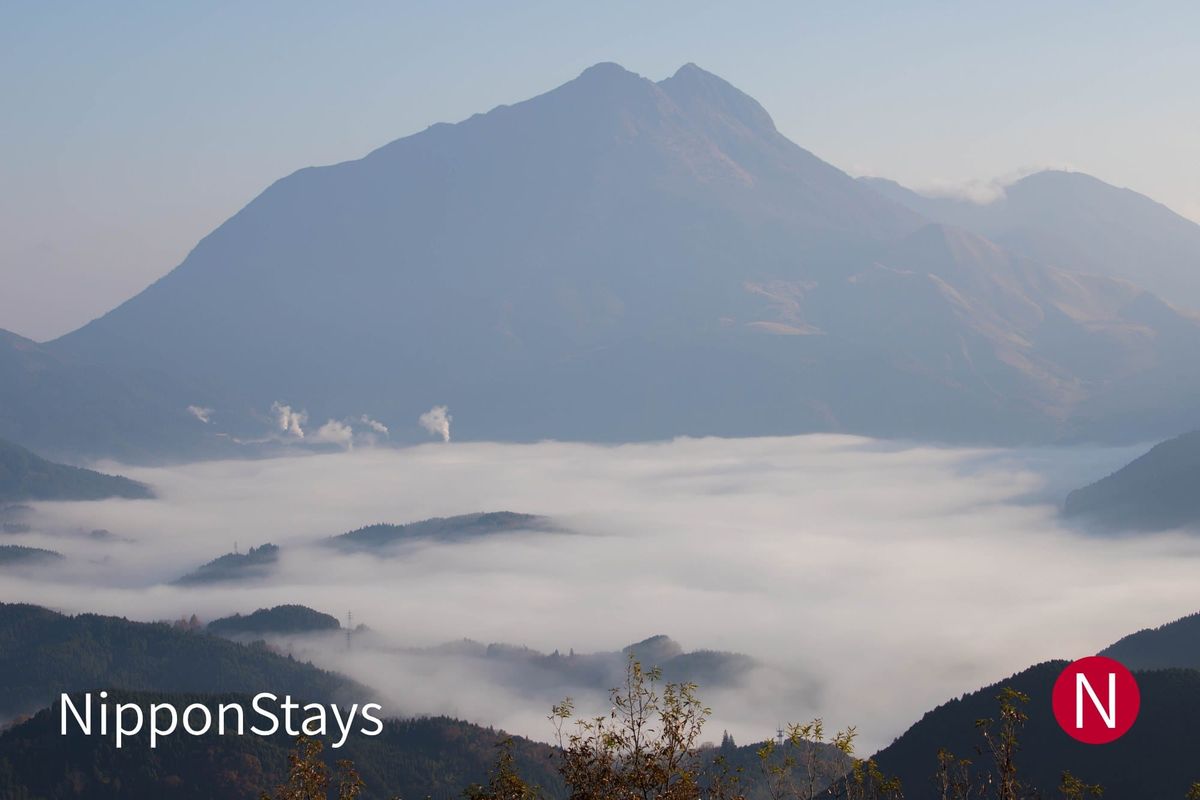
Yufuin autumn morning mist is a dawn phenomenon that day-trippers structurally miss: it typically thins within an hour or two of sunrise, long before the first bus or train from Beppu can reach Lake Kinrin. The fix is to already be there at first light. Sanso Tanaka, about an 18-min walk from the lake, and Yufuin Sansuikan, a longer 25-min walk but on the main approach road toward it, both put a guest close enough to reach the shore before the sun clears the surrounding hills; rooms run from roughly ¥14,000 for two at Sanso Tanaka and from roughly ¥21,000 at Yufuin Sansuikan, both ordinary-period rates, not November prices (see the price note below the first table). The one thing that changes this answer: a traveler who isn't chasing the mist itself, and just wants the lake and the color around it, sees essentially the same walk and the same maples on a same-day trip from Beppu — they only arrive a few hours after the more photogenic version has already burned off.
Why the mist is a lodging decision, not a sightseeing one
Lake Kinrin stays warm by local standards year-round because both cold spring water and hot spring water feed into it, holding the surface around 13–15°C even in winter, according to Oita Prefecture's official tourism board. On a clear, calm morning in autumn or winter, when the air above the basin drops well below that water temperature, the difference produces the visible mist the lake is known for — a radiative-cooling effect, not a permanent feature of the water itself. That means the mist is conditional, not guaranteed: an overcast or windy dawn can leave the lake bare, and the display is generally best on the still, cold mornings that cluster around Yufuin's early-to-mid-November leaf peak in most years, with the exact week shifting slightly with that year's weather.
Sleeping in Yufuin vs. day-tripping from Beppu
| Option | Walk to Lake Kinrin | Arrival relative to the mist | From price (2 guests) | Meals included? |
|---|---|---|---|---|
| Overnight in Yufuin (e.g. Sanso Tanaka or Yufuin Sansuikan) | 18- to 25-min walk from the ryokan | Already in town before sunrise | from ¥14,000 (Sanso Tanaka) or ¥21,000 (Sansuikan) | Usually yes — most Yufuin ryokan default to a dinner-and-breakfast plan; a few also list room-only rates |
| Day trip from Beppu | 17- to 25-min walk from Yufuin Station, same route as the roughly 800m Yunotsubo-dori shopping street, only after arriving | Not before mid-to-late morning at the earliest | Bus or train fare only | None — pay as you go on Yunotsubo-dori |
A price caveat, since Yufuin's leaf season moves these numbers more than most: every "from" figure here and in the pricing table further down is an ordinary-period, two-guest rate, not a live November quote. The same room at any of the four ryokan named in this guide typically climbs several pricing tiers once the color turns, and each property's cheapest room category tends to sell out months ahead of the peak, sometimes before that year's exact dates are even confirmed. Read the four figures as a ranking of which property costs more or less than the others, not as what a booking will actually cost in November — and check your own travel dates directly with the property or Trip.com before assuming any of these prices hold.
Beppu and Yufuin are not linked by a fast, frequent rail line. Three limited-express round trips a day (the Yufu and Yufuinnomori services) connect them without a change of train, but none departs at dawn; earlier arrivals mean either changing at Oita onto a local JR Kyudai Main Line train or riding a Kamenoi Bus highway service, and neither option lands at Lake Kinrin before sunrise either. That transport gap, as much as the mist's own timing, is why the view belongs to whoever slept in Yufuin the night before.
Walking distance to Lake Kinrin is the whole spec
Once the mist is the goal, the only feature that matters in a Yufuin ryokan is how fast a guest can get to the water on foot before the light changes. Sanso Tanaka is a small, adults-only ryokan with seven rooms, a 10-min walk from Yufuin Station and an 18-min walk to the lake, with free loaner bicycles that cut that time roughly in half. Yufuin Sansuikan sits closer to the station itself — about a 7-min walk — but that puts it on the opposite side of town from the water, so the walk to the lake runs closer to 25 minutes along the main approach road. Hoshino Resorts Kai Yufuin trades lake proximity for a rice-terrace setting about 2.5 km out, which is a 30-min-plus walk most guests skip in favor of the hotel's own shuttle. Yufuin Kotobuki Hananosho, a 5-min walk from the station, is the closest of the four at roughly a 17-min walk to the lakeshore.
Of the four ryokan named in this guide, two — Kotobuki Hananosho (about 17 minutes) and Sanso Tanaka (about 18 minutes) — are within a 20-min walk of Lake Kinrin; the other two need 25 minutes or more on foot, and Kai Yufuin's rice-terrace setting is far enough that guests typically ride rather than walk it (checked August 2026).
The day-trip version, honestly
Yunotsubo-dori, the roughly 800-meter shopping street that runs from Yufuin Station toward the lake, is manageable in the early morning and difficult by late morning, once tour buses start unloading groups near the lakeside parking area. A day-tripper arriving from Beppu after mid-morning is walking the same route the overnight guest walked at dawn, past the same souvenir shops and cafés, but into thicker foot traffic and without the mist that made the earlier version worth photographing. That is not a reason to skip Yufuin as a day trip — the lake, the leaf color, and Yunotsubo-dori's food stalls are all still there — it is a reason not to expect the misty version of the postcard unless the night was spent in town.
Where to stay, side by side
| Name | Area | From price (2 guests) | Best for | Walk to the lake |
|---|---|---|---|---|
| Sanso Tanaka | Central Yufuin | from ¥14,000 | Fastest realistic walk to the mist, adults-only quiet | 18-min walk (or a loaner bike) |
| Yufuin Kotobuki Hananosho | Near Yufuin Station | from ¥27,000 | Closest walk of the four, station convenience | 17-min walk |
| Yufuin Sansuikan | Near Yufuin Station | from ¥21,000 | Buffet-style dinner, large communal baths | 25-min walk |
| Hoshino Resorts Kai Yufuin | Rice-terrace outskirts | from ¥64,000 | Scenery over lake proximity, shuttle available | 30-min-plus, usually by shuttle |
FAQ: Yufuin's autumn morning mist
What time does the mist usually lift?
There is no published minute-by-minute schedule, but it forms before or around sunrise and generally thins within an hour or two as the basin warms — the mechanism is the roughly 13–15°C lake water meeting much colder air, so the display fades as the air catches up. A guest walking down from a Yufuin ryokan at first light has the best chance; someone arriving mid-morning is usually too late.
How early is the first train or bus from Beppu?
Not early enough. The three daily limited-express round trips linking Beppu and Yufuin without a change (Yufu and Yufuinnomori) run mid-morning at the earliest, and Beppu's regular sightseeing bus service to Yufuin's earliest scheduled departure is around 7:40 (checked August 2026), landing in town roughly 70 minutes later — well after the mist has usually started to clear. Anyone catching the mist itself has to have already been in Yufuin, not arriving from Beppu that morning.
Which ryokan are within walking distance of Lake Kinrin?
Of the four covered here, Yufuin Kotobuki Hananosho (about a 17-min walk) and Sanso Tanaka (about an 18-min walk) are the closest. Yufuin Sansuikan is a 25-min walk despite sitting near the station, because it faces away from the lake, and Hoshino Resorts Kai Yufuin's rice-terrace location is far enough that most guests use the hotel shuttle rather than walk it.
Is late November too late for Yufuin's leaves?
In most years the color around Lake Kinrin peaks in early-to-mid November, so late November trends toward past-peak rather than prime viewing, though the exact week shifts with that year's weather and some color typically lingers into late month at lower elevations. Travelers locking in late-November dates should treat it as a leaves-are-fading trip rather than a peak-color one, and check current conditions closer to the date.
Sources checked for this article: the Oita Prefecture official tourism board's page on Lake Kinrin and the Yufuin Onsen Tourist Association's Lake Kinrin guide. See also the Beppu area guide, onsen ryokan across Japan, ryokan meal plans vs. room-only, and the national autumn leaves timing guide.