Sannai-Maruyama Jomon Site Aomori: Japan's 5,000-Year-Old Village, and How to Reach It
Sannai-Maruyama Jomon site, Aomori: UNESCO village dated 3,900-2,200 BCE, reached by Nebutan-go bus from Shin-Aomori stand 3 in 15 min for ¥300.

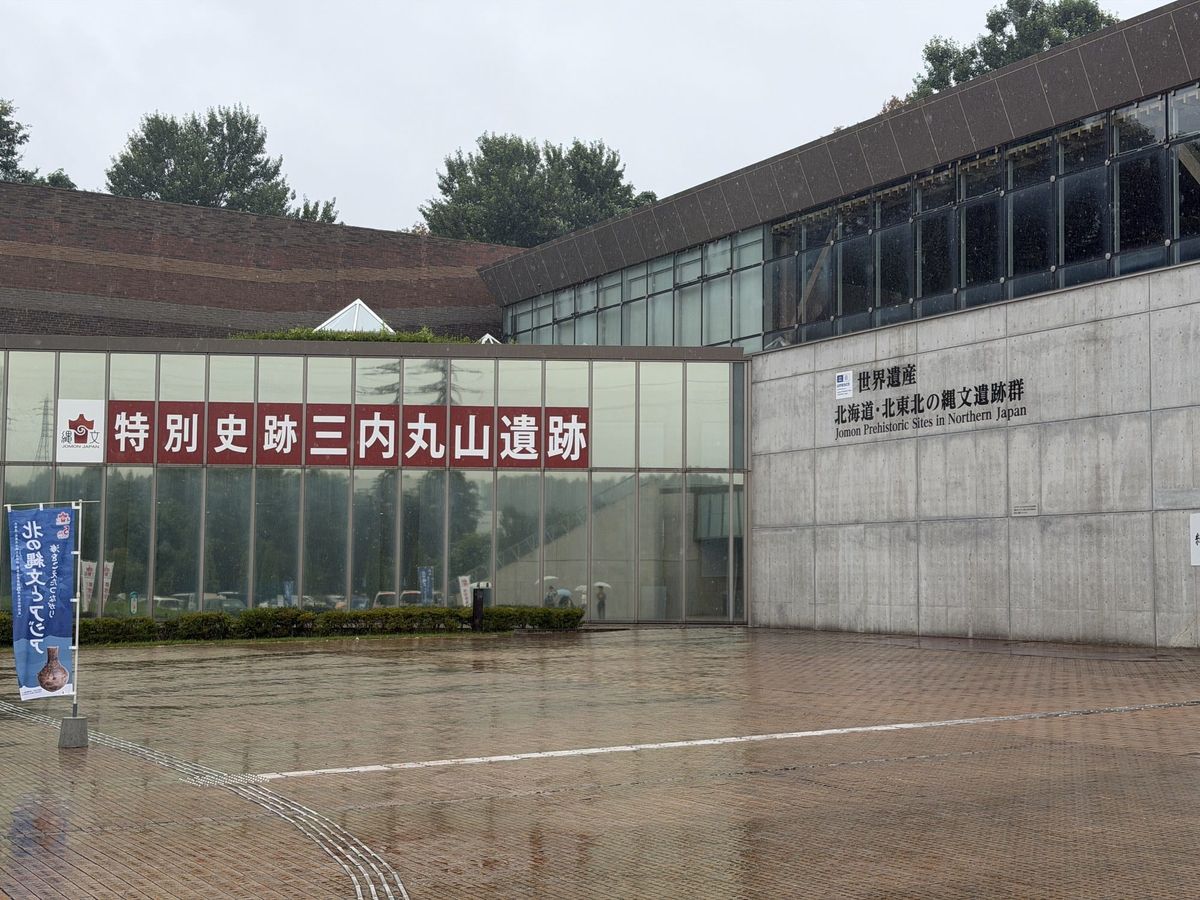
The Sannai-Maruyama Jomon site, Aomori Prefecture's UNESCO World Heritage component on the western edge of the city, sits a 15-min bus ride from the Shinkansen: take the Nebutan-go loop bus from Shin-Aomori Station East Exit, stand 3, for ¥300 one way, and pay ¥500 to get in (checked August 2026). Give it half a day. The one thing that changes this plan is weather: the reconstructed village stands outdoors on open turf, and we arrived on 11 August 2026 in steady rain.
Some links in this guide are affiliate links. If you book through them, we may earn a commission at no extra cost to you.
Of the three scheduled bus routes to the site listed on its own official access page, all three cost ¥300–¥310 one way, and only one — the Nebutan-go from Shin-Aomori Station East Exit stand 3 — takes under 20 minutes (checked August 2026).
What a Jomon settlement actually is
Sannai-Maruyama is the excavated and partly reconstructed remains of a Jomon village occupied from roughly 3,900 BCE to 2,200 BCE — about 1,700 years in one place. The Jomon period runs from around 15,000 to 2,400 years ago, and for more than ten thousand years its people lived settled lives on hunting, fishing and gathering rather than on farming, which is the part that surprises visitors arriving with a timeline built from Europe or the Middle East.
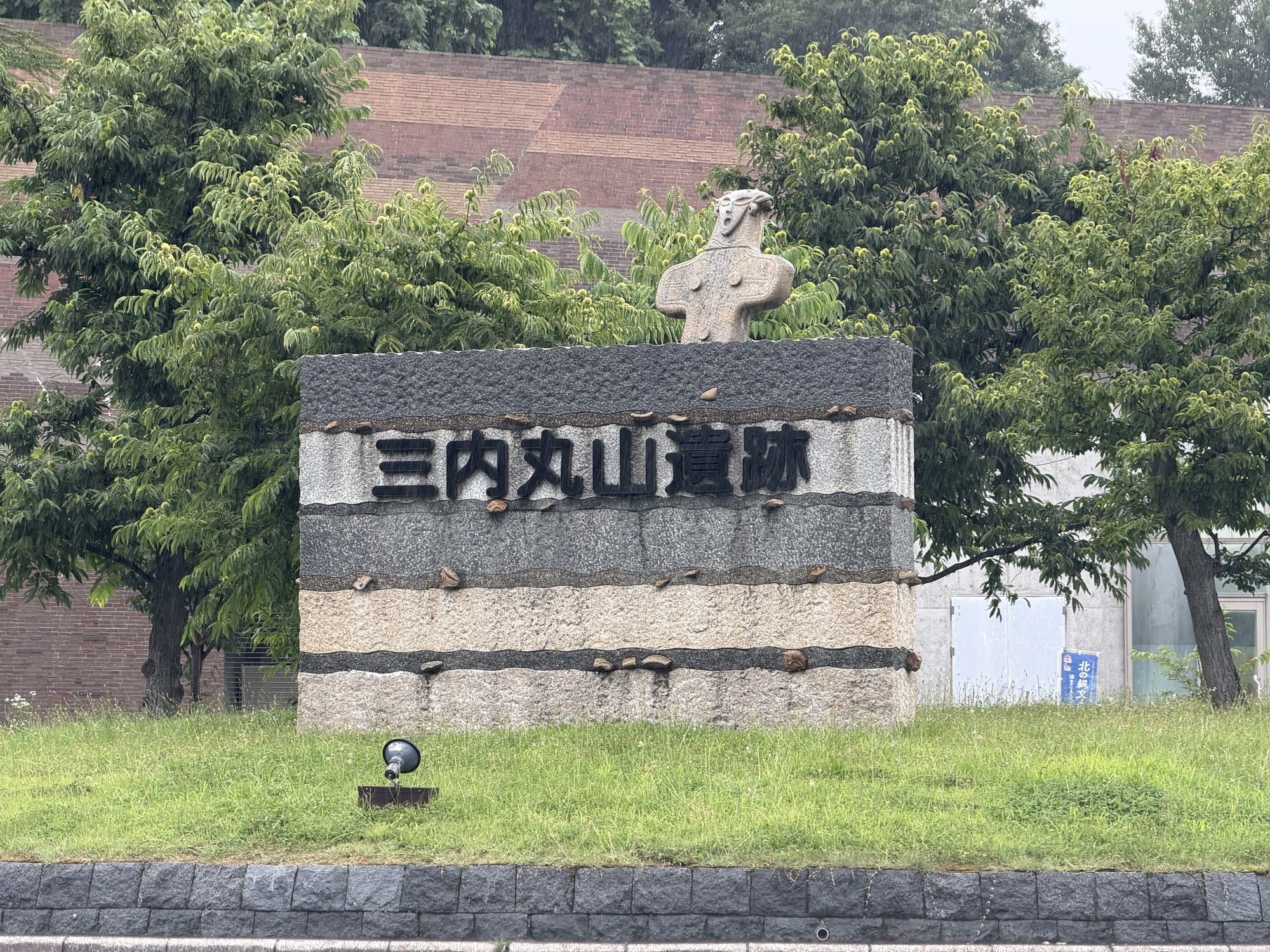
What was dug up here is a full village plan, not a single monument: pit dwellings, large pillar-supported structures, rows of pit graves, storage pits, roads and artificial earthen mounds. More than 2,000 clay figurines have been recovered here, the largest number recorded at any site in Japan. The outdoor area presents that plan at full scale, on the ground where it was found. "Five thousand years old" is, if anything, an understatement: the label on the site's large flat clay figurine dates that find to 3,000–2,900 BCE.
A UNESCO site that reads in English
Sannai-Maruyama was inscribed on the UNESCO World Heritage List on 27 July 2021 as part of "Jomon Prehistoric Sites in Northern Japan," a serial property of 17 archaeological sites across Hokkaido, Aomori, Iwate and Akita. The English inscription name is set into the concrete wall beside the entrance under the UNESCO logo — the first thing you can read on arrival without any Japanese.
Inside, the exhibition labels are bilingual. The large flat clay figurine is captioned "Large flat clay figurine / Important cultural properties / 3,000–2,900 BCE," and IT guide markers around the displays let you pull up explanations by pointing a phone camera at them. The site provides brochures in English, Chinese, Korean and Thai, and audio players at the information desk carry the Jomon Theater video in English.
One honest limit: the free volunteer walks (roughly 50 minutes, no reservation needed) and the museum guide sessions at 10:30 and 14:00 are conducted in Japanese. As an English speaker you read this site rather than listen to it — do not plan around a live English tour unless you have confirmed one in advance. Photography is allowed inside without flash, with prior permission required before images are published, which is why this guide shows the outdoor site and the buildings only.
Getting there from Shin-Aomori or Aomori Station
Reaching Sannai-Maruyama needs exactly one bus, and which one depends on which Aomori station you start from. Shin-Aomori Station is the Shinkansen stop and the fast option; Aomori Station is the city centre, and it is 30–40 minutes out by bus.
| Route | From | Journey | Fare (one way) |
|---|---|---|---|
| Nebutan-go loop bus, stand 3 | Shin-Aomori Station East Exit | about 15 min | ¥300 adult / ¥150 primary school |
| City bus for Sannai-Maruyama, stand 6 | Aomori Station | 30–40 min | ¥310 |
| Nebutan-go loop bus, stand 2 | Aomori Station West Exit | 30–40 min | ¥300 |
| Taxi or rental car | Shin-Aomori Station | about 10 min, 2.5 km | metered (fare not verified) |
The bus stands at Shin-Aomori Station are numbered on a four-language board inside the concourse, and the numbering is worth reading once because three different services leave from the same East Exit forecourt. Stand 1 is the JR Bus Mizuumi-go for Sukayu Onsen and the Lake Towada direction; stand 3 is the Nebutan-go for Sannai-Maruyama; stand 5 is the Towada Kanko Dentetsu bus for Towada City. Taxi ranks are at both the East and South exits, rental car counters are at the West Exit. If the gorge is your next stop, our guide to reaching Oirase Gorge and Lake Towada without a car starts from stand 1 of this same forecourt.
Aomori City lists the Nebutan-go at ¥300 per ride for adults and ¥150 for primary school children, with a one-day pass at ¥800 and a two-day pass at ¥1,000; cash and IC cards (AOPASS, Suica, PASMO) are both accepted. Frequency is the constraint: about 8 runs a day from the Shin-Aomori East Exit, rising to 15 on designated days between 11 April and 12 October (weekends and holidays), on the timetable published 24 March 2026.
- Hours: 9:00–17:00, extended to 18:00 during Golden Week and from 1 June to 30 September. Last admission is 30 minutes before closing.
- Closed: the fourth Monday of each month (the following day if that Monday is a holiday), and 30 December–1 January.
- Admission: ¥500 adults, ¥250 university students, free for high school students and younger (checked August 2026 on the site's official pages); some third-party listings still quote ¥410, so budget the higher figure.
- Luggage: free coin lockers of the ¥100 returnable type, with larger bags accepted at the information desk.
- Parking: roughly 500 spaces for cars, about 10 for buses.
What the weather does to this visit
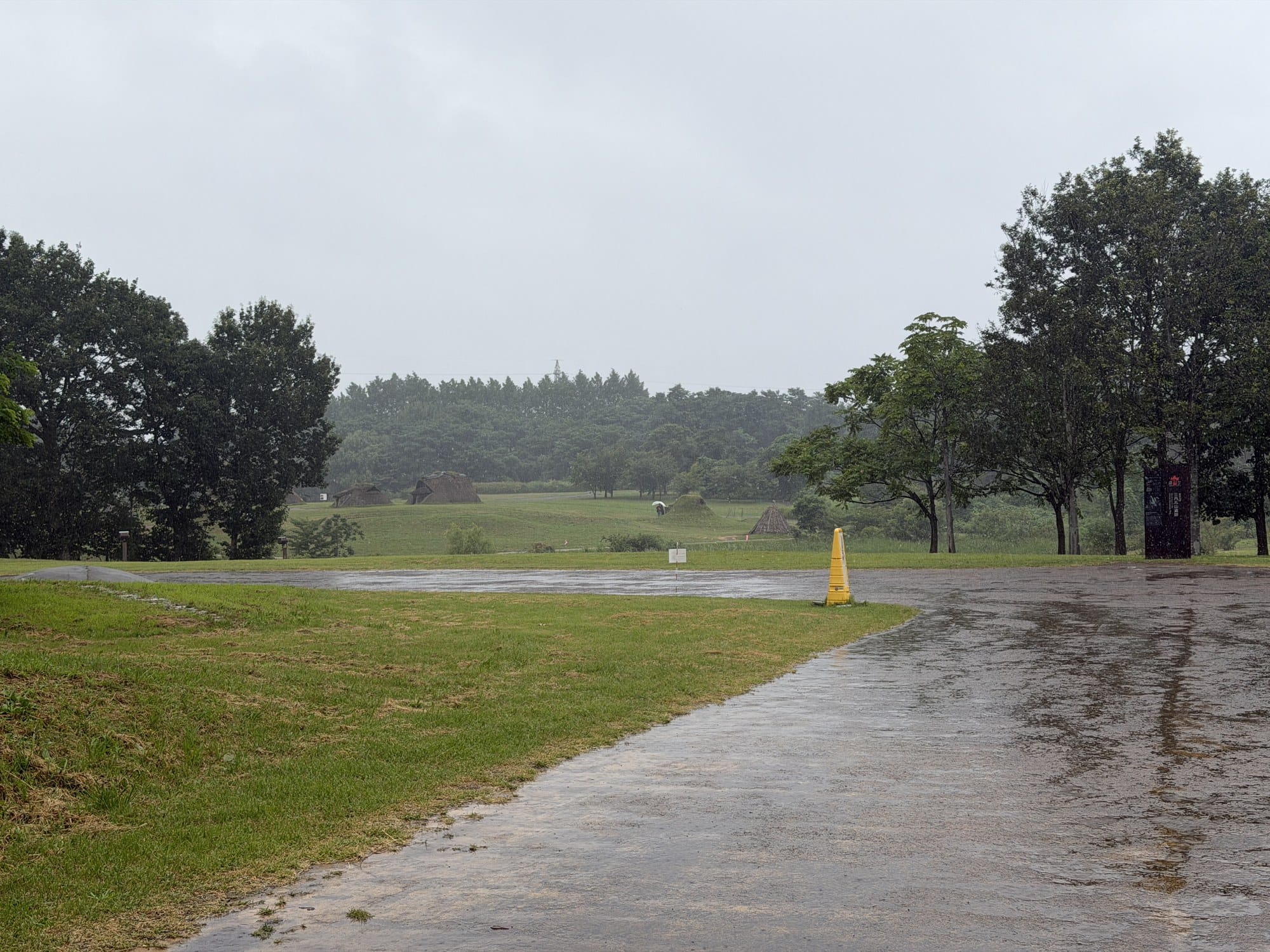
The outdoor half of Sannai-Maruyama has no shelter between its structures, which makes the forecast a planning input rather than a detail. We walked it on 11 August 2026 in steady rain: the pit dwellings sit across a wide expanse of turf, paths are paved but have steps before some structures, and the walk between buildings is fully exposed. It reads well in wet grey light, but you will be wet, and an umbrella beats a hood because you spend the visit looking up at roof structures.
The indoor half is a genuine fallback rather than a consolation. The museum displays around 1,700 excavated finds, the Jomon Theater runs a video with English audio players available at the desk, and the exhibition building connects to the excavation area by an indoor passage — the Jiyu Tunnel — which the site's FAQ names as the meeting point for guided walks. There is a restaurant, Gosennen-no Hoshi, plus a kiosk; eating is restricted to those areas and the designated picnic spots.
If rain settles in for the day, stay on the same bus route. The Aomori Museum of Art is a neighbouring stop (Kenritsu-bijutsukan-mae), opens 9:30–17:00 with last admission 30 minutes before closing, and charges ¥700 for adults and ¥400 for university students, with high school students and younger free (checked August 2026); its closed days follow a Monday pattern, so check the museum calendar. Back at Aomori Station, the indoor option is A-FACTORY beside the station building, covered in our guide to Aomori cider and sake.
Where to stay for a Sannai-Maruyama visit
Base yourself at Aomori Station rather than Shin-Aomori: the city station is where the hotels, the restaurants and the waterfront are, and the site is one bus ride from it. All 3 hotels below are within a 6-min walk of JR Aomori Station — each walk time is the property's own figure, checked against its official site in August 2026 — which matters on a morning built around a bus that runs 8 times a day.
HOTEL MYSTAYS Aomori Station is a 3-min walk from JR Aomori Station, from ¥5,500, varies by season — the shortest luggage carry of the three and the simplest budget base for a one-night stop.
Daiwa Roynet Hotel Aomori is a 5-min walk from the East Exit of JR Aomori Station, from ¥8,000, varies by season. Predictable chain rooms, on the same block as the bus stands and A-FACTORY.
Hotel JAL City Aomori is a 6-min walk from JR Aomori Station, from ¥9,000, varies by season. Forty deluxe rooms were renovated for stays from 15 March 2025, with glass art and cushions in Tsugaru kogin-zashi patterns and an Aomori indigo palette, per the hotel's own renovation notice (checked August 2026) — the step up for a two- or three-night base.
| Name | Area | Price range | Best for |
|---|---|---|---|
| HOTEL MYSTAYS Aomori Station — check rates | Aomori Station (3-min walk) | from ¥5,500, varies by season | Shortest walk with luggage |
| Daiwa Roynet Hotel Aomori — check rates | Aomori Station (5-min walk) | from ¥8,000, varies by season | Predictable chain rooms |
| Hotel JAL City Aomori — check rates | Aomori Station (6-min walk) | from ¥9,000, varies by season | Renovated rooms, longer stays |
If your trip is built around cherry blossom season instead, the base question changes — see our comparison of Aomori vs Hirosaki for cherry blossoms.
FAQ: visiting Sannai-Maruyama
How long do you need at Sannai-Maruyama?
Half a day covers the outdoor site plus the museum. The guided route through the reconstructed village takes about 50 minutes on its own, and the indoor exhibition of roughly 1,700 finds absorbs another hour. Opening hours are 9:00–17:00, extended to 18:00 during Golden Week and from 1 June to 30 September, with last admission 30 minutes before closing.
How do you get to Sannai-Maruyama from Shin-Aomori Station?
Leave by the East Exit and take the Nebutan-go loop bus from stand 3, which reaches the site in about 15 minutes for ¥300 one way. The service runs about 8 times a day, so check the posted timetable before committing to a return time. By taxi or car the distance is only 2.5 km, about 10 minutes, with taxi ranks at both the East and South exits.
Can you visit Sannai-Maruyama without speaking Japanese?
Yes. Exhibition labels are in Japanese and English, brochures come in English, Chinese, Korean and Thai, IT guide markers deliver explanations to a phone camera, and audio players at the information desk carry the Jomon Theater video in English. The volunteer walks and the 10:30 and 14:00 guide sessions are in Japanese, so an English-speaking visitor reads the site rather than being talked through it.
Is Sannai-Maruyama worth visiting in the rain?
It is worth doing in rain, with an umbrella and the acceptance that the outdoor circuit is exposed end to end. The reconstructed pit dwellings stand across open turf with no shelter between them. If the rain rules out the outdoor half, the museum, the Jomon Theater and the neighbouring Aomori Museum of Art on the same bus route make a full indoor day.
Trip Essentials for Aomori
Things worth booking before you land, all in English:
- eSIM — Airalo's Japan eSIM: install it at home and data works as soon as you switch off airplane mode at Aomori Airport.
- Tickets and day trips — Klook covers Aomori-area day tours and JR East rail passes; booking ahead skips the ticket-window line.