Ryokan in Tokyo: Real Ryokan or a Hotel With Tatami?
Ryokan in Tokyo: which stays show tatami, a hot spring bath and meals on their own official pages, and which are hotels with a bath. Checked November 2026.
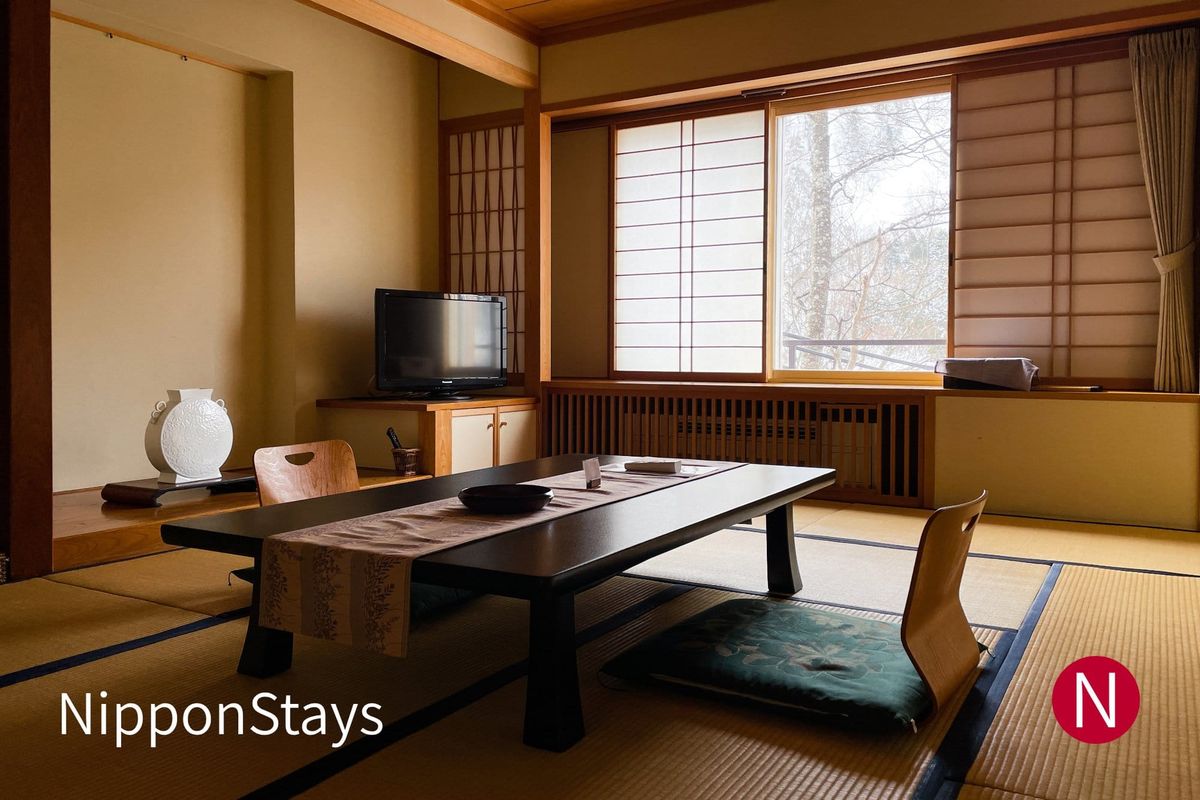
A ryokan in Tokyo is rare, so check what the official page actually shows: tatami rooms, a bath, meals. HOSHINOYA Tokyo is the pick if you want the closest thing to a traditional inn in the city: it calls itself a high-rise ryokan, and its official listing shows tatami-floored rooms and a natural hot spring on the top floor. ONSEN RYOKAN Yuen Shinjuku is the pick if you want the ryokan style in Shinjuku with a hot spring bath, but its rooms are listed with beds, not tatami. If you want a natural-spring bath and do not need tatami, the two Asakusa hotels in the table below are the other option.
What counts as a ryokan in Tokyo
A ryokan is a Japanese inn where the stay is built around tatami rooms, futon bedding, a communal bath and a meal, and in Tokyo you usually get only some of those. We sorted each stay below by what its own official page shows, and we did not treat the word "ryokan" in a name as proof. A licence check cannot settle it either: the Ministry of Health, Labour and Welfare's summary of the amended Inns and Hotels Act shows the separate hotel and ryokan business categories merged into a single "ryokan and hotel business" licence. So "ryokan" in Tokyo is the operator's own description, and we judge each stay by what its official page shows.
Three questions separate the types. Do the rooms have tatami floors? Is there a bath beyond the room, and does the operator call the water a natural hot spring? Are meals part of the stay? The table uses those three. Walking times are each operator's figures, checked November 2026.
| Stay | Type (by its own page) | Station and exit | Tatami or beds | Meals on the page | Bath |
|---|---|---|---|---|---|
| HOSHINOYA Tokyo (Otemachi) | Self-described "high-rise ryokan" | 10-min walk from the Marunouchi North Exit, Tokyo Station | Tatami rooms; the basic room is listed with a king-size bed | 3 restaurants listed; meal plans not stated on the page | Top-floor bath with Otemachi hot spring, listed as pumped from 1,500 m underground |
| ONSEN RYOKAN Yuen Shinjuku | Self-described "onsen ryokan" hotel | 7-min walk from Exit 3, Shinjuku-gyoemmae (Marunouchi Line), or 8-min walk from Exit C7, Shinjuku-sanchome (Toei Shinjuku Line) | Beds; no tatami mentioned | One restaurant, GOU Shinjuku; meal plans not stated | Open-air bath of hot spring water carried in from a Hakone source (alkaline simple spring) |
| Onyado Nono Asakusa | Hotel with a natural hot spring | 4-min walk from Exit A1, Asakusa Station (Tsukuba Express) | Beds only | Breakfast buffet; dinner not listed | Natural hot spring, black water from the hotel's own source |
| Onyado Nono Asakusa Bettei | Hotel with a natural hot spring | 4-min walk from Exit A1, Asakusa Station (Tsukuba Express) | Beds only | Breakfast buffet; dinner not listed | Natural hot spring, black water from own source, plus a self-löyly sauna |
Picks by what you want
The most ryokan-like stay: HOSHINOYA Tokyo
HOSHINOYA Tokyo is the only stay in this guide whose official pages describe tatami-floored rooms. The brand's own official page says "a high-rise ryokan that is deeply rooted in Tokyo's feudal past", and each floor has a tatami-matted corridor. Rooms take 1 to 3 guests, check-in is 15:00 and check-out is 12:00 (checked November 2026). The operator's Japanese room page describes the basic room as a tatami room with a king-size bed and a sofa of hiba wood, and does not mention futon. The top-floor bath uses Otemachi Onsen, which the operator's onsen page calls a natural hot spring from 1,500 m below ground. I work next to the building and have used the Otemachi Onsen bath myself: it is a real hot spring, but not a particularly distinctive one, so book HOSHINOYA Tokyo for the tatami and the quiet rather than for the water. On the ground floor is Minatoya 2, a standing soba shop that serves only cold niku soba (soba with meat); it usually has a queue in the daytime. I have been told that hotel guests can order it as room service from 21:00 to 23:00, and the portion is a decent size for a late snack, so ask the front desk when you book. For families, the page says children under 12 can share a bed up to the room's maximum occupancy.
A hot spring and the ryokan style in Shinjuku: Yuen Shinjuku
Yuen Shinjuku, per its official page, describes itself as a new "onsen ryokan" and explains the word as a place where travellers are met with a meal and a place to rest. Rooms are listed with beds from 90 cm singles to 200 cm doubles, and a yukata is listed in every room's amenities. The open-air bath is described as "an alkaline pure hot spring" transported from a Hakone source. The page names the source and the spring type, so this is hot spring water, but it is carried in from Hakone rather than drawn from under the building. Check-in runs from 15:00 to 26:00 and check-out is 11:00, which suits a late flight in.
Downtown Asakusa with a natural spring: Onyado Nono
Onyado Nono Asakusa and its sister building Onyado Nono Asakusa Bettei are hotels with Western beds, not ryokan. Their draw is the bath: both official pages describe a natural hot spring of dark water from the hotel's own source, in separate men's and women's baths on the basement floor. The main hotel's page says it is about 200 m from Sensoji's main hall. Room sizes on the main building run from about 14 m² singles to a 19 m² twin, and the Bettei goes up to 38 m² Deluxe Triples. For the area itself, see our Asakusa or Ueno comparison.
Trying one night: how to choose
If you only want to try a Japanese-style night, pick by the one feature you care about. Tatami goes to HOSHINOYA Tokyo. A hot spring bath at the end of the day goes to Yuen or Nono. If your main reason is the shared bath, our guide to Tokyo hotels with a separate washing area covers hotels where the bathroom is built around that.
Ryokan rules that surprise first-timers
The rules that catch first-timers are the arrival window, the bath etiquette and the meal times, and none of the four official pages we read states a curfew or a tattoo policy. Yuen sets a check-in window of 15:00 to 26:00 and HOSHINOYA Tokyo lists check-in at 15:00. The Nono pages we read do not show check-in times. If you land late, ask the hotel for its latest arrival time before you book.
On tattoos, we found no policy on any of the four pages, so the honest answer is "not stated; ask the hotel before you book". Bathing rules are the usual ones: wash first, then enter the bath. For what a full ryokan stay with a multi-course dinner looks like, our Kyoto kaiseki ryokan guide is the better reference, because none of the four stays here lists a dinner plan on its page.
Tokyo or Hakone for your ryokan night
The choice between Tokyo and Hakone is a choice between staying in the city and spending a day travelling. Tokyo gives you a bath and some ryokan style between sightseeing days, with no change of base. A ryokan outside Tokyo is the better fit if the dinner and the room are the point of the trip. For what a ryokan stay involves in busy seasons, see our note on New Year ryokan stays, and for a ryokan with the traditional setting in Kyoto, see Arashiyama ryokan.
Check-in, dinner and capacity compared
Of the 4 stays above, 1 lists tatami rooms (HOSHINOYA Tokyo), 3 call their water a natural hot spring on their own pages (HOSHINOYA Tokyo and both Onyado Nono buildings), and the fourth, Yuen Shinjuku, names a Hakone source for water carried in (checked November 2026). The table below sets out the practical details from the official pages.
| Stay | Check-in / check-out | Dinner on the page | Largest room capacity | Booking note |
|---|---|---|---|---|
| HOSHINOYA Tokyo | 15:00 / 12:00 | Restaurant listed; dinner plan not stated | 1 to 3 guests | Children under 12 can share a bed within that maximum; four people cannot share one room |
| ONSEN RYOKAN Yuen Shinjuku | 15:00 to 26:00 / 11:00 | Restaurant GOU Shinjuku; plan not stated | Up to 4 in Onsen Suite, Family and Premium Double rooms | Futon added for three or more in some rooms |
| Onyado Nono Asakusa | Not on the page we read | Not listed | 2 guests per room type | One child per bed; free up to age 2, a fee from age 3 to primary school (hotel FAQ) |
| Onyado Nono Asakusa Bettei | Not on the page we read | Not listed | Up to 4 in Triple and Deluxe Triple | One child per bed; free up to age 2, a fee from age 3 to primary school (hotel FAQ) |
Trip Essentials for Tokyo
Things worth booking before you land, all in English:
- eSIM — Airalo's Japan eSIM: install it at home and data works as soon as you switch off airplane mode at Haneda or Narita.
- Airport transfer — Welcome Pickups runs fixed-price door-to-door pickups from Haneda or Narita; Klook sells the airport bus and train tickets if you'd rather ride.
- Luggage storage — arriving before check-in? Radical Storage takes bags at shops near Tokyo's major stations for a flat daily rate.
- Tickets and day trips — Klook covers teamLab tickets, Tokyo Skytree, and Hakone day trips; booking ahead skips the ticket-window line.
FAQ: Ryokan in Tokyo
Are there ryokan with a natural hot spring in Tokyo?
Yes. HOSHINOYA Tokyo, which calls itself a ryokan, describes Otemachi Onsen as a natural hot spring from 1,500 m below ground, and both Onyado Nono Asakusa buildings, which are hotels, describe dark water from their own source. Yuen Shinjuku uses hot spring water carried in from a Hakone source (checked November 2026).
Is a ryokan in Tokyo worth it compared with Hakone?
Choose Tokyo if you want one ryokan-style night without changing base, and Hakone if the dinner and the room are the reason for the trip. None of the four Tokyo stays here lists a dinner plan on its page, so a multi-course ryokan meal is not what the Tokyo pages promise.
Can a family of four stay in a Tokyo ryokan?
Not in one room at HOSHINOYA Tokyo, where rooms take 1 to 3 guests and children under 12 share a bed within that limit. Yuen Shinjuku lists up to 4 guests in its Onsen Suite, Family and Premium Double rooms, and the Bettei lists Triple and Deluxe Triple rooms for 4. Co-sleeping rules are not stated on the Yuen page, so ask the hotel before you book: the age limit, how many children per bed and whether a fee or futon is added.
Do I have to book dinner at a ryokan in Tokyo?
Not for these four. Their official pages list a restaurant or a breakfast buffet and say nothing about a required dinner plan. Confirm the meal terms of the rate you choose before you pay.