Is Japan Crowded During Chinese New Year 2027? City by City
Chinese New Year 2027 falls Feb 6. See which Japanese cities fill up that week (and which stay quiet), country by country, city by city.

Is Japan crowded during Chinese New Year 2027? Unevenly, yes. Lunar New Year 2027 falls on Saturday, February 6, and the week around it (roughly February 5–13) tightens hotel supply in six places: Tokyo, Osaka, Kyoto, Sapporo (especially Niseko), Naha, and Fukuoka. Most of the country does not feel it — Tohoku, the San'in coast, Shikoku, and Hokuriku outside Kanazawa run close to a normal February. If your dates are fixed to that week, book early in one of the six; if you can shift a week either way, the squeeze mostly disappears (see our guide on whether to avoid that week entirely).
Which countries actually get the week off — and which don't know yet
Chinese New Year 2027 is fixed by the lunar calendar, not by policy: it falls on Saturday, February 6, 2027, the start of the Year of the Fire Goat (Sheep). That date will not move. What is not fixed yet, as of this writing, is how many consecutive days off travelers from each market actually get, because most Lunar New Year public holidays are set by annual government notice rather than a standing calendar rule.
Singapore is the exception — its 2027 public holidays are already published: Chinese New Year falls on Saturday–Sunday, February 6–7, with Monday, February 8 added as a substitute holiday because the second day lands on a Sunday (Ministry of Manpower, 2027 public holidays, checked September 2026). Taiwan's 2027 work calendar fixes a seven-day break from Thursday, February 4 to Wednesday, February 10, with February 9–10 added as make-up days because the first two days of the new year fall on a weekend (Taiwan DGPA, 2027 work calendar press release). Hong Kong's 2027 general holidays are also gazetted: February 6, 8 and 9 (Hong Kong Government, general holidays for 2027). Mainland China's State Council published its 2027 schedule on November 5, 2026: a nine-day Spring Festival break from Friday, February 5 to Saturday, February 13, with Sunday, January 31 and Sunday, February 14 as make-up workdays (State Council notice on 2027 public holidays). South Korea's in-lieu day for 2027 had not been separately confirmed as of this check, so for Korean travelers treat "a few days either side of February 6" as the planning assumption rather than a confirmed span.
| City that fills up | Why that week specifically | Quiet alternative nearby | Travel time between them |
|---|---|---|---|
| Tokyo | Already the default first stop on almost every itinerary; Lunar New Year demand stacks on top of a city that's near capacity most weeks anyway | Sendai | About 1.5 hours on the Tohoku Shinkansen (Hayabusa) |
| Osaka | Kansai's main gateway, and USJ's own peak-season pricing overlaps directly with the Lunar New Year window (see our USJ during Lunar New Year guide) | Matsuyama | Roughly 50 minutes by air, or about 3.5 hours by train via Okayama |
| Kyoto | The temple and ryokan circuit draws its own Lunar New Year surge, and Setsubun (early February) adds a second wave of demand just before it (see our Setsubun Kyoto guide) | Toyama | About 2 hours via limited express to Tsuruga plus the Hokuriku Shinkansen extension |
| Sapporo / Niseko | Peak ski season overlaps directly with the holiday, and the Sapporo Snow Festival (Feb 4–11, 2027) sits in the same week — see our sellout timeline | Aomori | Around 4.5 hours by train via Hakodate; confirm any seasonal flight options separately before relying on them |
| Fukuoka | The closest major Japanese gateway to Korea, Taiwan, and mainland China by air and ferry, and the jumping-off point for the Nagasaki Lantern Festival | San'in coast (Matsue, Izumo) | Roughly half a day by train or bus — there's no fast direct rail link |
| Naha / Okinawa | The default warm-weather escape for Hong Kong, Taiwan, and Singapore travelers using their own Lunar New Year break to skip winter at home | No mainland quiet pair — see the Okinawa guides below for spreading out within the islands | — |
The six cities that fill that week
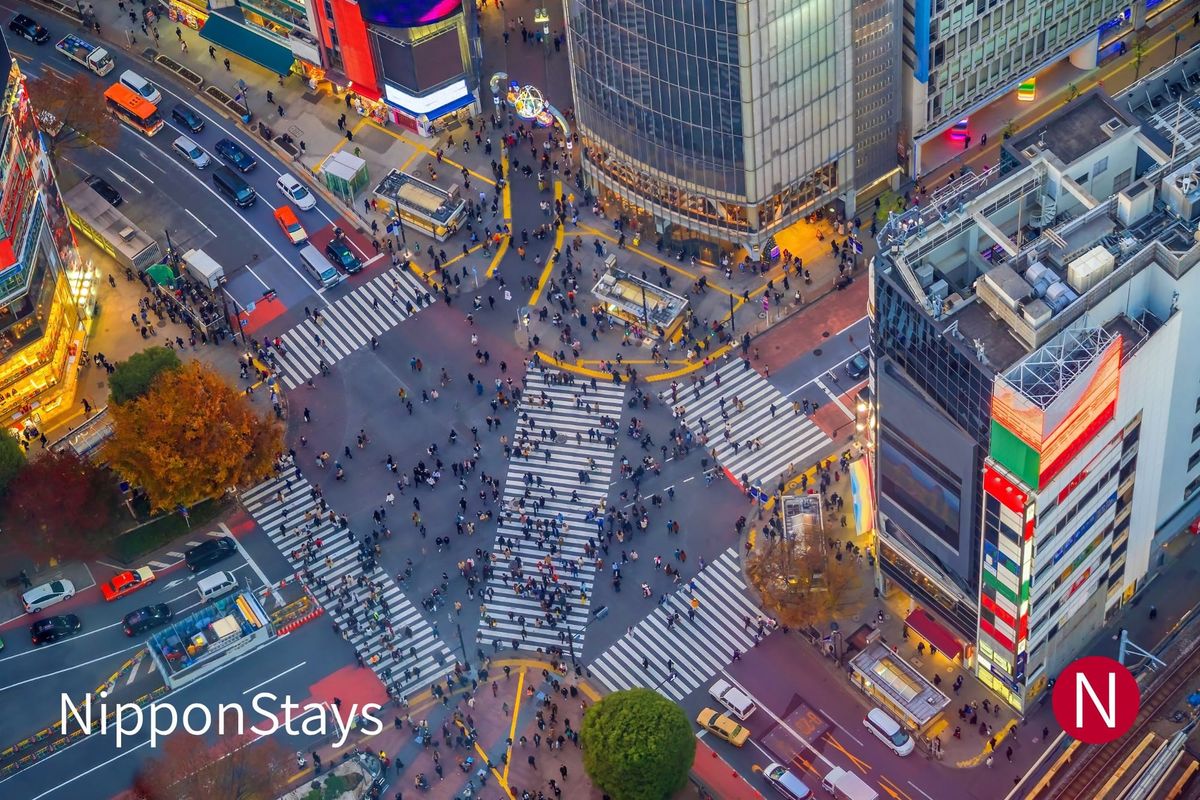
Tokyo doesn't need a Lunar New Year–specific reason to be busy — it's the entry point for most first-time visitors regardless of season, so the holiday simply adds a large, date-locked segment onto a city that's already close to capacity most weeks in winter.
Osaka combines its role as Kansai's other big gateway with Universal Studios Japan, whose own peak-season pricing already runs hot in early February; the Lunar New Year crowd overlaps directly with that, rather than creating a separate spike.
Kyoto sees pressure from two directions at once: the temple and ryokan circuit that draws Lunar New Year travelers every year, and Setsubun in early February, which pulls a second, partly overlapping wave of demand into the same two weeks.
Sapporo, and Niseko specifically, is the sharpest squeeze on this list. Peak ski season already overlaps the holiday window, and the Sapporo Snow Festival runs February 4–11, 2027 — the same week — on top of it.
Naha and the rest of Okinawa pull a different kind of Lunar New Year traveler: families from Hong Kong, Taiwan, and Singapore using their own holiday to leave winter behind rather than to sightsee a specific city.
Fukuoka fills for a geographic reason more than a sightseeing one — it's the closest major Japanese city to Korea, Taiwan, and mainland China by short flight or ferry, and it's also where most people connect through on the way to the Nagasaki Lantern Festival.
Where February stays close to normal
Four regions don't sit on the routes Lunar New Year travelers use most, and none of them get amplified by a second event the way Kyoto (Setsubun) or Sapporo (the Snow Festival) do. Tohoku — Sendai, Aomori, Yamagata, Akita — has historically drawn a far smaller share of Greater China, Hong Kong, Taiwan, and Korean visitors than the Golden Route or Hokkaido's ski country, and early February there is simply winter, not a holiday event. The San'in coast (Matsue, Izumo, Tottori) has the same profile: real winter scenery and onsen towns, but not on the itineraries that fill up around Lunar New Year. Shikoku (Matsuyama, Takamatsu, Tokushima, Kochi) is close enough to Osaka to reach in half a day but isn't part of the standard first-time route, so it doesn't inherit Osaka's squeeze. And Hokuriku outside Kanazawa — Toyama and Fukui specifically — sits one stop past the region's own famous city on the Hokuriku Shinkansen, close enough to reach easily but past the point where most itineraries stop.
None of this means empty hotels — it means availability and pricing that track a normal February rather than a holiday week, which is the whole point if your dates are fixed to early February 2027.
What's confirmed for 2027, and what still isn't (checked September and November 2026)
Of the five Lunar New Year travel markets that matter for Japan-bound demand, four had published their 2027 Lunar New Year holidays at the time of this check: Singapore (February 6–7, plus a substitute holiday on February 8), Taiwan (a seven-day break, February 4–10), Hong Kong (February 6, 8 and 9) and mainland China (a nine-day break, February 5–13, published November 5, 2026). Only South Korea's in-lieu day had not been separately confirmed as of this check. One date on the Japanese side is settled either way: February 11, 2027 (a Thursday) is National Foundation Day, a fixed-date holiday that doesn't fall next to a weekend this year, so it doesn't add a second wave of Japanese domestic demand on top of the Lunar New Year travelers.
| Pair | What the quiet side offers | Read next |
|---|---|---|
| Tokyo → Sendai | Full Shinkansen access, under 1.5 hours out; Comfort Hotel Sendai East sits a 5-minute walk from Sendai Station | December vs. February in Japan |
| Kyoto → Toyama | Reachable via the Hokuriku Shinkansen extension without detouring through Kanazawa | Setsubun in Kyoto 2027 |
| Osaka → Matsuyama | Shikoku's Dogo Onsen town, a short flight or a half-day train ride away | USJ during Lunar New Year 2027 |
| Sapporo/Niseko → Aomori | Same winter, none of the ski-season or festival-week pricing | Should you avoid that week? |
| Fukuoka → San'in coast | Matsue and Izumo, off the routes most Lunar New Year travelers take | Nagasaki Lantern Festival 2027 |
| Naha/Okinawa → within the islands | Spreading out inside Okinawa itself rather than leaving it | Okinawa in winter with kids, Okinawa or Hokkaido in February |
Staying in Tokyo with children that week? Rooms listed for four are scarce, so Tokyo family hotels for Lunar New Year 2027 starts from rooms the hotels themselves list for four.
Trip Essentials for Japan
Things worth booking before you land, all in English:
- eSIM — Airalo's Japan eSIM: install it at home and data works as soon as you switch off airplane mode at Haneda, Narita, Kansai, or wherever you land.
- Tickets and day trips — Klook covers the Japan Rail Pass, teamLab tickets, and shinkansen-linked day trips; booking ahead skips the ticket-window line.
FAQ: Lunar New Year 2027 in Japan
What is the exact date of Lunar New Year 2027?
Saturday, February 6, 2027 — the start of the Year of the Fire Goat (Sheep). This is fixed by the lunar calendar and won't change, unlike the number of holiday days each country grants around it, which is set separately by each government.
Which Japanese cities are actually affected?
Six: Tokyo, Osaka, Kyoto, Sapporo (Niseko above all), Naha, and Fukuoka. These are the cities that already draw the largest share of Lunar New Year travel from Greater China, Hong Kong, Taiwan, Singapore, and South Korea, and in Kyoto's and Sapporo's case a second event (Setsubun and the Sapporo Snow Festival) overlaps the same week and adds to the squeeze.
Is early February 2027 a bad time to visit Japan overall?
Not if you're not trying to book Niseko or Kyoto specifically that week. A two-week, five-or-six-city itinerary barely notices Lunar New Year outside those two hotspots — Tohoku, the San'in coast, Shikoku, and Hokuriku beyond Kanazawa run close to a normal February the whole time.
Should I shift my dates to avoid the Lunar New Year week?
Only if you're set on Niseko, Kyoto, or another of the six cities above and haven't booked yet — a week earlier or later removes most of the pressure. If your itinerary is elsewhere, or your dates are already fixed, our week-by-week comparison walks through the trade-offs in both directions.