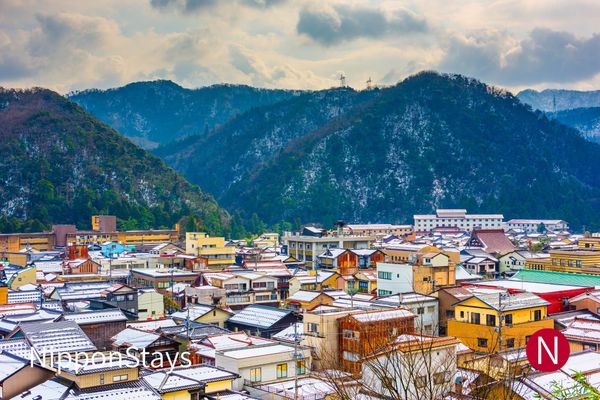
Kanazawa or Kaga Onsen for Crab Season: Market or Ryokan?
Kanazawa or Kaga Onsen for crab season: a ryokan bundles crab into the room rate, Kanazawa lets you buy it by the piece at Omicho Market. Compare both.

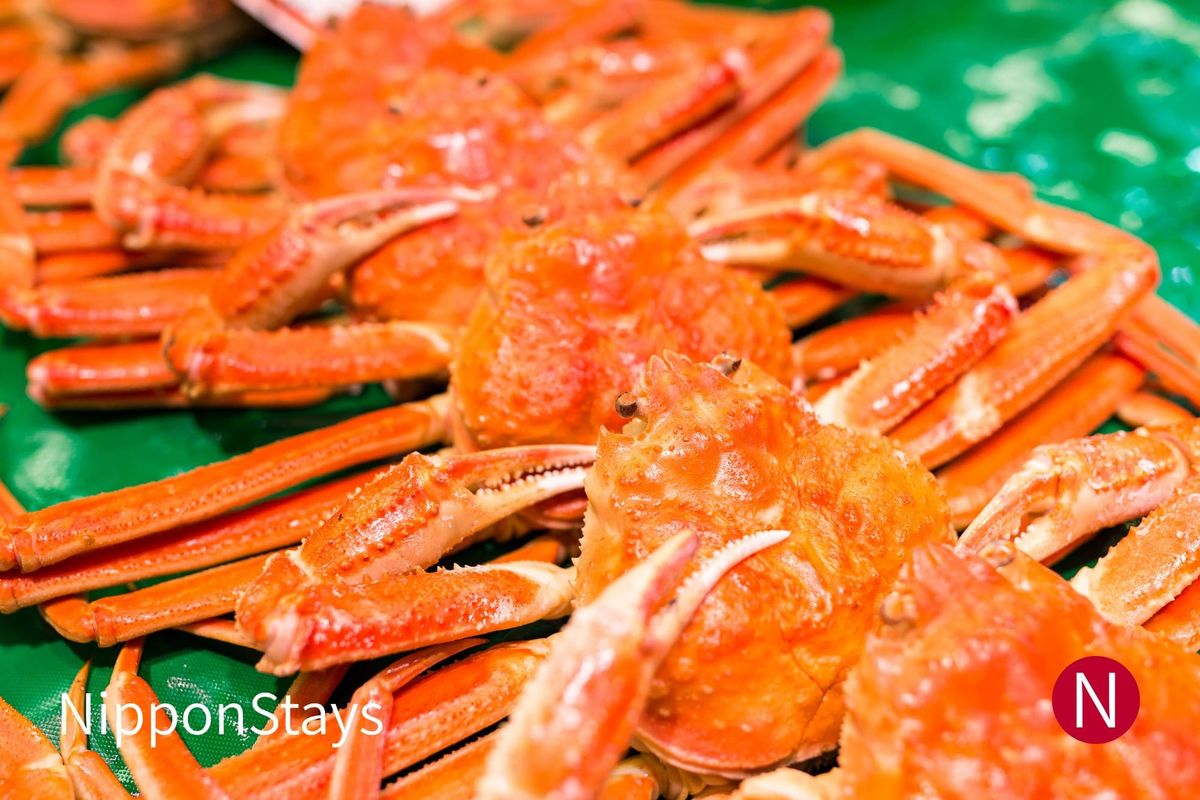
Kanazawa or Kaga Onsen for crab season comes down to one question: who plans the meal? In Kaga Onsen, ryokan such as Araya Totoan fold a whole or half crab into a single per-person kaiseki course that's already part of your room rate — book the stay, and the crab decision is made for you. In Kanazawa, near Omicho Market, you buy crab piece by piece instead: a whole one from a market stall, a plate of crab sashimi at an izakaya near a base like Dormy Inn Kanazawa, however much or little you want, stacked on top of a room you've already paid for. Pick Kaga Onsen if you want it all settled in one sitting; pick Kanazawa if you'd rather build your own crab meal, or if your dates fall across New Year, when Kaga Onsen's rates and minimum-stay rules climb at most properties.
Kaga Onsen or Kanazawa: how you pay for crab
The two bases don't just differ in scenery — they differ in how the transaction works. One table settles most of the decision before you arrive.
| Base | How you pay for crab | Train from Kanazawa Station | Kids | Late Dec–early Jan |
|---|---|---|---|---|
| Kaga Onsen (Yamashiro, Yamanaka, and nearby onsen towns) | Bundled into a per-person crab kaiseki course, priced into the stay | 14–19 min by Hokuriku Shinkansen to Kaga Onsen Station, plus a local bus or taxi to the ryokan | Some higher-end ryokan set a minimum guest age; check before booking with toddlers | Rates rise and minimum-stay rules kick in at most properties around New Year |
| Kanazawa (Omicho Market area) | À la carte — a whole crab from a market stall, or crab dishes at an izakaya, added on top of your room | Base station — no transfer needed | No age restriction at the market or most izakaya | Busier and pricier for rooms, but no crab-specific surcharge |
Kaga Onsen: the crab is inside the room rate
A crab kaiseki plan at a Kaga Onsen ryokan is a fixed course built around one crab (or half of one) per guest, usually served across several preparations — grilled, boiled, raw as sashimi, and worked into the crab miso or a small hot pot. Araya Totoan, a long-running Yamashiro Onsen ryokan once favored by the potter Kitaoji Rosanjin, runs its winter menu around Ishikawa's blue-tagged zuwai crab prepared boiled, grilled and as sashimi, alongside other cold-season seafood like buri and oysters. It's one example of a pattern that holds across the onsen town: Beniya Mukayu, a 16-room villa-style ryokan nearby, builds its own winter kaiseki around the same crab in sashimi, grilled and boiled form; Hoshino Resorts' Kai Kaga, also in Yamashiro, has run a dedicated winter crab menu — including a whole crab steamed in a straw-rope wrap, a technique borrowed from an Edo-period cooking method — every season for years; and in Yamanaka Onsen, Kissho Yamanaka's crab plans center on one whole tagged crab per guest, served teppan-style alongside Noto beef. None of these charge crab separately — it's baked into what you book.
Kanazawa: buy it by the piece
Base yourself in Kanazawa instead and the crab becomes a purchase you make on your own schedule rather than a course that arrives on a set menu. Omicho Market's fish stalls sell kobako gani and kano gani individually, priced by size and grade rather than bundled into anything, and a handful of seafood restaurants around the market — Ichi no Kura among them — sell crab dishes and set lunches à la carte. One rule worth knowing before you go: eating while walking through the market aisles isn't allowed, so plan to eat at a stall's own counter or a nearby restaurant rather than snacking your way through. The trade-off against a ryokan course is obvious — you're assembling your own crab meal instead of having one arrive — but it also means you can spend as little or as much as you want, and a base near the station puts you a 15-min walk (or a 5-min bus ride) from Omicho Market — see our closer options right by the market — rather than committed to one town's crab menu for the whole stay.
Getting between them
Since the Hokuriku Shinkansen extended from Kanazawa to Tsuruga in March 2024, Kaga Onsen has had its own shinkansen stop, and the ride from Kanazawa Station takes 14–19 minutes depending on the train (Kagayaki is fastest; Tsurugi and Hakutaka run a few minutes slower). That's short enough that day-tripping in either direction is realistic if you don't want to fully commit to one base — reaching Kai Kaga in Yamashiro Onsen from Kaga Onsen Station, for example, is a roughly 15-minute local bus ride plus a 5-min walk, so door-to-door from Kanazawa Station runs about 35–40 minutes total. The practical read: this isn't a decision about which town is reachable, since both are close together — it's a decision about which town holds your crab meal.
Shift your dates around New Year
Ishikawa's crab season opens well before the New Year travel crunch, which is useful to know if your dates are flexible. Kaga Onsen ryokan in this bracket typically raise their rates and require longer minimum stays for arrivals across the Dec 29–Jan 3 period — the same stretch where kobako gani's own season is ending (see below) — so a stay in mid-November or in January, once the New Year block has passed, tends to land on calmer pricing and fewer stay restrictions than one squeezed into the holiday week itself. Kanazawa doesn't carry a crab-specific New Year surcharge, but hotel rooms citywide get scarcer and pricier over the same stretch, for the same reason every other Japanese destination does.
How consistent is the crab season across Kaga Onsen?
Every one of the five Kaga Onsen ryokan checked for this guide — Araya Totoan, Beniya Mukayu, Kai Kaga, Kissho Yamanaka and Yunokuni Tensho — runs its own crab kaiseki plan as an annual winter fixture rather than a one-off promotion, confirmed against each property's own site (checked September 2026). That consistency tracks Ishikawa's fishing rules: the male zuwai crab (branded locally as kano gani) is in season from November 6 through around March 20, while the female kobako gani is allowed for just 54 days, November 6 through December 29 — a regulation set by JF Ishikawa to protect breeding females. That's why a Kaga Onsen crab plan booked anywhere from opening week through March will find crab on the menu, but a trip built specifically around kobako gani only has that 54-day window to work with.
| Name | Base | Crab plan type | Best for |
|---|---|---|---|
| Araya Totoan | Yamashiro Onsen | Tagged zuwai crab, boiled, grilled and sashimi | A historic ryokan with a long-running kaiseki reputation |
| Beniya Mukayu | Yamashiro Onsen | Crab kaiseki (sashimi, grilled, boiled) | Couples wanting a quieter, minimalist stay (elementary-age minimum for children) |
| Kai Kaga (Hoshino Resorts) | Yamashiro Onsen | Whole crab steamed in a straw-rope wrap, plus a "one-crab" solo plan | First-time visitors who want a recognizable name |
| Kissho Yamanaka | Yamanaka Onsen | One whole tagged crab per guest, teppan-style with Noto beef | Travelers who want the crab-per-person question answered clearly |
| Yunokuni Tensho | Yamashiro Onsen | Crab kaiseki using roughly two crabs' worth per guest | Bigger appetites, or two travelers splitting a generous course |
| Dormy Inn Kanazawa | Kanazawa Station area | No bundled crab — a natural hot-spring bath, then crab à la carte in town | Travelers who'd rather choose their own crab at Omicho Market |
None of the plans above are quoted with a price here, since ryokan crab kaiseki rates shift by season, room grade and how far into the New Year period you're booking — check the current rate on the property's own booking page before you commit, and see our guide to ryokan meal-plan pricing for how these per-person course rates compare to a room-only stay. For the fine print on what a specific plan name actually includes — whole crab versus half, tagged versus untagged, and the cancellation rules attached to live-crab courses — our guide to reading crab kaiseki plans covers it in more detail than fits here. And if you want the biology first — what makes kobako gani different from kano gani, and why the window is so short — our kobako gani guide is the place to start. For the wider area context, our Yamashiro-or-Yamanaka comparison covers the two Kaga Onsen towns without the crab angle, and the official Kaga Onsen tourism site lists current ryokan availability and area events.
Trip Essentials for Kanazawa
Things worth booking before you land, all in English:
- eSIM — Airalo's Japan eSIM: install it at home and data works as soon as you switch off airplane mode at Komatsu Airport.
- Tickets and day trips — Klook covers Kanazawa day tours and trips to Shirakawa-go; booking ahead skips the ticket-window line.
FAQ: Crab Season in Kanazawa and Kaga
Is Kaga Onsen or Kanazawa better for crab season?
Neither is objectively better — they suit different plans. Kaga Onsen works if you want a fixed, per-person crab kaiseki course already built into a ryokan stay, which is what all five Kaga Onsen ryokan checked for this guide offer every winter. Kanazawa works if you'd rather buy crab individually at Omicho Market or an izakaya and keep your room separate from the meal.
How far is Kaga Onsen from Kanazawa?
Since the Hokuriku Shinkansen reached Kaga Onsen Station in March 2024, the ride from Kanazawa Station takes 14 to 19 minutes depending on the train. Reaching a specific ryokan in Yamashiro or Yamanaka Onsen adds a further local bus or taxi ride of roughly 10 to 15 minutes.
Can I combine a Kaga Onsen ryokan and Omicho Market crab on the same trip?
Yes — the 14-to-19-minute shinkansen ride makes a day trip realistic in either direction. Staying in Kanazawa and taking a day trip to a Kaga Onsen ryokan for a crab lunch plan, or basing in Kaga Onsen and coming into Kanazawa for a market morning, both work without an overnight change of base.
Do Kaga Onsen ryokan crab plans work for families with young children?
It depends on the property. Beniya Mukayu, for one, doesn't accept guests younger than elementary-school age, which rules it out for families with toddlers; other Kaga Onsen ryokan set no such minimum, so check each property's own children's policy before booking rather than assuming a crab-course ryokan is family-friendly by default.