Jozankei in October: Day Trip From Sapporo, or Stay?
Jozankei's leaves peak about a month before Honshu's. Bus times from Sapporo, the guest-only gorge light-up, and which hotel fits a day trip vs. an onsen stay.

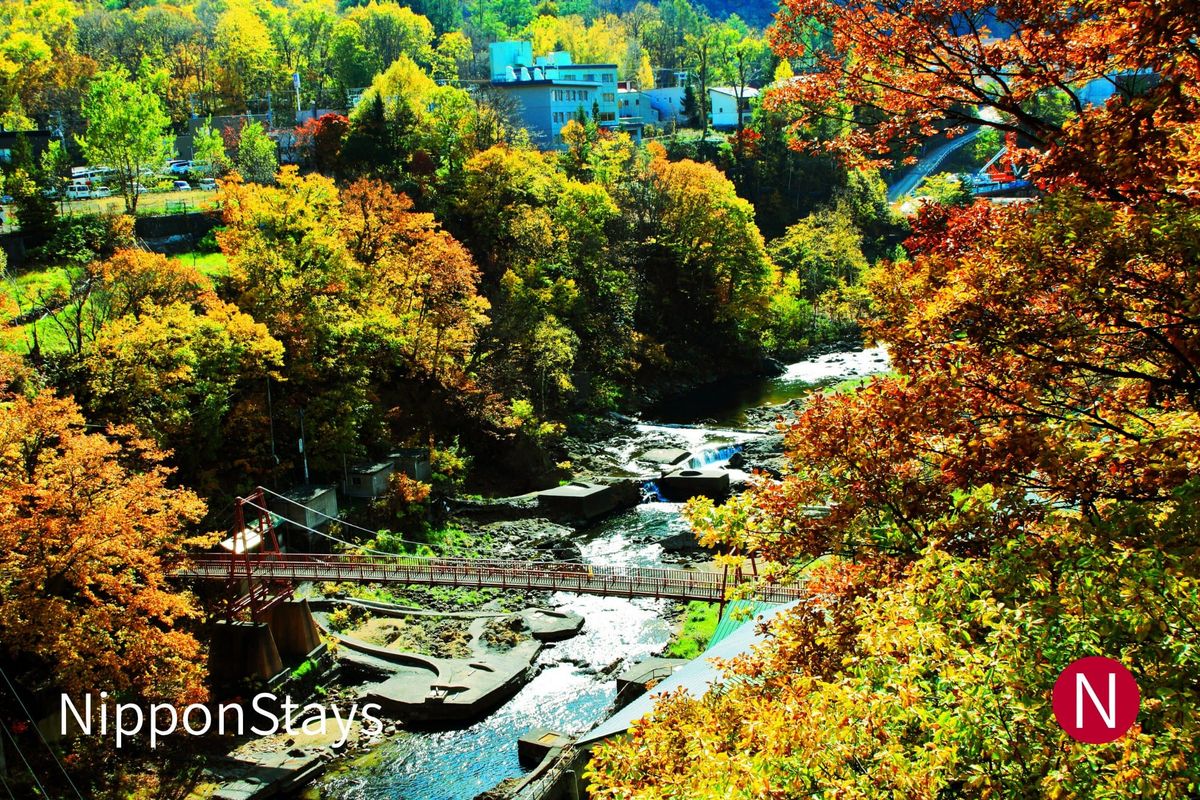
Jozankei in October is close to peak color, since Jozankei's maples usually turn a full month before Tokyo's. A day trip from Sapporo works fine if all a traveler wants is a walk across the Futami Suspension Bridge and a foot bath — the bus takes roughly an hour each way. Staying over is the better call for anyone who wants to see the gorge lit up after dark or soak in an onsen at leisure: Jozankei View Hotel, from ¥19,000/night for two, is the easiest pick for families (its indoor water park keeps kids occupied on a rainy afternoon). Anyone prioritizing restaurant variety and Sapporo sightseeing before or after the gorge is usually better off sleeping in the city — Sapporo Grand Hotel, from ¥14,000, is a 5-minute walk from JR Sapporo Station and puts the last Jozankei bus back within easy reach. Prices here and in the tables below are from-rates for two guests in the typically quieter early-October shoulder window, not peak-weekend rates.
Hokkaido's calendar is the reason this article publishes first
Hokkaido's autumn color runs about a month ahead of Honshu, which is why a Jozankei-focused article makes sense on the calendar before the rest of Japan's momiji season gets going. Jozankei's average peak sits in the early-to-mid October window, based on the seasonal guidance published by the Jozankei Tourist Association for the area. That average shifts by a week or so year to year depending on autumn temperatures, so treat any specific date as a planning midpoint rather than a promise — checking a live foliage tracker in the two weeks before a trip is still the more reliable move than relying on a single published date.
Jozankei vs. Sapporo at a glance
| Question | Stay in Jozankei | Stay in Sapporo |
|---|---|---|
| Bus time from Sapporo Station | ~60-80 min each way (Jotetsu Bus, direct) | N/A — already there |
| Evening access to the gorge | Walk out the door after dinner | Only if you catch the last bus out and back same day — tight |
| From price (2 guests) | From ¥18,000/night (onsen ryokan, shoulder season) | From ¥14,000/night (city hotel, shoulder season) |
| Onsen type | In-room or communal riverbed-source hot spring, soak any hour | None on-site at most city hotels; day-trip onsen only |
Prices are from-rates at two guests for a shoulder-season weekday; October weekends and the foliage peak run noticeably higher and rooms can sell out weeks ahead. The table is best read as a ranking of which option costs more than which, not a quote — put your own dates in before booking.
The case for sleeping in Jozankei
The strongest reason to stay overnight is the gorge after dark. From Futami Park to the suspension bridge, the walking path is lit for the seasonal Jozankei Nature Luminarie event, and the red-painted Futami Suspension Bridge under lighting is one of the more photographed autumn scenes in the area. In its most recently published pattern, the event ran nightly from June through late October, with September-October evening hours around 18:00-21:30, and free admission was limited to guests staying at Jozankei onsen accommodations that night (checked August 2026; exact 2026 dates and hours had not yet been posted by the Jozankei Tourist Association at the time of this check — reconfirm at jozankei.jp closer to a booking date). That guest-only admission is itself a reason to book a room rather than try to see it on a day trip.
Beyond the lit walk, staying in Jozankei means an onsen soak isn't rushed against a bus timetable. Jozankei Daiichi Hotel Suizantei draws from three natural hot-spring sources along the Toyohira riverbed, blended for a soft, near-skin-pH soak — a point the property makes of its own water on its official site — and its riverside rooms look straight onto the gorge's fall color without needing to leave the building. For a family that wants more than a bath, Jozankei View Hotel's indoor wave pool and kids' play area cover an entire wet-weather afternoon, which matters in a region where October rain is a real possibility.
The case for Sapporo
Sapporo wins on food variety and on flexibility if the trip includes more than just the gorge. Central Sapporo has far more restaurant choice within walking distance than Jozankei's onsen-town core, and skipping a hotel change means one less packing-and-moving day on a short Hokkaido itinerary. Sapporo Grand Hotel is a 5-minute walk from JR Sapporo Station through a connecting underground passage, which matters on a rainy October evening, and THE KNOT SAPPORO is a similarly short walk from the station. Cross Hotel Sapporo sits closer to Odori and Susukino's restaurant streets instead — a longer walk from the station, but the trade-off for being nearer the nightlife.
The decision-making detail for a Sapporo base is the last bus back from Jozankei. Jotetsu Bus's direct service between Sapporo Station and Jozankei runs roughly 34 trips a day between about 6:10 and past 21:00, but the realistic cutoff for a comfortable evening in the gorge and a bus back is earlier — anyone planning dinner at Jozankei needs to check the same-day return time on Jotetsu Bus's own timetable before leaving Sapporo, since it varies by weekday and weekend and isn't the kind of number worth guessing at. A Sapporo base that treats Jozankei as a half-day out-and-back, rather than an evening plan, avoids that timing pressure entirely.
What the numbers below actually show
Of the 5 Sapporo-area properties compared in this article, 3 are in Sapporo city itself — two, Sapporo Grand Hotel and THE KNOT SAPPORO, within a 10-minute walk of JR Sapporo Station, and one, Cross Hotel Sapporo, on the Odori/Susukino side rather than the station side — and 2 are onsen ryokan inside Jozankei itself with hot-spring bathing on site (checked August 2026). That split is the practical version of the day-trip-or-stay question: choosing a JR Sapporo Station hotel keeps the rest of a Hokkaido itinerary simple, while choosing one of the two Jozankei properties buys an on-site soak and, in season, the lit gorge walk after dinner.
Where to book
| Name | Area | From price (2 guests) | Best for | Walk to the leaves |
|---|---|---|---|---|
| Jozankei View Hotel | Jozankei Onsen | From ¥19,000 | Families (indoor water park) | 10-min walk to Futami Suspension Bridge |
| Jozankei Daiichi Hotel Suizantei | Jozankei Onsen | From ¥18,000 | Quiet, adults-paced onsen soak | Riverside; gorge view from many rooms |
| Sapporo Grand Hotel | Sapporo Station | From ¥14,000 | Classic, connected to the station | Bus to Jozankei from the station, ~60-80 min |
| Cross Hotel Sapporo | Sapporo (Odori/Susukino side) | From ¥15,000 | Design-hotel feel near nightlife | Bus to Jozankei, ~60-80 min |
| THE KNOT SAPPORO | Sapporo Station | From ¥16,000 | Rooftop views, station convenience | Bus to Jozankei, ~60-80 min |
For hotels beyond this shortlist, the site's Sapporo area guide and Sapporo hotels with an onsen roundup cover the rest of the city, and hotels near Sapporo Station narrows in on the station cluster used for the comparison above. For how Jozankei's timing fits the rest of the country's season, see the Japan autumn leaves guide.
FAQ: Jozankei in October
When do Jozankei's leaves usually peak?
Seasonal foliage trackers place Jozankei's average peak in the early-to-mid October window, roughly a month ahead of Tokyo and Kyoto. The exact week shifts with that year's autumn temperatures, so it's worth checking a live foliage forecast in the two weeks before a trip rather than booking around a fixed date.
How long is the bus from Sapporo to Jozankei?
The direct Jotetsu Bus service between Sapporo Station and Jozankei takes roughly 60 to 80 minutes depending on the exact route and stop, with about 34 trips running each day. It's a one-seat ride with no transfer.
What time is the last bus back to Sapporo?
Jotetsu Bus's Jozankei route runs from around 6:10 to shortly after 21:00, but the actual last practical departure for a same-day evening trip varies by weekday and weekend. Anyone planning to see the gorge after dinner and return to Sapporo the same night should check Jotetsu Bus's published timetable before leaving the city, since missing the last bus with no car means an unplanned overnight stay.
Is the gorge walk doable in an afternoon?
Yes. The walk from Futami Park across the Futami Suspension Bridge and back along the riverside path is short enough — under an hour at an easy pace — to fit into a half-day out from Sapporo, including the roughly 60-80 minutes of bus time each way. It doesn't leave room for an onsen soak on the same trip unless a day-use bath is booked in advance.