Is Nagasaki Worth Visiting 2 Days? A Practical Plan and Where to Stay
Is Nagasaki worth 2 days? Yes — here's a practical day-by-day plan covering Gunkanjima, Dejima, the churches, and the night view, plus where to stay.
Is Nagasaki worth visiting 2 days? Yes — provided you pick a base close to the tram lines. JR Kyushu Hotel Nagasaki at the station starts from ¥9,000 per night and puts you a single tram ride from Dejima, the Peace Park, and the Oura churches; the Nagasaki Marriott starts from ¥22,000 for harbor views and direct Shinkansen access. The one factor that changes the plan: Gunkanjima cruise bookings are weather-dependent and require advance reservation, so build a buffer day if the island is a priority.
Short Answer: Yes, Two Days Is Enough — If You Plan Smart
If you're wondering is Nagasaki worth visiting 2 days, the short answer is yes — provided you arrive with a rough plan. Two days gives you time for a Gunkanjima cruise (weather permitting), Dejima and Shinchi Chinatown, the Mount Inasa night view, the Oura churches, and the Peace Park — provided you pick a base that keeps the tram rides short. There is no city in Japan quite like it, and it earns the detour.
Some links in this guide are affiliate links. If you book through them, we may earn a commission at no extra cost to you.
The three base areas are: Nagasaki Station front (Nishi-Kyushu Shinkansen terminus, airport limousine bus stop, Nagasaki Marriott and Hilton Nagasaki); Dejima / Shinchi Chinatown / Shianbashi (food, nightlife, and the Dutch-history quarter on foot); and Minamiyamate / Oura (Catholic churches, Glover Garden, and the Western-mansion slopes). All three connect by tram.
For a tight two-day itinerary I'd split Day 1 between the harbor and the food quarter, and keep Day 2 for the hill side and the Peace Park. The hotel comparison below shows which base makes that split easiest.
Quick Comparison: Hotels for a 2-Day Nagasaki Plan
| Name | Base | Price range | Best for |
|---|---|---|---|
| Nagasaki Marriott Hotel | Nagasaki Station (station-connected) | from ¥22,000 for two — varies by season | Early cruise departure; Shinkansen/airport bus convenience; Bonvoy points |
| Hilton Nagasaki | Nagasaki Station area | from ¥18,000 — varies by season | Harbor views; Hilton Honors; convention-center adjacency |
| JR Kyushu Hotel Nagasaki | Nagasaki Station (AMU Plaza) | from ¥9,000 — varies by season | Budget-conscious station-front stay; direct tram access |
| Dormy Inn Nagasaki Shinchi Chinatown | Dejima / Chinatown | from ¥9,000 — varies by season | Night-owl diners; Chinatown walks; hot-spring bath on a budget (closed 1 December 2026 to 28 February 2027) |
| CANDEO HOTELS Nagasaki Shinchi Chinatown | Dejima / Chinatown | from ¥15,000 — varies by season | Rooftop onsen; easy walk to Dejima and Chinatown; mid-range comfort |
Rates vary significantly by season, day of week, and booking lead time.
Why Nagasaki Is a Distinctive Stop
Three history threads make Nagasaki unlike any other city in Japan. First, Dejima: during the Edo period's near-total isolation, the Dutch trading post on this artificial island was the only conduit for Western trade and knowledge. The post chief — the kapitan (from Portuguese capitão) — made an annual journey to Edo to meet the shogun. The overseas reports submitted to the shogunate, the Oranda Fusetsugaki ("Dutch news reports"), were Japan's main window onto the wider world. Siebold, a German physician who came as the Dutch post's doctor, opened the Narutaki school near Nagasaki. Dejima is now a partly reconstructed museum open daily 8:00–21:00 (last admission 20:40).
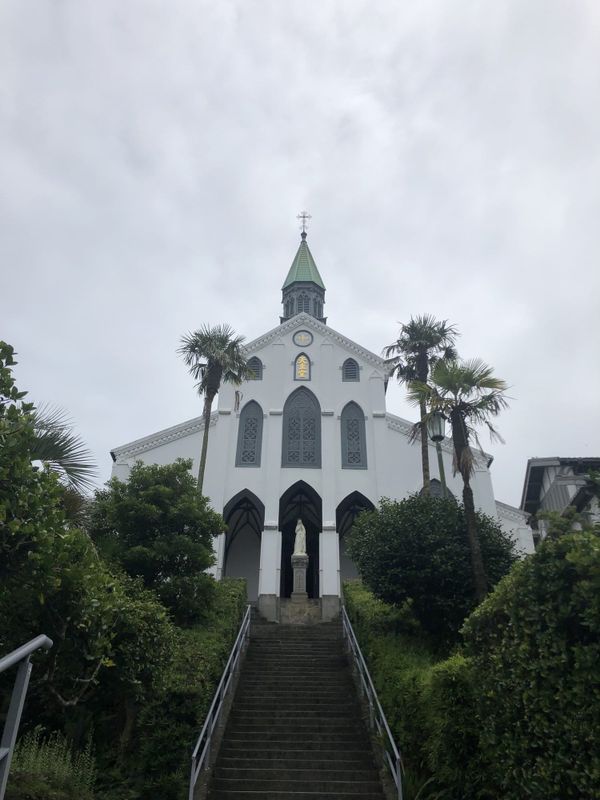
Second, the Hidden Christian heritage: Nagasaki holds the UNESCO "Hidden Christian Sites in the Nagasaki Region" (inscribed 2018). Oura Cathedral — a National Treasure and Japan's oldest surviving Western-style church, completed in 1864 — is where hidden Christians first revealed themselves to a French missionary after some 250 years of secret practice. The 26 Martyrs site in Nishizaka marks the 1597 execution of 26 Christians. Urakami Cathedral stands near the 1945 hypocenter. Some component sites need advance contact and are closed during Mass.
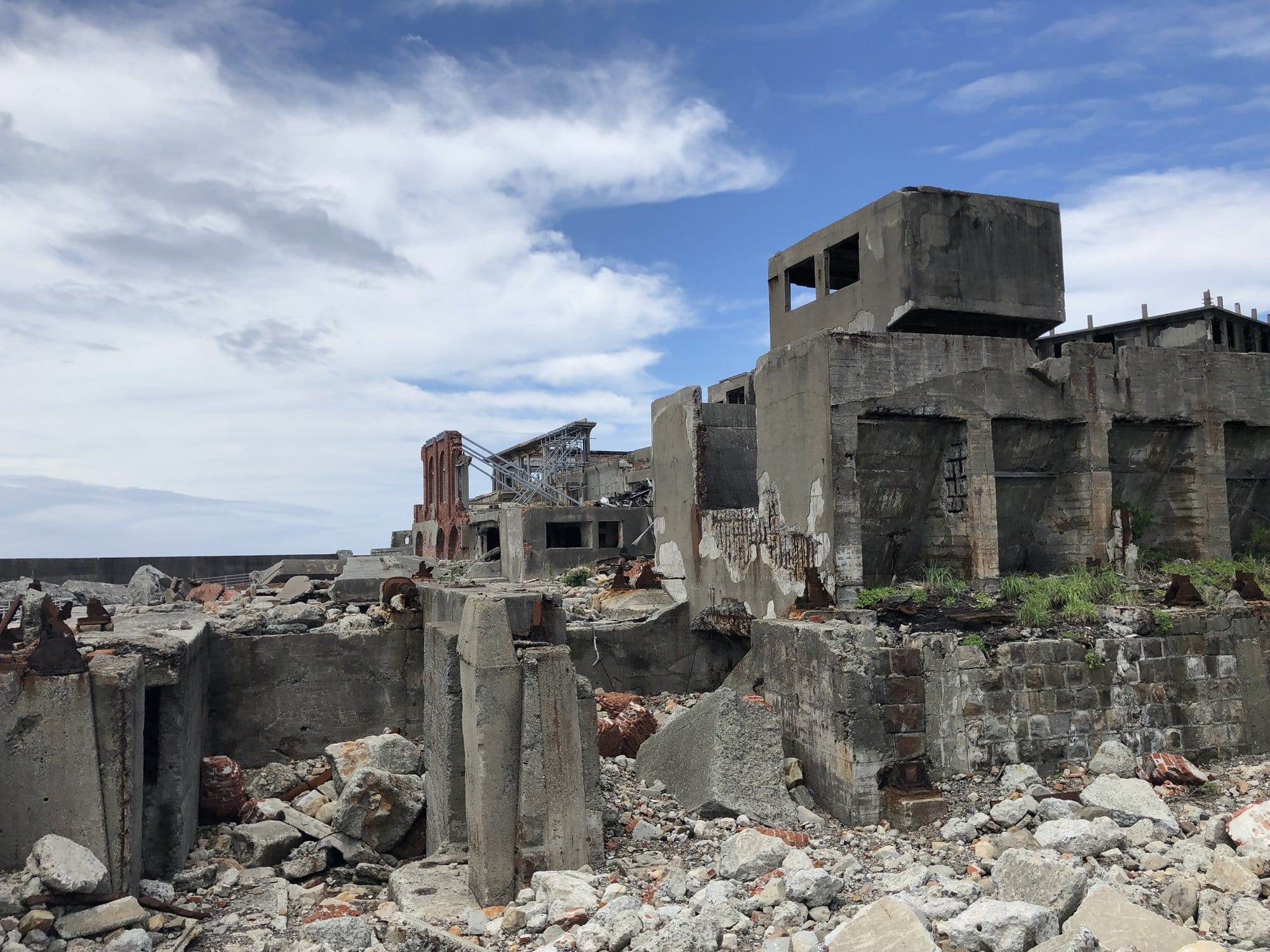
Third, Gunkanjima (Hashima Island): a UNESCO Meiji Industrial Revolution heritage site (inscribed 2015) 19 km offshore. Once a coal-mining island, it was abandoned in 1974 and now stands as striking concrete ruins visible from the sea. Licensed cruise operators depart from Nagasaki Port — see Day 1 for logistics.
Day 1: Gunkanjima Cruise, Dejima, Chinatown, and the Night View
Morning: Gunkanjima Cruise
Book the earliest departure you can find. Multiple licensed operators run morning sailings from Nagasaki Port terminals, typically departing between 9:00–10:30. Tours run roughly 2.5–3 hours total, and the route passes the Mitsubishi Nagasaki Shipyard's active cranes as industrial scenery.
Critical note: Gunkanjima landings are frequently cancelled or reduced to a cruise-only pass by weather and sea conditions. The decision is made the day of departure. Book an operator with easy rebooking, and keep your afternoon flexible. Walk-up tickets are not available.
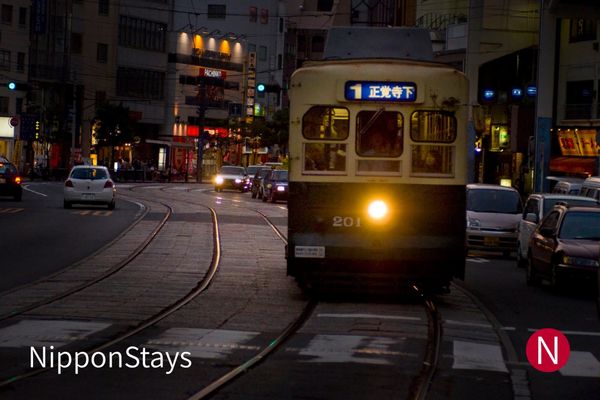
From station-front hotels, the tram (Route 1 or 3, about 5 min) reaches the Dejima stop; port terminals are a short walk from there.
Afternoon: Dejima and Shinchi Chinatown
After the cruise, walk to Dejima (open 8:00–21:00; adults ¥1,100 from April 2026) and spend an hour among the reconstructed warehouses and history panels. From the Dejima gate, Shinchi Chinatown is a 5-min walk. A bowl of champon (Nagasaki's thick pork-and-seafood noodle soup) here is non-negotiable. Shianbashi, the compact dining and bar district, is 5 minutes further; some smaller venues are cash-only.
Evening: Mount Inasa Night View
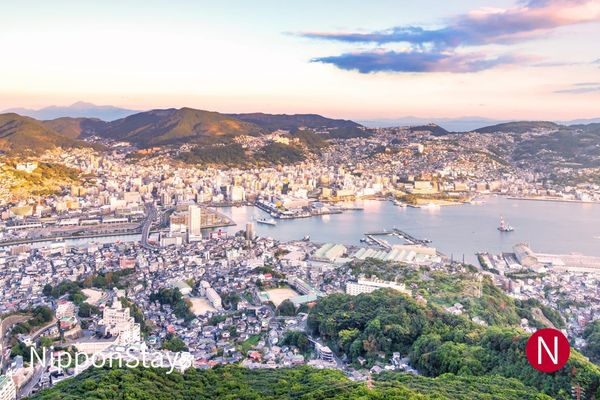
The Nagasaki Ropeway runs daily 9:00–22:00 (every 15 minutes from 18:00 onward). A round-trip adult ticket costs ¥1,250. The 5-minute gondola ride reaches 333 m, where the city spreads below in a bowl of lights. To reach the ropeway base station, take the tram to Takaramachi stop, then a short taxi or the Inasayama Slope Car (a separate hillside cable car). Note: the ropeway undergoes scheduled maintenance annually — the 2026 maintenance window was June 8–July 10; check the current schedule before visiting. Weather can obscure the view; a clear night is worth the extra wait.
Note: the "new three great night views of the world" designation linked to Mount Inasa is cited widely in Japanese tourism materials but lacks a clear independent authority behind it — treat it as a popular local claim rather than a formal global ranking.
Day 2: Churches, Glover Garden, and the Peace Park
Morning: Oura Cathedral and Glover Garden
Take the tram to Ourakaikandori stop (Route 5), then walk uphill 10–15 minutes to Oura Cathedral. Entry costs ¥1,000 for adults and includes the adjacent Christian Museum. Open 8:30–18:00 (last entry 17:30). Photography is not permitted inside the church. Arrive before 10:00 to avoid tour groups.
Glover Garden is a 5-min walk from the cathedral. It opens at 8:00 AM (¥1,300 for adults as of April 2026) and features Western-style 19th-century merchant residences on a hillside with harbor views. The moving walkways reduce the uphill climb. Allow 1–1.5 hours.
The 26 Martyrs site (Nishizaka) is on the opposite side of the city, near the Nishizaka tram stop on Route 3. If time is tight on Day 2, it can be skipped or saved for a third day.
Afternoon: Peace Park and Atomic Bomb Museum
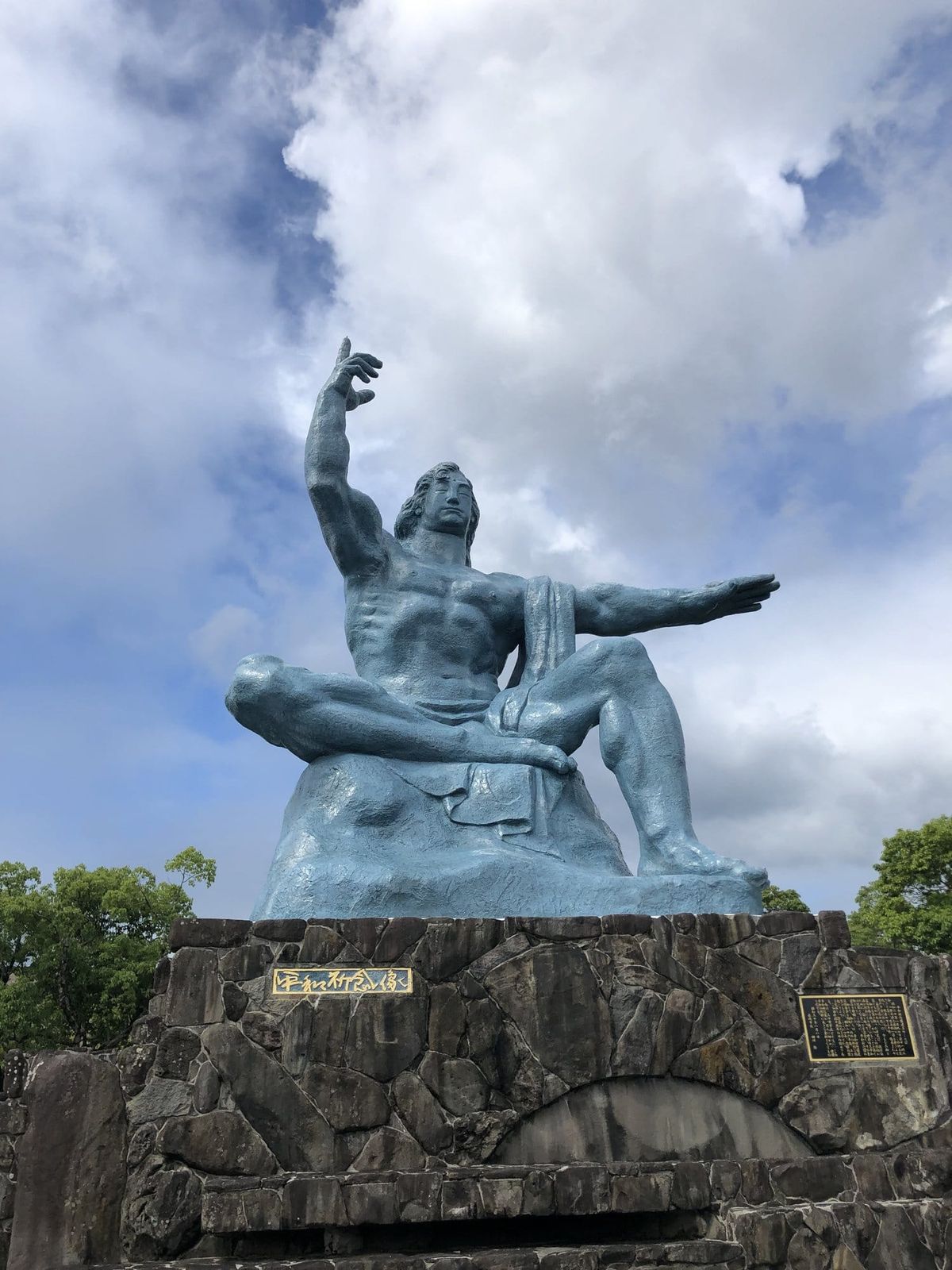
Take tram Route 1 or 3 to the Atomic Bomb Museum stop (about 10 minutes from central Nagasaki). Entry to the museum is ¥200 for adults; the Peace Park is free. On August 9, 1945, the hypocenter fell in the Urakami district, near Urakami Cathedral, devastating one of East Asia's largest Catholic communities. The current cathedral was rebuilt in 1952 and is an active parish church — not a museum, and visiting during Mass is not appropriate. Budget at least two hours here.
Where to Sleep for a Tight 2-Day Plan
The station front is the most practical base for Shinkansen or airport bus arrivals. The Nagasaki Marriott Hotel (opened January 2024, station-connected, 207 rooms) and the Hilton Nagasaki (opened November 2021, short walk from the station) both give you a tram stop at your door — Nagasakieki-mae serves Routes 1 and 3.
In the food quarter, Dormy Inn Nagasaki Shinchi Chinatown Hot Spring (2-min walk from Tsukimachi tram stop) sits 5 minutes from Chinatown gates and Dejima. It is closed for a major renovation from 1 December 2026 to 28 February 2027 (official notice dated 16 September 2026; the end date may shift), a window that includes the 2027 Lantern Festival (5–21 February), so for those dates the food-quarter pick is Candeo, described next. CANDEO HOTELS Nagasaki Shinchi Chinatown (3-min walk from Shinchi Chinatown tram stop) has a rooftop onsen and mid-range pricing, well reviewed through 2025–2026.
A single tram ride is ¥150; a one-day pass is ¥600. Key stops: Nagasakieki-mae (station), Tsukimachi (Chinatown / Dejima), Ourakaikandori (Oura / Glover Garden), Atomic Bomb Museum, Peace Park (Heiwa Koen). Trams run approximately 6:00–23:00.
For more on base selection, see our full Nagasaki area guide, Gunkanjima cruise base picks, and hotels near the Hidden Christian sites.
Practical Constraints
- Gunkanjima landings: Tours frequently shift to cruise-only due to sea conditions. Book with a cancellation-friendly operator and treat a landing as a bonus, not a guarantee.
- Hillside walking: Oura, Glover Garden, and Minamiyamate involve steady uphill sections. Moving walkways at Glover Garden help, but wear comfortable shoes on Day 2.
- Ropeway: Last ride up is before 22:00; the ropeway undergoes annual maintenance (2026 window: June 8–July 10). Confirm before your visit.
- Church sites: Some Hidden Christian component sites need advance contact. Oura Cathedral does not require advance booking, but check for closures on Catholic feast days. Viewing during Mass is not permitted.
- Hotel rates: All prices listed as "from" figures; peak periods (Golden Week, Obon, New Year, cherry blossom season) push rates significantly higher.
Getting to Nagasaki
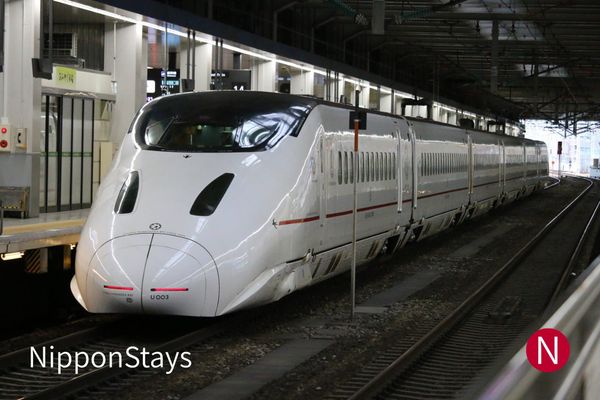
By rail: take the Nishi-Kyushu Shinkansen Kamome and transfer at Takeo-Onsen — a 3-minute cross-platform connection to the Relay Kamome limited express brings you to Hakata. Total journey time from Hakata is roughly 90 minutes. There is no direct Shinkansen from Hakata; the Takeo-Onsen relay is required.
By air: Nagasaki Airport is in Omura. The limousine bus to Nagasaki Station takes roughly 45 minutes (¥1,400 one-way for adults since September 2025; confirm current fares at the airport).
Final Hotel Comparison
| Name | Base | Price range | Best for |
|---|---|---|---|
| Nagasaki Marriott Hotel | Nagasaki Station (station-connected) | from ¥22,000 for two — varies by season | Top-tier comfort; early Gunkanjima departure; Bonvoy points |
| Hilton Nagasaki | Nagasaki Station area | from ¥18,000 — varies by season | Harbor-view rooms; Hilton Honors; onsen |
| JR Kyushu Hotel Nagasaki | Nagasaki Station (AMU Plaza) | from ¥9,000 — varies by season | Best-value station-front option; tram at the door |
| Dormy Inn Nagasaki Shinchi Chinatown | Dejima / Chinatown | from ¥9,000 — varies by season | Night diners; hot-spring bath; walkable to Chinatown (closed 1 December 2026 to 28 February 2027) |
| CANDEO HOTELS Nagasaki Shinchi Chinatown | Dejima / Chinatown | from ¥15,000 — varies by season | Rooftop onsen; mid-range comfort; Chinatown walking distance |
All rates are from-prices; final cost varies by season, room type, and booking lead time.
Worth visiting and worth basing in are different questions — on a Kyushu loop the practical rival is Fukuoka, with its faster trains and bigger hotel stock. Fukuoka vs Nagasaki as a Kyushu base takes that one head on.
Trip Essentials for Nagasaki
Things worth booking before you land, all in English:
- eSIM — Airalo's Japan eSIM: install it at home and data works as soon as you switch off airplane mode at Nagasaki Airport.
- Tickets and day trips — Klook covers Gunkanjima cruises and Nagasaki city tours; booking ahead skips the ticket-window line.
FAQ
Is two days enough for Nagasaki?
Yes, if you prioritize. Two full days covers the Gunkanjima cruise, Dejima, Oura Cathedral, the Mount Inasa night view, and the Peace Park — provided you use the tram and book the Gunkanjima cruise in advance.
Station or Chinatown: which base for a 2-day plan?
Station front wins on logistics — the Shinkansen and airport bus drop you there, and tram routes 1 and 3 cover everything. If you arrive late and want evening food within walking distance, the Chinatown / Dejima area is more convenient.
Do I need to book the Gunkanjima cruise in advance?
Yes. Walk-up tickets are not available. Book early, especially on weekends. Weather cancellations are common; choose an operator with a flexible rebooking policy.
How do I get around without a rental car?
The tram covers almost every site. A single ride is ¥150 (adult); a one-day pass is ¥600. Mount Inasa requires the ropeway and Inasayama Slope Car — everything else is tram-accessible.
Information audit: Last fact-checked July 2026 · Prices checked July 2026 (all rates are “from” floors that vary by season) · How this guide was researched: hotel facilities, prices and access details are verified against official and primary sources; we have not personally stayed at every property listed. The author has traveled in this area personally; original photographs on this site are from those trips · How this site verifies information: About NipponStays.