How to Get to Nagasaki: Shinkansen and Airport, Explained
How to get to Nagasaki: Nishi-Kyushu Shinkansen relay (~1h32m from Hakata) or airport bus (~55 min). Tram guide and hotels by arrival mode.
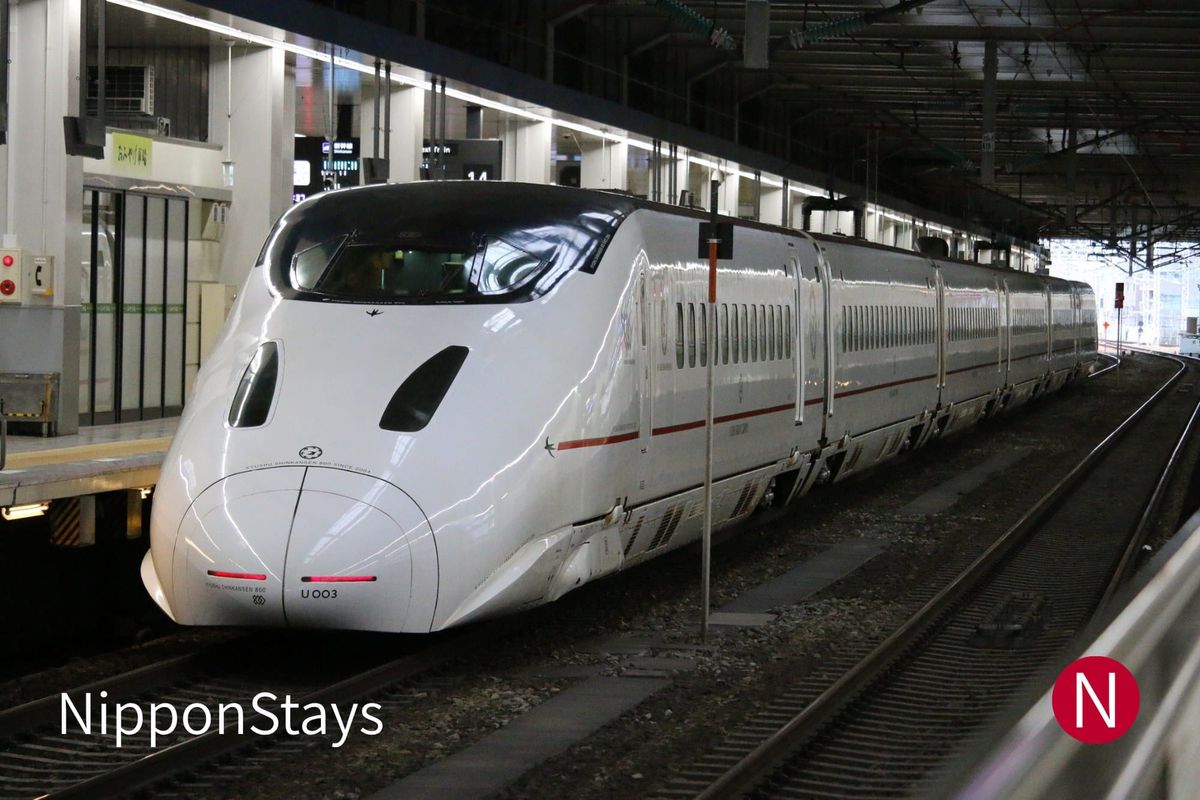
Knowing how to get to Nagasaki makes the trip far easier to plan. The city sits at the far western tip of Kyushu, so neither the shinkansen nor the airport is a straight shot from Tokyo or Osaka. Once you understand the two main routes — the Nishi-Kyushu Shinkansen with its relay transfer, and the Nagasaki Airport limousine bus — the journey is straightforward. Here is what each option actually looks like, and how to get to your hotel once you arrive.
Some links in this guide are affiliate links. If you book through them, we may earn a commission at no extra cost to you.
Of the 3 main transport options into Nagasaki covered in this guide, journey times range from approximately 55 minutes (airport limousine bus from NGS to Nagasaki Station) to approximately 2 hours 30 minutes (highway bus from Hakata), with the Nishi-Kyushu Shinkansen relay from Hakata taking approximately 1 hour 32 minutes (checked July 2026).
Quick comparison: shinkansen relay vs airport bus
| Mode | Time (approx.) | Transfers | Best for |
|---|---|---|---|
| Relay Kamome + Nishi-Kyushu Shinkansen (from Hakata) | ~1 hr 32 min | 1 cross-platform change at Takeo-Onsen | Travelers already in Fukuoka / Kyushu; JR Pass holders |
| Nagasaki Airport limousine bus (from NGS) | ~55 min to Nagasaki Station | 0 (direct) | Domestic flyers from Tokyo, Osaka, or Okinawa; families with luggage |
| Highway bus (Hakata to Nagasaki) | ~2 hr 30 min | 0 | Budget travelers; flexible departure times |
Rates vary by season. Book the shinkansen package in advance during Golden Week, Obon, and New Year holidays.
By rail: the Nishi-Kyushu Shinkansen Kamome and the Takeo-Onsen relay
The Nishi-Kyushu Shinkansen Kamome runs between Takeo-Onsen and Nagasaki — it is not yet connected to the rest of Japan's shinkansen network. To ride it from Fukuoka (Hakata), you take the Limited Express Relay Kamome from Hakata to Takeo-Onsen, then step across the same platform to board the Kamome shinkansen for the final leg into Nagasaki.
- Total time: approximately 1 hour 32 minutes from Hakata to Nagasaki
- Transfer: Takeo-Onsen Station, cross-platform, typically 3 minutes; staff assist and the connecting train waits if the Relay Kamome is late
- Fare: from around ¥5,960 (unreserved) to ¥6,490 (reserved) for the full Hakata–Nagasaki journey; JR Kyushu Pass and other rail passes cover both legs
- Frequency: services run throughout the day; the Relay Kamome and Kamome are booked as a single reservation
Do not write "direct shinkansen from Hakata" on your itinerary — that is not how this line works. The relay transfer is easy, but it is a required step. Trains run from roughly 06:00 to 22:00; check the last departure if you plan a late evening from Fukuoka.
From Tokyo or Osaka, you can connect via the Tokaido/San'yo Shinkansen to Hakata, then pick up the Relay Kamome. Alternatively, some travelers prefer a flight to Fukuoka Airport followed by the subway to Hakata Station (~5 min) and then the relay route.
For the full picture of what to do at Nagasaki Station once you arrive — including which exit leads to the tram, the airport bus stop, and the two station-area hotels — see our guide to hotels near Nagasaki Station.
By air: Nagasaki Airport and the limousine bus
Nagasaki Airport (NGS) is located in Ōmura City, roughly 40 to 55 km northeast of central Nagasaki. It is Japan's first full-scale offshore airport, built on a reclaimed island in Ōmura Bay. Domestic routes serve Tokyo (Haneda and Narita), Osaka (Itami), Okinawa, and a small number of other cities. International connections are limited — most international visitors fly into Fukuoka or Tokyo and connect domestically, or travel by rail.
Airport limousine bus
- Route: Nagasaki Airport → Nagasaki Station → Shianbashi (and beyond on some services)
- Time to Nagasaki Station: approximately 55 minutes
- Fare: ¥1,400 one-way for adults (raised in September 2025; check the vending machine outside arrivals for the current price)
- Frequency: buses run throughout the day, timed to meet arriving flights
- Tickets: buy from the automated vending machine just outside the arrivals exit, or pay the driver in cash; no advance reservation required
The bus drops you at Nagasaki Station first, then continues to Shianbashi — useful if your hotel is in the Dejima or Shianbashi quarter. Taxis from the airport cost significantly more and take a similar amount of time in moderate traffic.
Airport bus stop at Nagasaki Station
The airport limousine bus stop at Nagasaki Station is on the west side of the station building. From there you are within a 2-min walk of the tram stop at Nagasakieki-mae, and the station-connected Nagasaki Marriott Hotel (opened January 2024) is directly accessible via the station building. Hilton Nagasaki, which opened in November 2021, is a 1-min walk from the station via the pedestrian deck from the West Exit.
Around Nagasaki on arrival: the tram
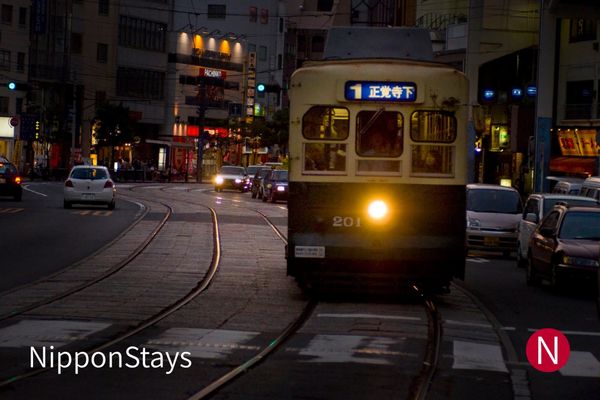
Once you reach Nagasaki Station, the city's electric tramway (streetcar) is the primary way to move around. The flat fare is ¥150 per ride for adults; a one-day unlimited pass costs ¥600. Pay on exit by cash or IC card. IC card holders get free transfers between lines within a set time window.
Key tram stops for most visitors:
- Nagasakieki-mae — directly in front of JR Nagasaki Station; the starting point for most tram journeys
- Shianbashi — for the izakaya and restaurant district; approximately 10 min from Nagasakieki-mae by tram
- Tsukimachi — closest tram stop to Dejima and Shinchi Chinatown
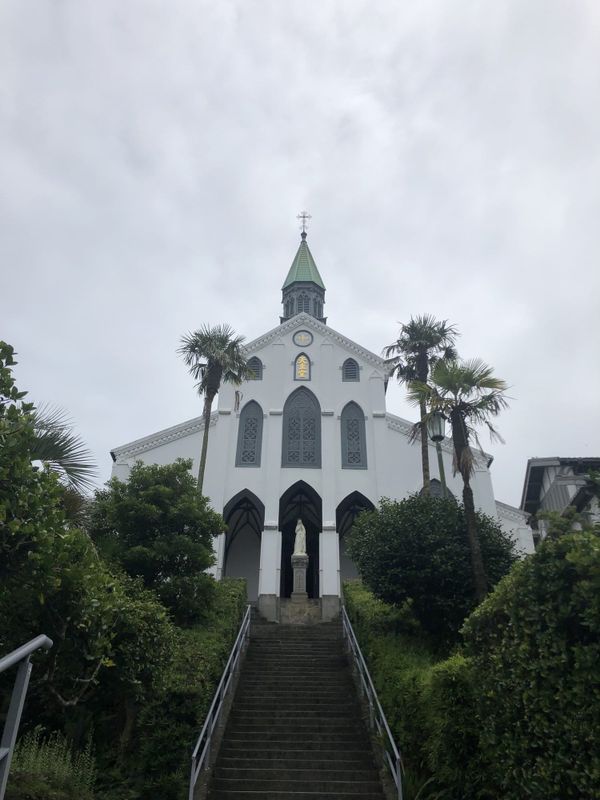
- Ouramachi — for Oura Cathedral and the Glover Garden area; change here for the hillside quarter
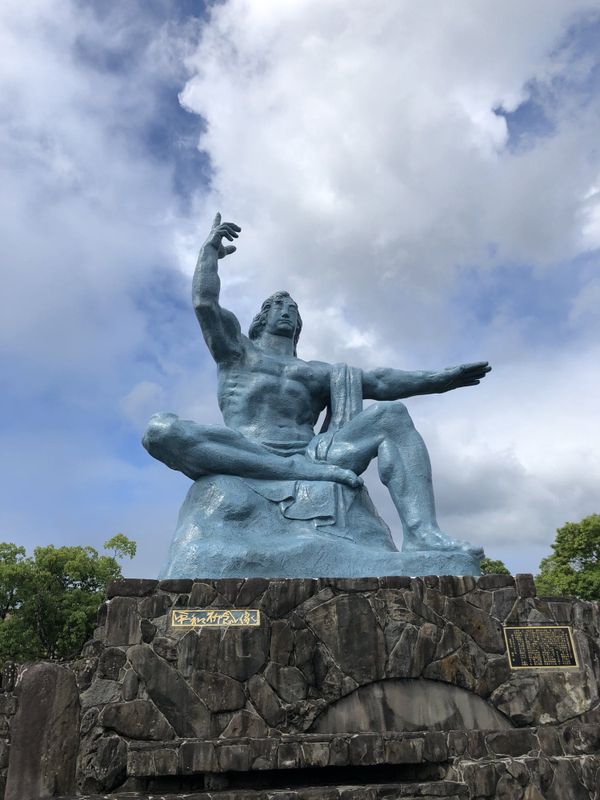
- Matsuyamamachi — for Peace Park and the Atomic Bomb Museum
The tram runs from approximately 06:00 to 23:00. Five routes cover the city; routes 1 and 3 both serve Nagasakieki-mae and run toward the Dejima and Shianbashi direction. Pick up a route map at the station tourist information desk — stops are announced in Japanese and English.
Where to sleep on arrival by travel mode
Your arrival mode often points to your best base for a first night:
- Arriving by shinkansen or airport bus: the Station Front area is the most logical base. You exit at Nagasaki Station, the major hotels are steps away, and the tram stop at Nagasakieki-mae puts every attraction within a few stops. The Nagasaki Marriott Hotel (opened 2024, station-connected, from ¥22,000/night; rates vary by season) and Hilton Nagasaki (opened 2021, 1-min from West Exit, from ¥18,000/night; rates vary by season) are the two flagship options here.
- Late arrivals after 21:00: the Dejima/Chinatown/Shianbashi quarter works well — restaurants and izakayas there stay open later than the tourist-side of the city, and a handful of business hotels are in walking distance of the Shianbashi tram stop.
For a full comparison of where to base yourself across all three of Nagasaki's main areas, see our guide to where to stay in Nagasaki.
Hotels on arrival: comparison by base
| Name | Base on arrival | Price range | Best for |
|---|---|---|---|
| Nagasaki Marriott Hotel (check rates) | Station Front — direct station connection | from ¥22,000/night | Shinkansen and airport bus arrivals; Marriott Bonvoy members |
| Hilton Nagasaki (check rates) | Station Front — 1-min from West Exit | from ¥18,000/night | Hilton Honors members; harbor and station views |
| Dormy Inn Premium Nagasaki Ekimae (check rates) | Station Front — 3-6 min walk to station | from ¥10,000/night for two | Solo travelers; onsen on the top floor; value pick |
| Richmond Hotel Nagasaki Shianbashi (check rates) | Chinatown / Shianbashi — 0.4 km from Dejima | from ¥7,000/night | Late-night arrivals; food-first travelers |
| Hotel Forza Nagasaki (check rates) | Chinatown / Shianbashi — 0.4 km from Dejima | from ¥8,000/night for two | Couples; central location for food and Dejima |
All rates vary by season. The station-area hotels fill fastest during Golden Week, Obon, and the Nagasaki Lantern Festival (late January/early February).
Practical constraints
- Last trains and buses: the final Relay Kamome from Hakata to Takeo-Onsen departs in the late evening; check the JR Kyushu timetable for the exact last service before you plan a late departure from Fukuoka. The airport limousine bus runs until the last arriving flight of the day.
- JR Pass and rail passes: the JR Kyushu Pass (Kyushu area) and the All-Kyushu version cover both the Relay Kamome and the Nishi-Kyushu Shinkansen Kamome, making the relay route free if you already hold a pass. Verify pass coverage at the time of purchase.
- Luggage: coin lockers are available at Nagasaki Station. If you plan a Gunkanjima cruise on your first morning, you can leave bags at the station and collect them after the tour.
- Tram IC cards: Suica, ICOCA, and other national IC cards work on the Nagasaki tram. This is the easiest payment method for multi-ride days.
Trip Essentials for Nagasaki
Things worth booking before you land, all in English:
- eSIM — Airalo's Japan eSIM: install it at home and data works as soon as you switch off airplane mode at Nagasaki Airport. Comparing providers? See our Japan eSIM guide.
- Tickets and day trips — Klook covers Gunkanjima cruises and Nagasaki city tours; booking ahead skips the ticket-window line.
FAQ
Is there a direct shinkansen from Hakata to Nagasaki?
No. As of 2026, the Nishi-Kyushu Shinkansen runs only between Takeo-Onsen and Nagasaki. From Hakata, you take the Limited Express Relay Kamome to Takeo-Onsen, then change platforms to the Kamome shinkansen. The total journey from Hakata is approximately 1 hour 32 minutes. The extension westward from Takeo-Onsen to connect to the main shinkansen network has not yet begun construction.
How long does the airport bus take from Nagasaki Airport to the city?
Approximately 55 minutes to Nagasaki Station. The bus continues to Shianbashi, adding another 10 to 15 minutes. Fares are around ¥1,000–¥1,200 one-way; buy tickets from the vending machine outside arrivals.
Can I use a JR Pass for the Nagasaki shinkansen?
The standard nationwide JR Pass covers the Relay Kamome (Limited Express leg) and the Nishi-Kyushu Shinkansen Kamome. The JR Kyushu Pass (all-Kyushu or northern Kyushu versions) also covers both legs. Verify inclusion at the time of purchase, as coverage rules can change.
What is the tram fare in Nagasaki?
¥150 per ride for adults, flat fare regardless of distance. A one-day unlimited pass is ¥600. IC cards (Suica, ICOCA, etc.) are accepted; IC card holders can transfer between lines within a window without paying an additional fare.
Where do I stay if I arrive by train vs. by plane?
Both the shinkansen and the airport limousine bus terminate at or near Nagasaki Station, so the Station Front area works for either mode. If you arrive late and want to be close to restaurants and nightlife, the Shianbashi quarter is a short tram ride or taxi from the station.
How do I get from Hakata to Nagasaki on a budget?
The highway bus (Fukuoka–Nagasaki) takes about 2 hours 30 minutes and costs significantly less than the shinkansen. It departs from Hakata Bus Terminal and drops you near Nagasaki Station. Check Nishitetsu and other operators for current fares and timetables. If you have a JR Pass, the relay shinkansen route costs nothing extra.
Information audit: Last fact-checked July 2026 · Prices checked July 2026 (all rates are “from” floors that vary by season) · How this guide was researched: hotel facilities, prices and access details are verified against official and primary sources; we have not personally stayed at every property listed. The author has traveled in this area personally; original photographs on this site are from those trips · How this site verifies information: About NipponStays.