Is Fukushima Safe to Visit? A Measured Answer
Is Fukushima safe to visit? A dose meter at Tomioka Station read 0.064 μSv/h in August 2022. NRA data shows 70% of the prefecture now at the national average.
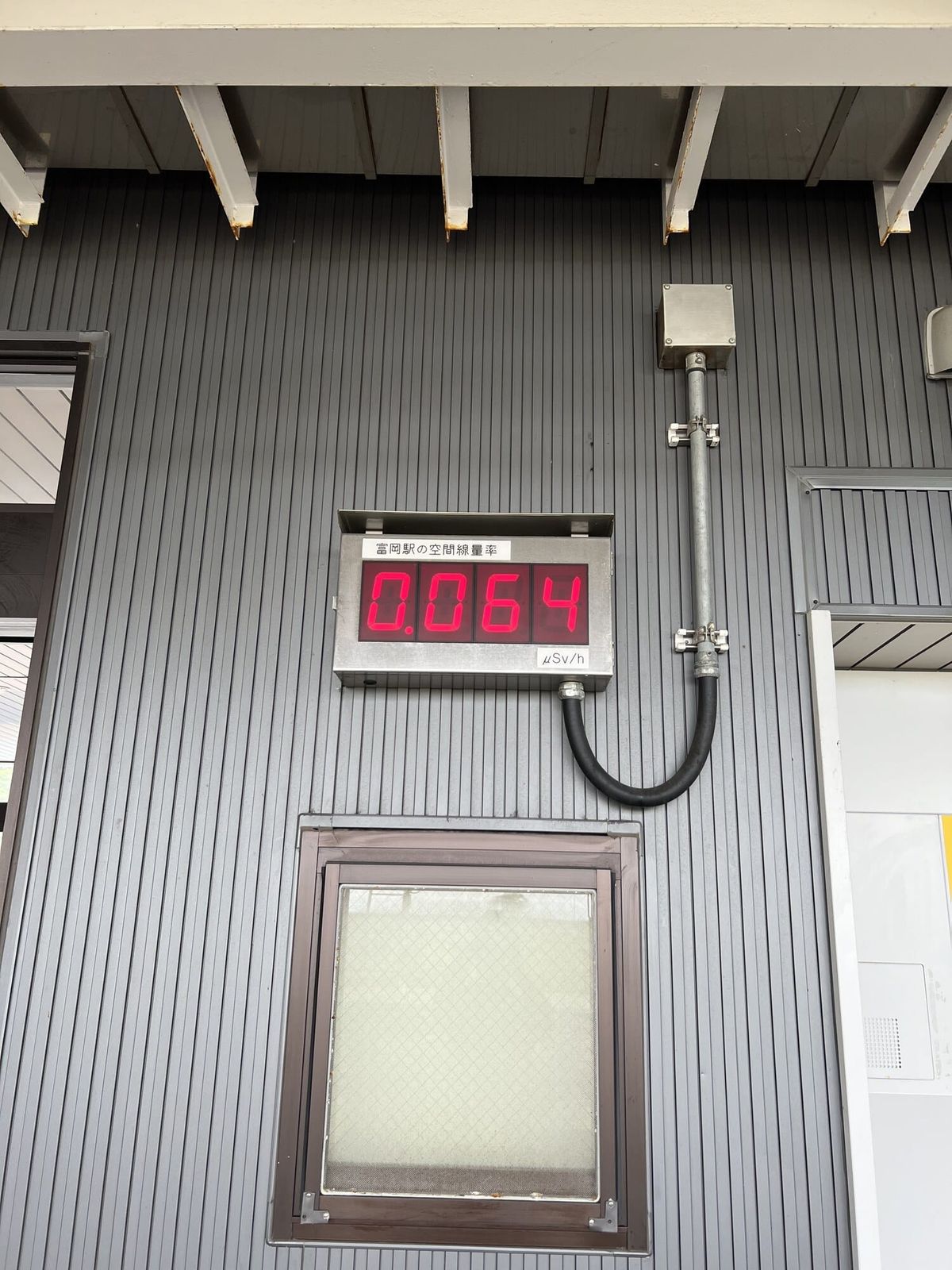
Is Fukushima safe to visit? For the areas open to visitors, yes. On 13 August 2022, the public dose meter mounted at Tomioka Station displayed 0.064 μSv/h — a reading I photographed directly off the screen. By December 2025, the Nuclear Regulation Authority reported that air dose rates across roughly 70% of Fukushima Prefecture had fallen to the national average of 0.1 μSv/h or below (NRA press release, June 2026). The one condition that changes this answer: a small number of difficult-to-return zones remain restricted and are not open to casual visitors. Everywhere else — including Tomioka town, the TEPCO Decommissioning Archive Center, and the road into Futaba — is accessible without permits.
You do not stay on the Hamadori coast itself — there is very little visitor lodging in Tomioka or Futaba. For where to base yourself and how to get there, see our guide to where to stay to visit Fukushima's coast.
What the number means: a dose comparison
The 0.064 μSv/h measured at Tomioka Station in August 2022 sits in the same range as ordinary background radiation in many cities. The table below uses only figures from official or institutional sources, each with its measurement date and source named. Every row is designed to stand on its own.
| Where | Dose rate | Measured / published | Source |
|---|---|---|---|
| Tomioka Station (public dose meter, photographed) | 0.064 μSv/h | 13 August 2022 (firsthand) | Public monitoring post, Tomioka Station |
| Fukushima Prefecture open areas (70% of prefecture) | ≤ 0.1 μSv/h | December 2025 survey, published June 2026 | Nuclear Regulation Authority (NRA) press release, June 2026 |
| Tokyo (average ambient dose rate, major cities survey) | 0.029–0.071 μSv/h | 2024 survey | Japan Ministry of the Environment (MOE), 2024 measurements of ambient dose rates in major cities |
| Tokyo–London flight, one way (cosmic radiation at cruising altitude) | approx. 0.1 mSv for the flight — the same dose would take about two months of continuous outdoor exposure at the Tomioka rate above | Order-of-magnitude figure; sources reviewed 2024 | Health Physics Society; IAEA aircrew radiation guidance |
Of the four reference points verified for this article, the 2022 Tomioka reading (0.064 μSv/h) falls within the same order of magnitude as Tokyo's ordinary ambient background. The downward trend since 2011 has been continuous; the NRA's June 2026 report confirms that the restricted zone with readings above 3.8 μSv/h — the level that triggered evacuation orders — has contracted from 608 km² in 2011 to 7.4 km² in 2025 (NRA, June 2026).
Two causes, not one: tsunami and evacuation order
Almost every English-language account of Fukushima conflates two separate events. Understanding the distinction changes what you actually see when you arrive.
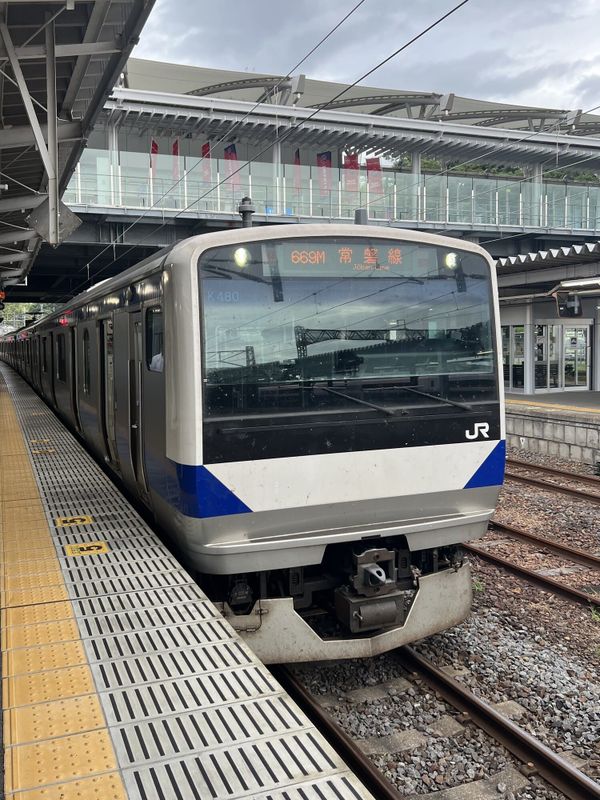
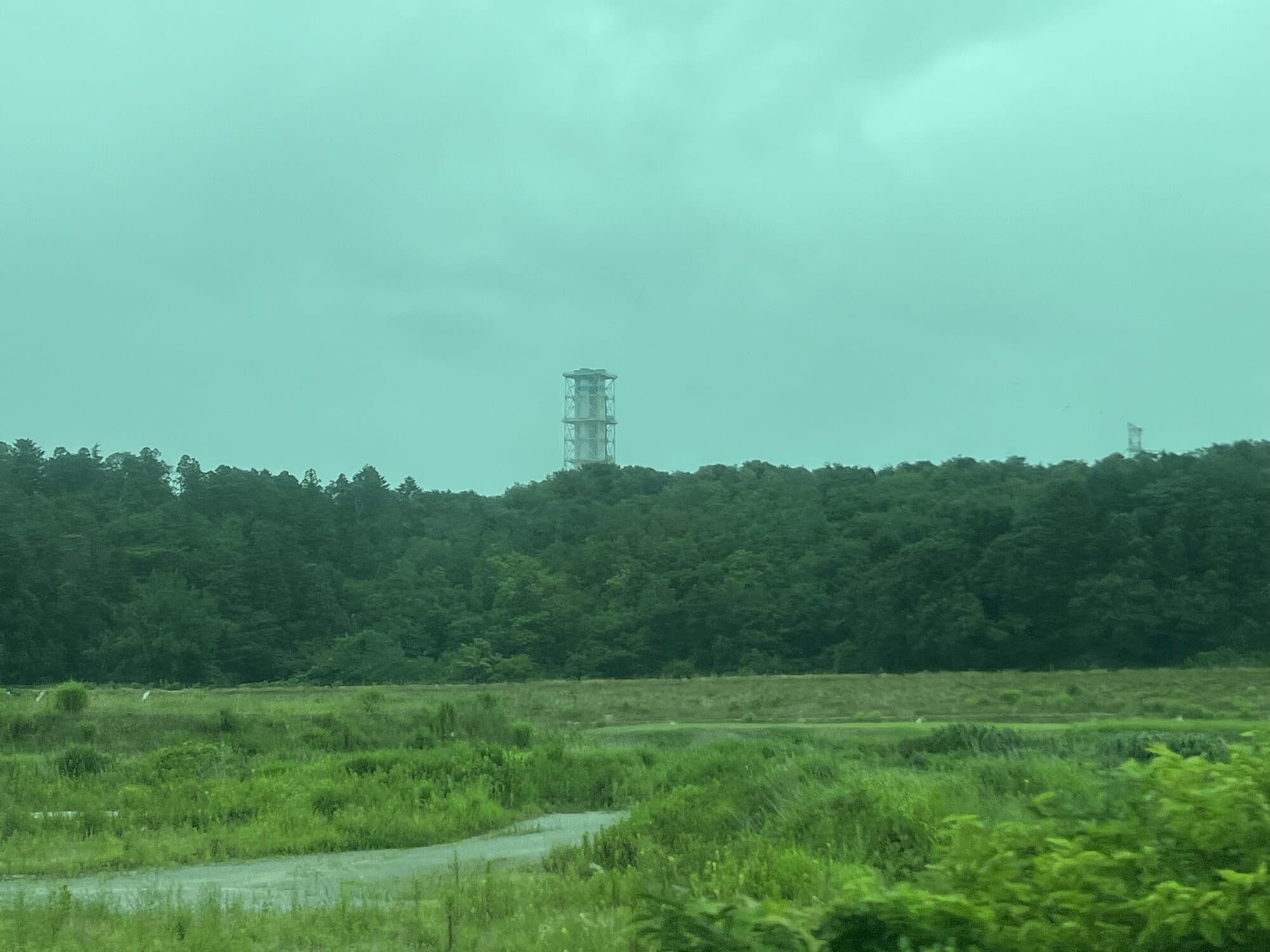
The buildings are gone because of the tsunami. On 11 March 2011, the wave that followed the Tōhoku earthquake reached the Hamadori coast and destroyed Tomioka Station along with much of the town around it. Rail service on the Jōban Line through Tomioka did not resume until 21 October 2017, when a rebuilt station opened on the same site.
The people are absent because of the evacuation order. Following the nuclear accident at Fukushima Daiichi, the Japanese government issued evacuation orders across a wide area of the coast. For the majority of Tomioka town, that order was lifted on 1 April 2017 (Citizens' Nuclear Information Center, citing the official government notice). Residents were legally permitted to return more than eight years ago. The slow pace of actual return reflects individual choices, economic realities, and in some cases the ongoing presence of restricted sub-zones — not a continuing blanket prohibition.
When you step off the train at Tomioka Station today, you see a new station building, new roads, and new commercial facilities. The town looks freshly built because almost nothing from before 2011 survived. Scattered in the pavement near the station, one pre-2011 manhole cover — cast with a cherry-blossom design, most likely a nod to the Yonomori cherry avenue the town is known for — remains where it was set before the disaster. It is not marked. It is simply there.
Where you can and cannot go
Current access divides into four practical categories. Because zone boundaries and rules change as decontamination proceeds, always check the current official status before travelling; the relevant pages are listed in the table below.
- Fully open: Tomioka town (most areas), Tomioka Station surroundings, the TEPCO Decommissioning Archive Center, Naraha town, Hirono town, and the rebuilt town centre of Futaba near the memorial museum.
- Open to vehicles only: National Route 6 runs straight through the difficult-to-return zone. Cars and motorcycles may drive through without a permit or checkpoint stop, but bicycles and pedestrians remain prohibited on those sections (Ministry of Economy, Trade and Industry, special transit rules, revised March 2020). If you are cycling the coast, you need a detour.
- Difficult-to-return zones (restricted): Parts of Futaba, Okuma, and adjacent areas immediately surrounding Fukushima Daiichi. As of late 2025, roughly 85% of Futaba's land area and significant portions of Okuma remain behind access restrictions. Entry to these zones requires permission and is not available to casual visitors (Japan Times, November 2025; Beyond Nuclear International, March 2025).
- Specified reconstruction and revitalisation bases: Some zones within formerly restricted areas have been partially reopened following decontamination. Overnight stays are not yet permitted in all of them; the conditions vary by municipality and change over time.
| Area or zone | Status (as of July 2026) | Access | Where to check current figures |
|---|---|---|---|
| Tomioka town (majority) | Evacuation order lifted 1 April 2017; open | No permit required; Jōban Line to Tomioka Station | Fukushima Prefecture portal: pref.fukushima.lg.jp/site/portal-english/ |
| Futaba town centre and memorial museum area | Partially open; reconstruction base designated | Accessible without permit for day visits to designated areas | Fukushima Prefecture portal above; Futaba town office website |
| Difficult-to-return zone (Futaba, Okuma cores) | Restricted; evacuation order in force | Entry requires government permission; not available to tourists | Reconstruction Agency: fukushima-updates.reconstruction.go.jp/en/ |
| All other Fukushima open areas | Normal; dose rates at or near national average (NRA, June 2026) | No restrictions | NRA monitoring data: radioactivity.nra.go.jp/en |
What you will actually see
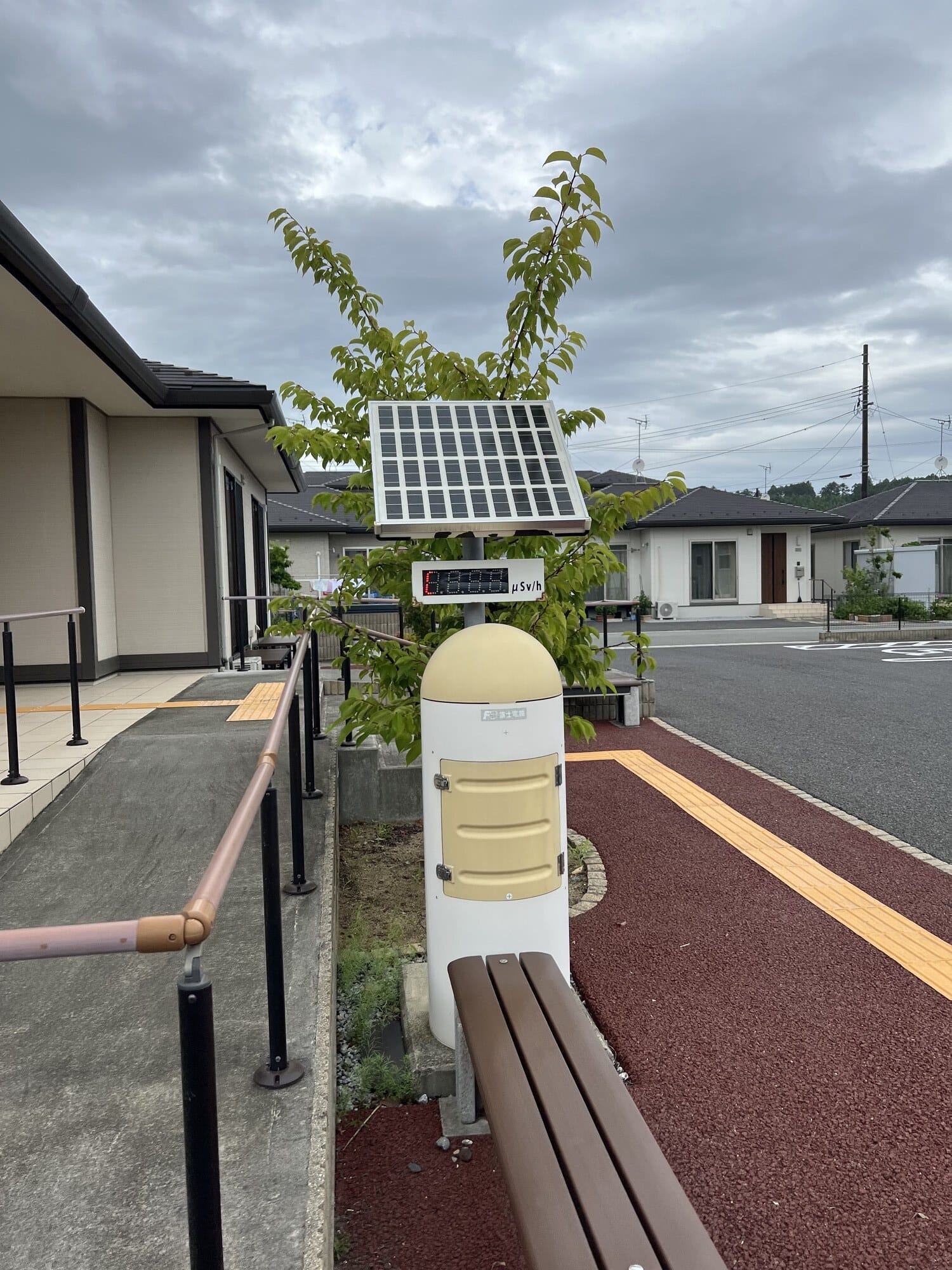
Walking from Tomioka Station toward the archive center, monitoring posts appear at regular intervals on ordinary streets — grey metal boxes on poles, with small digital displays showing the current reading. They are unremarkable in appearance, and you would not notice them unless you were looking for them. The one most visitors do see is the display at Tomioka Station itself, mounted at eye level where passengers walk past it.
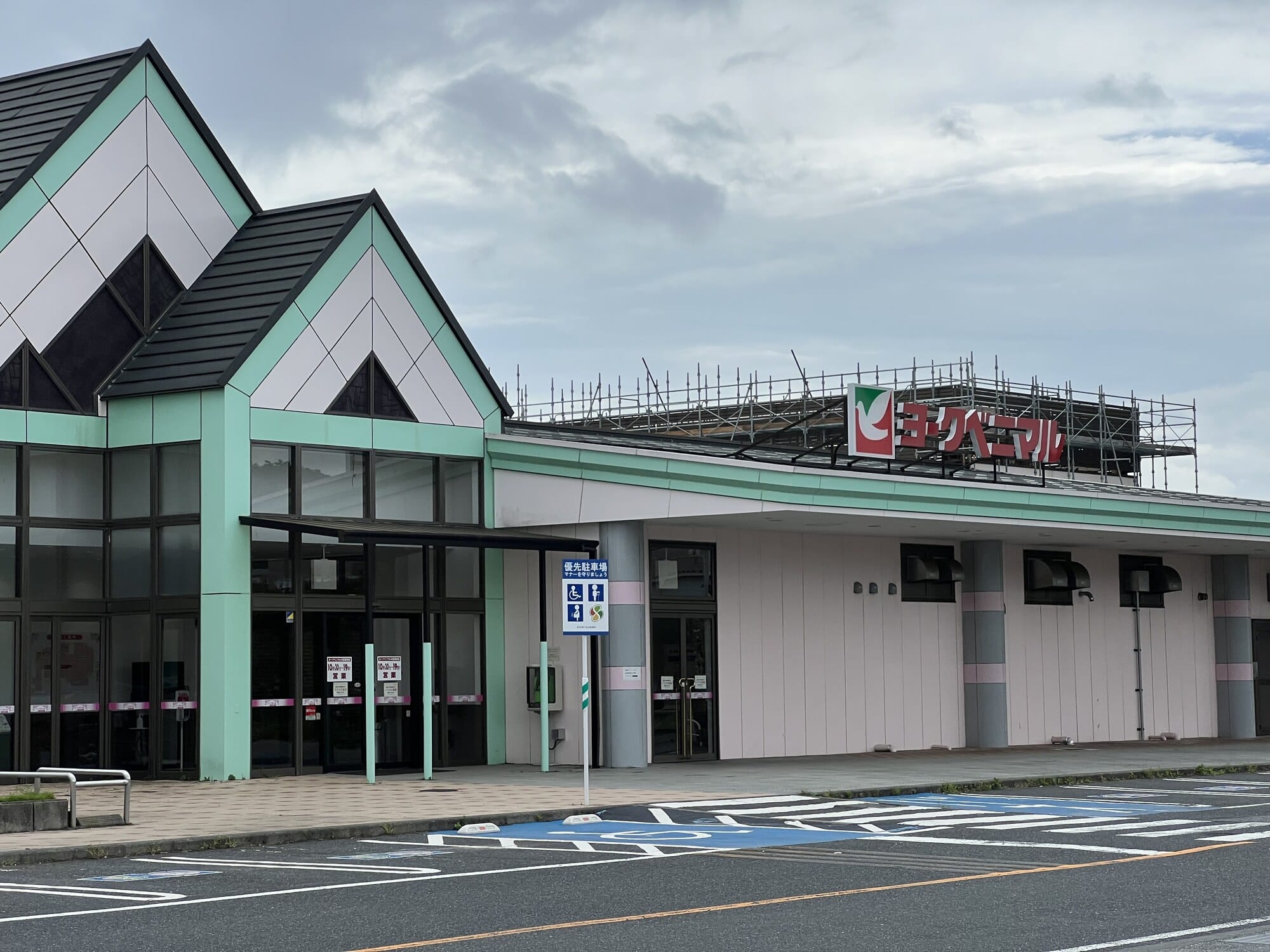
The York Benimaru supermarket in Sakura Mall Tomioka opened on 30 March 2017 — two days before the evacuation order for most of Tomioka was lifted on 1 April 2017. The sequence matters: a town cannot sustain returning residents without a functioning food supply, so the store opened before people were officially permitted to return.
Is it disrespectful to visit?
Fukushima Prefecture runs an official programme called Hope Tourism, which organises and promotes visits to the affected areas for educational purposes. The programme has been active since fiscal year 2016 and welcomes both domestic and international visitors, including school groups and corporate delegations (Japan Gov / JapanGov.jp, 2023; hopetourism.jp). Coming to understand what happened — and what is being done — is described by the prefecture itself as a constructive reason to visit, not a reason to stay away.
Practical information for visitors
For open areas, there are no special precautions that differ from ordinary travel in Japan. The following apply as standard common sense, not as radiation-specific rules:
- Do not enter areas marked as restricted or behind barriers; these markings exist and are enforced.
- The Jōban Line runs infrequently — check the timetable before you go. Taxis are not reliably waiting at Tomioka Station.
- The TEPCO Decommissioning Archive Center is a 15-min walk or 5-min taxi from Tomioka Station. For full details on opening hours, the free English-language guided tour, and timed-slot booking, see our guide to Fukushima's two nuclear disaster museums.
- A rental car substantially increases what you can see in a single day; public transport on the Hamadori coast is limited.
For base options (Mito, Iwaki, or J-Village) and the full route from Tokyo via the Jōban Line, see the where to stay guide.
FAQ: visiting Fukushima safely
Is the radiation in Fukushima dangerous for a short visit?
For the open areas of Fukushima, the air dose rate measured at Tomioka Station on 13 August 2022 was 0.064 μSv/h. The Nuclear Regulation Authority reported in June 2026 that about 70% of Fukushima Prefecture had fallen to the national average of 0.1 μSv/h or below by December 2025. A single long-haul flight (Tokyo to London, one way) exposes a passenger to approximately 0.1 mSv from cosmic radiation. At the rate measured at Tomioka Station, accumulating that same dose would take roughly two months of standing outdoors, day and night.
Can tourists enter the exclusion zone?
The original 20 km evacuation zone around Fukushima Daiichi no longer exists as a single entity. Most surrounding towns have had their evacuation orders fully lifted. What remains is a smaller set of difficult-to-return zones — mainly the core areas of Futaba and Okuma immediately adjacent to the plant — where entry still requires government permission and overnight stays are not permitted. Visitors cannot enter these restricted portions. All other areas, including Tomioka town and the TEPCO Decommissioning Archive Center, are open without permits.
Is the tsunami damage still visible?
Not in the way most visitors expect. Tomioka Station, which was destroyed by the 2011 tsunami, was replaced by a new station building that reopened in October 2017. Much of the town around it was similarly rebuilt or cleared. The rebuilt infrastructure looks new because the previous structures did not survive. Isolated pre-2011 remnants — such as a single manhole cover cast with a cherry-blossom design — remain visible if you look for them.
Do I need to take dosimeters or protective clothing?
No official guidance from Fukushima Prefecture, the Reconstruction Agency, or the NRA recommends that ordinary visitors to the open areas carry personal dosimeters or take protective measures beyond standard hygiene. Dose rates in open visitor areas are within the range of normal background radiation found in major cities. If you want to see figures for yourself, the public monitoring posts along the streets display live readings, and the NRA publishes real-time data from monitoring stations across the prefecture at radioactivity.nra.go.jp/en.