Ginzan Onsen or Nyuto Onsen Which Is Better in Winter?
Ginzan Onsen or Nyuto Onsen in winter: gas-lit streets and a 17:00 entry ticket vs. cloudy baths and a snowbound bus ride, checked September 2026.

Quick Answer: If you are deciding between Ginzan Onsen or Nyuto Onsen which is better in winter, the choice comes down to what the trip is actually for. Want the postcard shot — a row of wooden ryokan lit by gas-style street lamps under snow, reachable by a fast train plus a short bus? Book a night at Notoya Ryokan, one of Ginzan's riverside inns, and plan the visit around its 17:00 entry ticket. Want cloudy mineral baths, no ticketed entry system, and a genuinely remote feel instead? Book Taenoyu in Nyuto Onsen. The condition that flips the answer: Ginzan is the only one of the two that works as a same-day trip from a Yamagata or Sendai base; Nyuto's bus schedule effectively commits you to at least one night.
Why you usually can't do both in one trip
Ginzan Onsen sits in Yamagata Prefecture and Nyuto Onsen sits in Akita Prefecture, and neither is on the way to the other. Both are end-of-the-line destinations — a shinkansen station followed by a local bus into the mountains — with no direct train or bus between them; connecting the two means backtracking toward a shinkansen line first. From Tokyo, the fastest Yamagata Shinkansen (Tsubasa) reaches Oishida Station, the gateway to Ginzan, in about 2 hours 50 minutes, and the fastest Akita Shinkansen (Komachi) reaches Tazawako Station, the gateway to Nyuto, in almost exactly the same time (checked September 2026). Treat them as two separate legs of a Tohoku itinerary rather than one loop.
| Ginzan Onsen (Yamagata) | Nyuto Onsen / Lake Tazawa (Akita) | |
|---|---|---|
| What you come for | A single wooden ryokan row lit by gas-style lamps at night | Cloudy mineral baths spread across seven inns in a national park forest |
| Getting there from Tokyo | Yamagata Shinkansen to Oishida (about 2h50), then a seasonal bus (about 30-40 min) | Akita Shinkansen to Tazawako (about 2h50), then a local bus (about 47-48 min to the Nyuto terminus) |
| Winter rules | Ticketed entry 17:00-20:00, closed to day-trippers 20:00-9:00 (2025-26 season; 2026-27 dates not yet announced) | No equivalent permit system; friction comes from snow-narrowed roads and a famously hard-to-book inn |
| Inns bookable through this guide | 11 | 13 (5 in Nyuto itself, 8 around Lake Tazawa) |
| Same-day trip possible? | Yes, from a Yamagata or Sendai base | Not really — the bus schedule and distance push most visitors to an overnight |
Ginzan: the street and the 17:00 rule
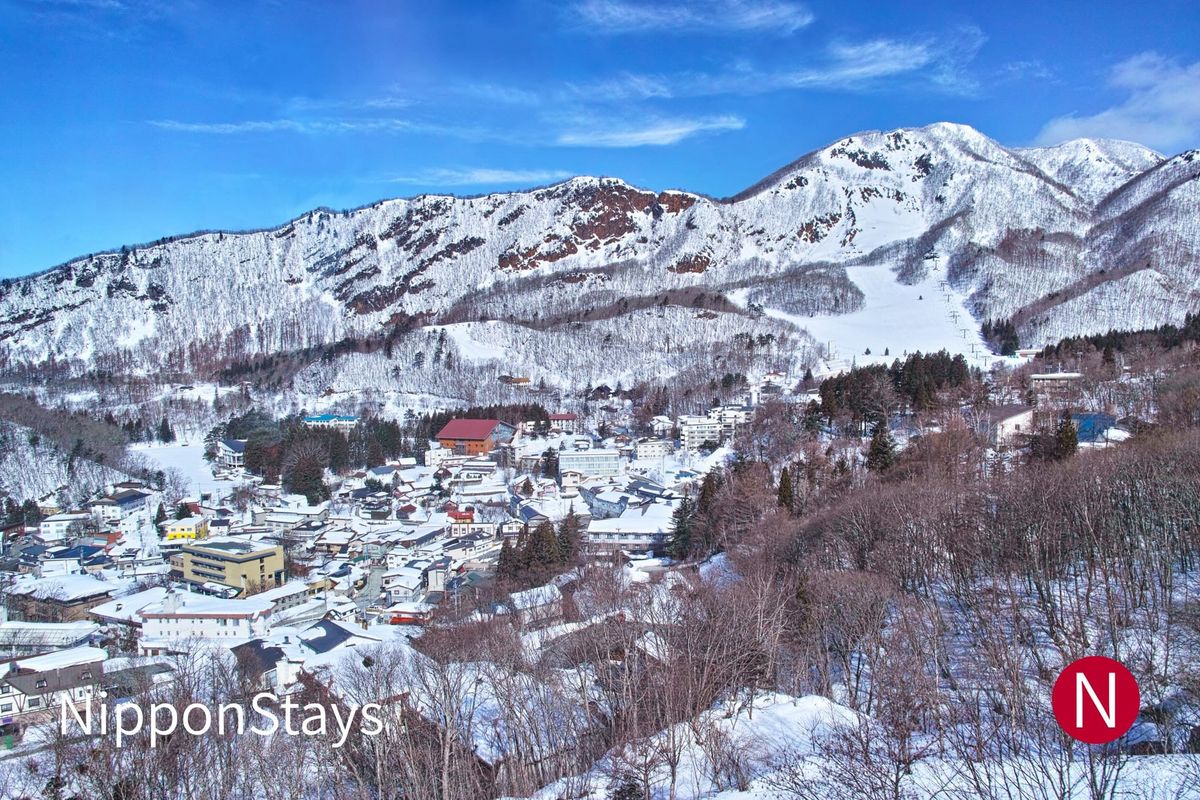
Ginzan Onsen is one street: a row of wooden, multi-story ryokan built up along the Ginzan River in the early 20th century, lit each evening by gas-style street lamps that give the town its postcard look. In winter, that look comes with a cost. For the 2025-26 season (December 20, 2025 through March 1, 2026), the town ran a three-band restriction: from 9:00 to 16:00, day-trippers can enter freely but are asked to use the park-and-ride system, leaving cars at the Taisho-Roman-kan lot and switching to a paid shuttle; from 17:00 to 20:00, entry for day-trippers is capped at roughly 100 people per hour and requires an advance ticket; and from 20:00 to 9:00 the next morning, only residents, commuters, workers, and pre-registered guests may enter. Diners with a restaurant reservation and guests with a lodging reservation are exempt from the ticket system — their names are registered by the business, and overnight guests can usually drive straight to their ryokan's own parking rather than using the shuttle. Ginzan Onsen's official site has not yet published 2026-27 season dates as of this writing (checked September 2026); treat the times above as last year's pattern, not a confirmed schedule, until the town posts new ones.
Notoya Ryokan, founded in 1892, is one of the inns on the river-facing side of that street, with a cave bath and a rooftop open-air bath both currently offered as reservable private baths, and 15 guest rooms — all with an en-suite toilet but no in-room bath (per the ryokan's own booking listing, checked September 2026). For the hour-by-hour breakdown of the day-trip and overnight versions, see our Ginzan Onsen day-trip-or-stay guide. For how Notoya compares to Ginzan's other ten bookable inns, see where to stay in Ginzan Onsen in winter.
Nyuto: the water and the Tsurunoyu problem
Nyuto Onsen is not one street but seven separate inns strung along a single mountain road inside Towada-Hachimantai National Park, each drawing from its own spring, so the water's mineral content — and its color — changes from one inn to the next. It's one of Japan's classic hikyou, or secluded hot springs, historically reached on foot before the road and bus service existed. The name most travelers already know is Tsurunoyu, whose centuries-old thatched buildings and mixed-gender outdoor bath show up in nearly every "hidden Japan" list — but Tsurunoyu takes phone reservations only and fills up well ahead of winter weekends, which is exactly the problem our Tsurunoyu-alternatives guide is built around.
Taenoyu, the inn named above, sits on the river a short walk from Tsurunoyu and is built around two riverside open-air baths — one framed by a small waterfall — plus a riverside suite the inn calls its largest modern Japanese-style room, and a dining room known for a mushroom-soup course with free refills (per Taenoyu's own site, checked September 2026). Unlike Ginzan, there's no ticketed entry system here: the friction is booking availability and winter road conditions, not a permit. For how to reach Nyuto without a car — including which bus stop the Tsurunoyu shuttle actually uses — see our no-car guide to Nyuto Onsen in winter.
With kids: which one is easier
Both destinations work with children, but the practical difference is how much you're committing to before you've seen the place. Ginzan's street is flat, plowed, and short enough to walk end to end in a few minutes, and because dining and lodging reservation holders are exempt from the 17:00 ticket cap, a family eating dinner in town isn't stuck outside the line — if a child has a meltdown, the day-trip version means you haven't lost an overnight booking by leaving early. Nyuto works the other way: the roughly 48-minute bus ride from Tazawako Station and a limited return schedule mean most visitors are effectively locked into at least one night, ryokan dinners run on a fixed serving time, and some of the area's baths are mixed-gender or keep separate hours for men and women — worth checking per inn before booking with older kids. Room capacity for a family of four or more varies inn by inn; the confirmed breakdown is in the Ginzan stay guide and the Nyuto stay guide, not repeated here.
Adding Sukayu from Aomori instead
If the trip is already stretching north into Aomori, Sukayu Onsen is a third option worth weighing against both of these — a single huge mixed-gender bathhouse (the Sennin-buro) reachable from Aomori Station by a winter bus that keeps running all season, near one of Japan's heaviest recorded snowfalls and the Hakkoda Ropeway's snow-monster views. It's a different kind of trip from either Ginzan or Nyuto — one building rather than a street or a cluster of inns — and our Sukayu day-trip-or-stay guide breaks down whether to sleep there or day-trip from the city. It's also not the same thing as Yamagata's other big winter draw, the ice-covered "snow monster" trees around Mount Zao, which is a separate phenomenon in a separate part of the prefecture — see where to stay for the Zao snow monsters if that's the trip you're actually planning.
Of the properties bookable through this guide's Trip.com directory, Ginzan Onsen has 11 inns online and the Nyuto/Lake Tazawa area has 13 — 5 inns in Nyuto itself and 8 properties around Lake Tazawa (checked September 2026). That gap is one reason Nyuto trips lean on the lake-district inns as overflow when the seven mountain-road inns are full, something covered in more depth in the Nyuto stay guide above. For how either of these fits into a broader Tohoku winter itinerary — including whether December or February suits your trip better — see our December-vs-February winter trip guide, and for onsen-ryokan basics that apply everywhere in Japan, not just these two towns, see our onsen ryokan guide.
| If you want this | Choose this |
|---|---|
| Photos of a lit-up street at night | Ginzan Onsen — stay overnight to see the 17:00-20:00 lighting |
| The area with cloudy "secret bath" water | Nyuto Onsen — book early, or use the Lake Tazawa side as overflow |
| No car, minimal planning | Either works — both are a shinkansen-plus-local-bus combination |
| To skip a ticketed entry system entirely | Nyuto Onsen — Ginzan's evening ticket cap doesn't apply here |
| One night only, easy to shorten if plans change | Ginzan Onsen — the day-trip version is a real fallback |
| Traveling Lunar New Year week (February 6, 2027) | Either, but book as early as possible — both towns run a limited number of rooms into their busiest week |
If your dates fall in December, December snow at Japan's onsen towns checks each town against the nearest Japan Meteorological Agency normals: snow on the ground by Christmas is close to a sure thing at Ginzan, while Nyuto is a close call on paper but sits higher and colder than the station used to measure it.
Trip Essentials for Ginzan Onsen
Things worth booking before you land, all in English:
- eSIM — Airalo's Japan eSIM: install it at home and data works as soon as you switch off airplane mode at Sendai or Yamagata Airport.
- Tickets and day trips — Klook covers round-trip tours to Ginzan Onsen from Sendai; booking ahead skips the ticket-window line.
FAQ: Ginzan or Nyuto in winter
Can I visit both Ginzan Onsen and Nyuto Onsen on the same trip?
Yes, but not as a single day out. Ginzan sits about 2 hours 50 minutes from Tokyo via Oishida Station and Nyuto about the same via Tazawako Station, and there's no direct route between the two — connecting them means routing back through a shinkansen line rather than crossing the mountains directly. Most travelers treat them as separate legs of a longer Tohoku trip rather than a loop.
Is Ginzan Onsen open to day-trippers by car in winter?
Yes, with conditions. In the 2025-26 season (December 20, 2025 to March 1, 2026), day-trippers could enter freely from 9:00 to 16:00 using a park-and-ride shuttle, needed an advance ticket for the roughly 100-people-per-hour cap from 17:00 to 20:00, and were barred entirely from 20:00 to 9:00 unless they held a dining or lodging reservation. 2026-27 season dates had not been published as of September 2026 — check Ginzan Onsen's official site before booking.
Do I need a car for Nyuto Onsen in winter?
No. The route is Akita Shinkansen to Tazawako Station (about 2 hours 50 minutes from Tokyo), then a local bus that takes roughly 47 to 48 minutes to reach the Nyuto Onsen terminus. There's no permit system like Ginzan's; the main planning risk is a limited return-bus schedule and winter road conditions, not a ticket cap.
Which is better for a family with kids?
Ginzan is the easier fallback: its street is flat and short, dining and lodging reservation holders skip the 17:00 ticket line, and the day-trip option means a rough afternoon doesn't cost you a room. Nyuto's roughly 48-minute bus ride effectively commits a family to at least one night, with a fixed ryokan dinner schedule and some mixed-gender or hours-restricted baths to check per inn before booking with older children.