When Is Drift Ice Visible in Abashiri: 40 Seasons of JMA Dates
JMA's 40-season Abashiri record: drift ice is usually first sighted by Jan 31 and reaches shore by early February, but some seasons run three weeks late.

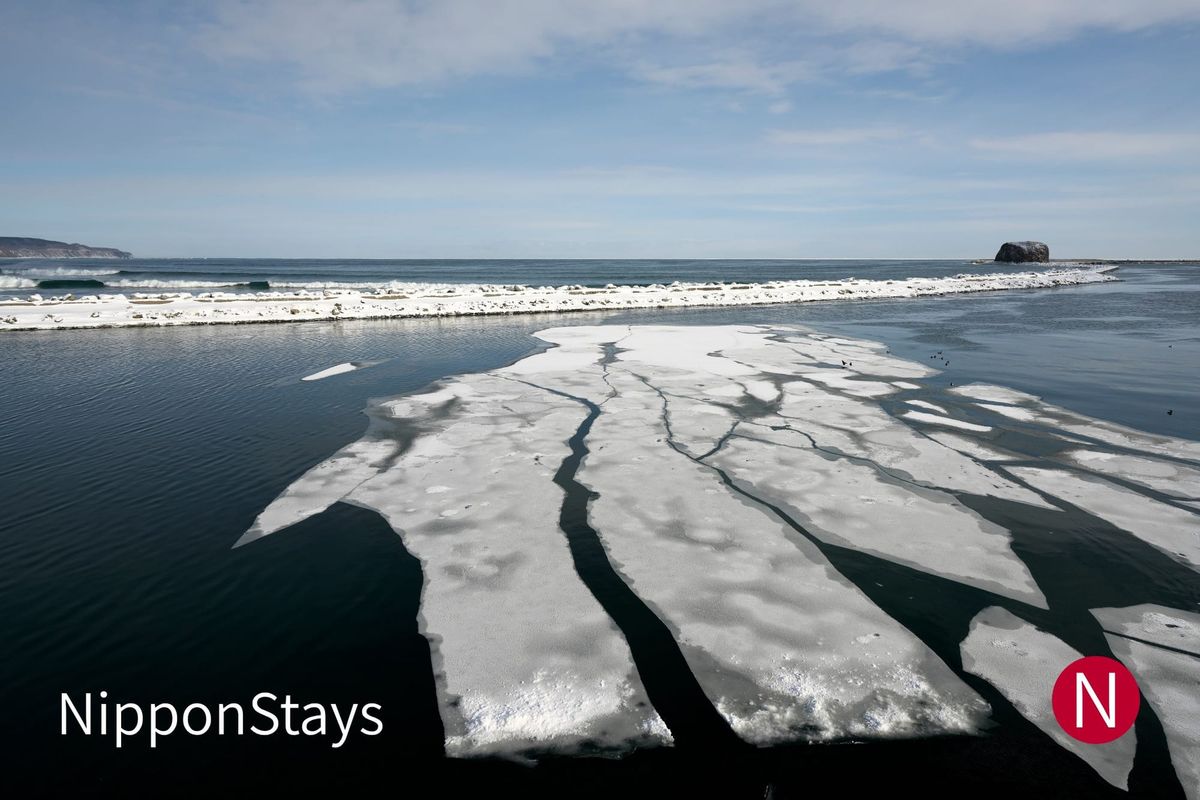
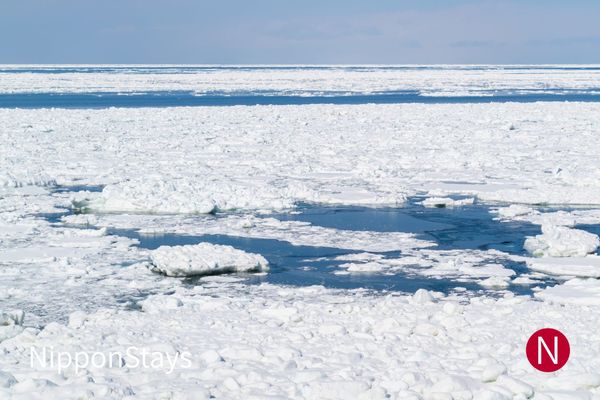
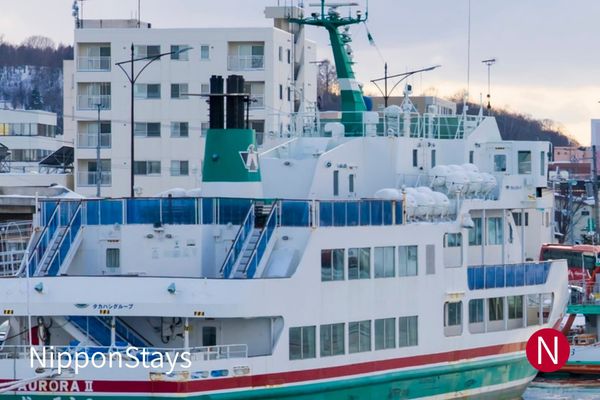
When is drift ice visible in Abashiri? JMA's own 40-season record (1986-2025) gives a specific answer: offshore, ice has usually already been sighted by January 31 (33 of 40 years, 82.5%) and almost always by February 10 (39 of 40, 97.5%). But "sighted offshore" isn't the same as "piled on the beach" — ice typically doesn't reach the shore itself until the first week of February on average, so early-to-mid February is the safer single window if you want ice visible from land rather than only from a cruise boat. The one condition that changes this: some seasons run two to three weeks late, and 2025 itself didn't see its first ice until February 15, the latest first-sighting date in the 40-year record. If you're timing a stay around this window, Hotel Route-Inn Abashiri Ekimae, a 1-minute walk from Abashiri Station, is one of the first hotels in town to fill for early February.
What the JMA dates actually mean
Abashiri's weather station has tracked drift ice under a fixed set of definitions since 1946, and the terms don't map onto each other the way casual write-ups imply. JMA's own glossary separates four distinct events: the first date of drift ice in sight (ryuhyo-shonichi) — the first day ice that drifted in from beyond the horizon became visible from the observation point; the first date drift ice came ashore (ryuhyo-sekigan-shonichi) — the first day ice reached the coast, or fused with shorefast ice, closing the coastal channel to boats; the last date of drift ice in sight — the final day ice was seen at all that season; and sea-opens (umiake) — the first day total ice cover dropped to half or less and a channel reopened for navigation. A season's label follows JMA's own convention, not the calendar: the season marked "2025" runs from December 2024 through May 2025, so a "December 27" sighting recorded under the 2002 season actually happened in December 2001.
Two of these four measurements stopped at Abashiri after the 2021 season — the last-sighted date and sea-opens simply aren't recorded for 2022 onward. And starting with the winter of 2025/26, JMA ended human visual observation of the other two (first sighting and came-ashore) as well, at Abashiri, Wakkanai and Kushiro alike, shifting to satellite-based ice maps and a new Digital AMeDAS app instead (announced December 9, 2025). The 2025 row in the table further down is the last one built from a person watching the shoreline.
How the season unfolds, week by week
The clearest way to read 40 years of dates is cumulatively: how many of those seasons had already reached a given point by a given date. The table below uses the came-ashore date rather than the first-sighting date, because that's the moment ice actually closes off the coast instead of just being visible offshore — the point most visitors mean by "the ice is here." Of the 40 seasons from 1986 through 2025, one (1989) never recorded a came-ashore date at all; ice stayed offshore the whole winter that year, and it's counted honestly below rather than dropped from the total.
| Period | Seasons ice had reached shore by then (of 40) | Probability |
|---|---|---|
| By Jan 31 (late January) | 18 of 40 | 45.0% |
| By Feb 10 (early February) | 28 of 40 | 70.0% |
| By Feb 20 (mid-February) | 37 of 40 | 92.5% |
| By Feb 28 (late February) | 39 of 40 | 97.5% |
| By Mar 10 (early March) | 39 of 40 | 97.5% |
| By Mar 20 (mid-March) | 39 of 40 | 97.5% |
Probability climbs fast through January and plateaus around February 20 — after that, waiting longer doesn't meaningfully raise the odds, because the years that were going to see ice ashore already have by then, and the one year that never did (1989) never will. Our booking-timeline guide turns this same 40-year pattern into a calendar for 2027 sailings and hotel deadlines specifically.
The 40-year normal vs. the last ten seasons
Averaged across all 40 seasons (1986-2025), the mean first-sighting date is January 22 and the mean came-ashore date is February 3. Narrow that to just the last ten seasons (2016-2025) and both dates drift later: the mean first sighting moves to January 28 (six days later) and the mean came-ashore date moves to February 6 (three days later). That's a description of the record as JMA published it, not a claim about why — the agency's public data doesn't attribute a cause, and this article doesn't either.
The ice period itself — first sighting to last sighting — averaged 77 days across the seasons Abashiri still tracked it in full (1986-2021, n=36), ranging from a 43-day season (1991 and 2009 tied) to a 110-day one (1988).
How to read a bad year
1989 is the outlier worth understanding, because it shows the shape a genuinely bad season takes rather than just a late one. Ice was sighted offshore on February 2 that year — already later than most seasons — and the last sighting came April 3, but the came-ashore and sea-opens dates both read "----" in JMA's own file: the coast never closed off at all that winter. A cruise could still have found ice offshore in a season like that; a visitor hoping to walk onto ice from Abashiri's own shore could not. That's the practical distinction the week-by-week table above is built around, and it's part of why choosing a cruise over a shore walk is the more resilient plan in a season that turns out to run short or offshore-only.
The number to remember
In 33 of the last 40 seasons (1986-2025), Abashiri's drift ice had already been sighted offshore by January 31; in 39 of 40, it had by February 10 (JMA coastal sea-ice statistics, data retrieved November 2026). Only one season in that 40-year record — 1989 — never saw ice reach the shore at all.
The last 15 seasons, date by date
For the seasons where JMA still recorded every stage, here's what the raw dates looked like. The last-sighted column is blank for 2022 onward — not because the ice didn't leave, but because Abashiri's station stopped recording that particular date after the 2021 season.
| Season | First sighted offshore | Reached the shore | Last sighted offshore |
|---|---|---|---|
| 2011 | Jan 19 | Jan 29 | Mar 12 |
| 2012 | Jan 17 | Feb 17 | Apr 16 |
| 2013 | Jan 12 | Jan 17 | Apr 2 |
| 2014 | Jan 21 | Feb 9 | Apr 30 |
| 2015 | Jan 12 | Jan 19 | Mar 8 |
| 2016 | Jan 28 | Feb 22 | Mar 18 |
| 2017 | Jan 31 | Feb 2 | Apr 24 |
| 2018 | Jan 28 | Feb 2 | Mar 31 |
| 2019 | Jan 13 | Jan 29 | Apr 14 |
| 2020 | Feb 9 | Feb 11 | Apr 3 |
| 2021 | Jan 17 | Jan 31 | Mar 28 |
| 2022 | Jan 24 | Feb 3 | not recorded after 2021 |
| 2023 | Feb 2 | Feb 10 | not recorded after 2021 |
| 2024 | Jan 19 | Jan 22 | not recorded after 2021 |
| 2025 | Feb 15 | Feb 17 | not recorded after 2021 |
Source: JMA's downloadable Abashiri station file (statistical period 1946-2025; data retrieved November 2026). If you're building a trip around this window rather than just around the data, our Abashiri lodging guide covers which of the town's few hotels are close enough to walk to the ice, and our December-vs-February comparison covers how a drift-ice trip trades off against an earlier, quieter winter visit.
Trip Essentials for Eastern Hokkaido
Things worth booking before you land, all in English:
- eSIM — Airalo's Japan eSIM: install it at home and data works as soon as you switch off airplane mode at Memanbetsu or Kushiro Airport.
- Tickets and day trips — Klook covers Abashiri's drift-ice icebreaker cruises; booking ahead skips the ticket-window line.
FAQ: Drift Ice Timing in Abashiri
When exactly is drift ice usually first visible near Abashiri?
Averaged across the last 40 tracked seasons (1986-2025), JMA's Abashiri station recorded its first offshore sighting on January 22, and in 33 of those 40 years the first sighting had already happened by January 31. The earliest on record was December 27 (2002); the latest was February 15 (2025).
What's the difference between drift ice being "visible" and being "on the shore"?
JMA tracks them as two separate events. The first-sighting date just means ice was seen from the observation point, often still well offshore and reachable only by cruise boat. The came-ashore date, averaging February 3 over the same 40 seasons, is when ice actually reaches the coast and closes the water off to boat traffic — the point most visitors mean when they say "the ice is in."
Will JMA announce this season's first day of drift ice for Abashiri?
Not the way it used to. JMA ended visual observation-based announcements for Abashiri, Wakkanai and Kushiro starting with the winter of 2025/26, a change it announced on December 9, 2025. Real-time ice status now comes from satellite-based sea-ice maps and JMA's Digital AMeDAS app rather than a weather-station press release.
Is there a year when drift ice didn't show up at all near Abashiri?
Not entirely absent, but 1989 came close. Ice was sighted offshore on February 2 that season, yet it never reached the shore, and JMA's own record marks both the came-ashore and sea-opens dates as unobserved. Out of 40 seasons from 1986 to 2025, that's the only one where the coast itself stayed ice-free all winter.