Brand Snow Crab Japan: Echizen vs Kano vs Matsuba Tags
Echizen-gani, Kano-gani, Matsuba-gani and Taiza-gani are the same brand snow crab in Japan. What each tag actually certifies, and what it doesn't.


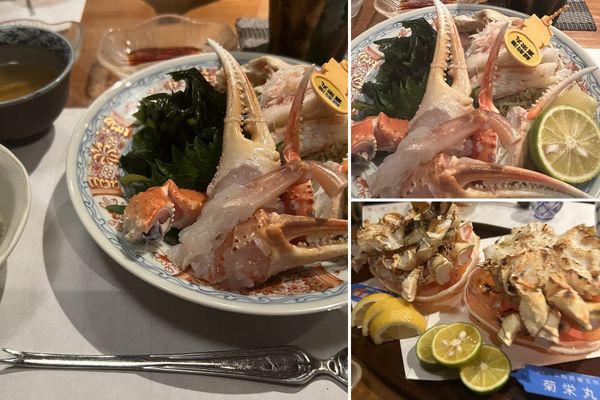
Search for brand snow crab Japan and you will find four names — Echizen-gani, Kano-gani, Matsuba-gani, and Taiza-gani — for what is, underneath the branding, a single species: Chionoecetes opilio, the snow crab that Japanese seafood buyers call honzuwai to separate it from the cheaper, different-species beni-zuwai. What changes between the four names is the port where the crab is landed and the tag clipped to it there: Fukui's boats sell Echizen-gani under a yellow tag confirmed by the prefecture itself, Ishikawa's Kano-gani is described as carrying a blue tag by the fishing cooperative's own account, and Tottori and Kyoto publish no tag colour at all for their Matsuba-gani and Taiza-gani — Taiza-gani is simply the name for a Matsuba crab landed at one port, Taiza, in Kyoto. None of that makes one brand better than another. The tag certifies where a crab came ashore, not how it tastes, and taste varies by individual crab and handling far more than by port.
Are Echizen-Gani, Kano-Gani, and Matsuba-Gani Actually the Same Crab?
Yes: Echizen-gani, Kano-gani, and Matsuba-gani are all Chionoecetes opilio, the male snow crab that lives on the muddy floor of the Sea of Japan, and Taiza-gani is not a fifth species but a Matsuba crab landed at one named port. The regional names predate any of the current branding programs — Echizen and Matsuba are both old place-based terms for the same crab, used on opposite sides of the Sea of Japan coastline long before tagging existed.
The crab worth watching out for is a different one: beni-zuwai, or red snow crab, is a related but distinct species (Chionoecetes japonicus) usually caught in deeper water and sold at a noticeably lower price. It does not carry an Echizen, Kano, Matsuba, or Taiza tag, because it is not the crab those tags are certifying.
Why Do Four Ports Sell the Same Crab Under Four Names?
Each name traces back to the fishing port and cooperative that lands the crab, not to any difference in the animal itself. Fukui's crab has been marketed as Echizen-gani for generations under the prefecture's own regional trademark. Ishikawa's name is far newer: Kano-gani was coined through a public naming contest after the prefecture's coastal fishing cooperatives merged into a single body in 2006, blending "Kaga" and "Noto" — the two halves of Ishikawa's coastline. Matsuba-gani is the older, shared name used across the San-in coast, where Tottori, Shimane, Hyogo, and Kyoto all land the same crab and market it under variations of the same brand.
| Brand name | Landing region | Prefecture | Relationship |
|---|---|---|---|
| Echizen-gani | Fukui coast | Fukui | Fukui's own regional trademark |
| Kano-gani | Kaga and Noto coasts | Ishikawa | Name created in a 2006 public naming contest |
| Matsuba-gani | San-in coast | Tottori, Shimane, Hyogo, Kyoto | Older regional name shared across several prefectures |
| Taiza-gani | Taiza port, Kyotango | Kyoto | A Matsuba-gani from one port; own trademark since 2006 |
What Does Each Tag Actually Certify?
A crab tag certifies one fact only — the port where that specific crab was landed — and each prefecture attaches its own tag to whichever portion of the catch clears its own size and condition checks. In Fukui, only male snow crab landed at a Fukui port and passing the prefecture's inspection is tagged and sold as Echizen-gani; the tag is stamped with the name of the landing port, so a buyer can trace a single crab back to the boat that caught it. Since 27 September 2018, Fukui's tag has also carried Japan's official Geographical Indication (GI) mark, after Echizen-gani was registered under the national GI protection system (Fukui Prefecture, checked September 2026).
Ishikawa runs a similar check for Kano-gani: only male crab with a carapace of 9cm or wider, judged to be well filled with meat, is tagged with the port name before it reaches market, according to the fishing cooperative's own description carried in Japan's national Pride Fish crab directory (Pride Fish, Japan Fisheries Co-operatives, checked September 2026). Tottori's own prefecture page confirms that Matsuba-gani landed by its offshore trawlers and measuring 11cm or wider at the carapace receives a certification tag proving Tottori origin, though the page itself does not publish what color that tag is (Tottori Prefecture, checked September 2026). Kyoto's own page confirms that Taiza-gani earned its regional collective trademark from the Japan Patent Office in 2006 and is landed specifically at Taiza port in Kyotango City, but it likewise does not state a tag color (Kyoto Prefecture, checked September 2026).
So What Color Is Each Tag?
Only one of the four tag colors is confirmed on the issuing prefecture's own page: Fukui's Echizen-gani tag is yellow. Kano-gani's tag is described as blue in Japan's national Pride Fish crab directory, which attributes that description directly to the Ishikawa fishing cooperative rather than to a retail site — a step more reliable than a blog post, though short of a page the cooperative or prefecture publishes itself. Tottori's Matsuba-gani tag is commonly described elsewhere as red and Taiza-gani's as green, but those two colors come only from retail and tourism sites, not from Tottori Prefecture's or Kyoto Prefecture's own pages, and colors are not standardized nationally between ports. If a tag's exact color matters to you — buying at a market, say, or trying to confirm a photo — check the issuing fishing cooperative's own current-year page rather than relying on a general description, since tagging programs are set locally and can change.
Of the four brand names covered here, only one — Fukui's Echizen-gani — has its tag color confirmed on the issuing prefecture's own site: yellow, with Japan's GI mark added on 27 September 2018 (Fukui Prefecture, checked September 2026).
Does a Tag Mean the Crab Is the Best One?
No — a tag is a location certificate, not a taste ranking, and none of the four brands outranks the others, because they are the same species landed along the same general coastline. A tag tells you a crab met a minimum size and condition standard on the day it was checked; it says nothing about whether that particular crab, once cooked, will be better than an untagged one from the same waters or a differently tagged one from the next prefecture over. Within any one brand, quality still swings on things a tag cannot capture — how full the meat is, whether the crab was shipped live or flash-frozen, and how carefully a kitchen handles it after it arrives.
Is Taiza-Gani a Fifth Kind of Crab?
No — Taiza-gani is a Matsuba-gani, singled out because it is landed at one specific port, Taiza, in Kyotango City on Kyoto's Tango Peninsula, rather than because it is biologically different from crab landed at other San-in ports. Kyoto Prefecture's own page confirms the crab earned a regional collective trademark from the Japan Patent Office in 2006 and identifies Taiza port by name as its landing point. Beyond the port and the trademark, Kyoto's page does not publish separate sorting criteria for Taiza-gani, so treat any specific grading claims you see elsewhere as the fishing cooperative's own practice rather than a government-confirmed standard.
How Do the Four Brands Compare at a Glance?
| Name | Landing prefecture | Tag color (as published by the issuing body) | Trademark status |
|---|---|---|---|
| Echizen-gani | Fukui | Yellow, with a GI mark since 2018 | Regional collective trademark (JPO No. 5089307) |
| Kano-gani | Ishikawa | Blue (per the fishing cooperative's own description) | Brand certified 2006 (no JPO regional collective trademark located) |
| Matsuba-gani | Tottori, Shimane, Hyogo, Kyoto | Not published on the prefectures' own pages | Varies by prefecture |
| Taiza-gani | Kyoto (Taiza port only) | Not published on Kyoto Prefecture's own page | Regional collective trademark since 2006 (JPO No. 5002133) |
If the tag has you wanting to eat where a brand is actually landed rather than only where it's served, Fukui and Kanazawa are the two easiest bases to reach by train, and neither has to be a crab-only trip — our guide to when, what, and where to eat Echizen-gani covers Fukui in full. In Fukui, a station-front option such as Toyoko Inn Fukui Ekimae puts you a couple of minutes from the crab restaurants around the station. In Kanazawa, Hyatt Centric Kanazawa sits close to Omicho Market, where Kano-gani turns up on ice most winter mornings once the season opens; our wider Kanazawa hotel guide covers other areas of the city. If your crab is more likely to come from a hotel spread than a market stall, our look at whether Hokkaido's all-you-can-eat crab buffets are worth it covers a completely different way to buy the same genus of crab.
Trip Essentials for Fukui
Things worth booking before you land, all in English:
- eSIM — Airalo's Japan eSIM: install it at home and data works as soon as you switch off airplane mode at Komatsu Airport.
- Tickets and day trips — Klook covers the Fukui Dinosaur Museum and day trips to Eiheiji and Tojinbo; booking ahead skips the ticket-window line.
FAQ: Brand Snow Crab in Japan
Is beni-zuwai crab the same as Echizen, Kano, or Matsuba crab?
No. Beni-zuwai, or red snow crab, is a related but different species (Chionoecetes japonicus), usually caught deeper and sold at a lower price than the tagged brands. It does not carry an Echizen, Kano, Matsuba, or Taiza tag, because those tags certify a different species landed at specific ports.
Which of the four brands tastes the best?
None is established as objectively better — all four are the same species landed along the same coastline, sorted by size rather than taste: Ishikawa requires at least a 9cm carapace for the Kano-gani tag, and Tottori sets an 11cm minimum for Matsuba-gani. What travelers actually notice comes down to the individual crab (how full the meat is, flash-frozen or shipped live) and how a restaurant or vendor handles it, not the brand name or tag color.
Can an untagged crab still be genuine?
Possibly, but a tag is the only way to verify the landing port, since cooperatives tag only the portion of the catch that clears their size and condition check — in Ishikawa, for instance, that cut-off is a 9cm carapace, so a smaller crab of the same species is simply sold without a tag. An untagged crab may still be the same species, just without documented proof of where or when it came ashore — ask to see the tag before you order if the port matters to you.
When does the season run for these brands?
Fukui's Echizen-gani and Ishikawa's Kano-gani both run 6 November to 20 March for male crab, confirmed to the day on each prefecture's own page. Tottori and Kyoto publish only "November to March" for Matsuba-gani and Taiza-gani, without a specific opening or closing date. Exact dates and any prefecture-specific rules are set year by year, so check the relevant prefecture's current fisheries page before planning a trip around the season.