Best Place to Eat Crab in Japan: Kinosaki, Echizen, Tottori
Kinosaki, Awara (Echizen) or Tottori for crab season: travel time from Kansai, and which crab brand each town actually serves.
Quick Answer: There is no single best place to eat crab in Japan — it depends on whether you are optimizing for travel time, crab brand, or price. If you are based in Kyoto or Osaka and want the shortest trip, base yourself at a ryokan such as Kinosaki Tsuruya in Kinosaki Onsen — it is the only one of the three towns you can reach in one direct limited-express ride, and the only one you walk around in a yukata between seven public baths. If you want to trade travel time for the more expensive tag — Echizen-gani carries Japan's oldest crab brand and the highest price ceiling — base yourself in Awara Onsen at a ryokan such as Grandia Housen. If cost matters more than the label, Tottori's Kaike or Misasa Onsen serve the same Matsuba-gani as Kinosaki at a more affordable plan price, with a longer, one-transfer journey from Kansai. The crab itself is largely the same fish (Zuwai crab) wearing three regional names; the difference between these towns is what the town outside the ryokan gives you.
Three towns, three trade-offs
Kinosaki, Echizen/Awara, and Tottori all sell the same winter crab — the male snow crab known regionally as Matsuba-gani (Hyogo/Tottori) or Echizen-gani (Fukui) — inside a one-night, two-meal ryokan plan. The choice between them comes down to three things: which crab brand you want on the menu, how much a crab-kaiseki plan costs relative to the other two, and how far you are willing to travel from Kyoto or Osaka. This article holds to those three axes; the walkable outer-bath experience at Kinosaki, the tattoo policy, and family logistics are covered in separate guides linked below. For the season's dates and how they differ by coast, see our Japan crab season guide; for onsen ryokan in other regions of Japan, see our onsen ryokan hub.
| Town | Crab | From Kyoto | From Osaka | Onsen character |
|---|---|---|---|---|
| Kinosaki Onsen | Matsuba-gani (tagged Tsuiyama-gani) | ~2h20 direct (Kinosaki limited express) | ~2h40 direct (Kounotori limited express) | Walkable town, seven public baths, yukata culture |
| Awara Onsen (Echizen) | Echizen-gani (branded, highest price ceiling) | ~2h40, one transfer (Thunderbird + Hokuriku Shinkansen) | ~2h40, one transfer (same route) | Ryokan-centred, shuttle-bus town, quieter streets |
| Kaike / Misasa Onsen (Tottori) | Matsuba-gani | ~3h+, one transfer | ~2h35 to Tottori (Super Hakuto), plus a local transfer to Kaike or Misasa | Seaside (Kaike) or riverside gorge-town (Misasa), fewer crowds |
Of the five ryokan named in this guide, all five sit inside a town that opens its crab season on the same November 6 date, and only Awara's two properties serve the separately branded Echizen-gani (checked September 2026).
Kinosaki — the easiest to reach and the most walkable
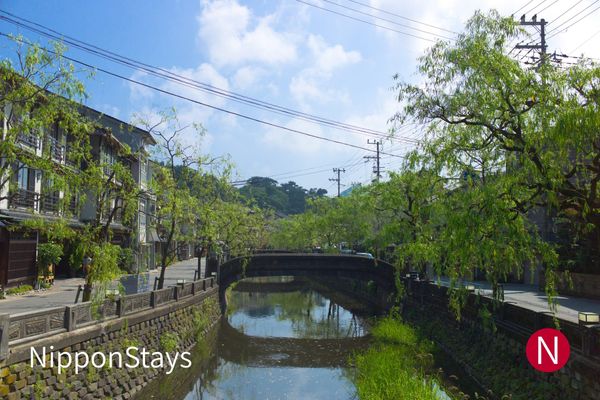
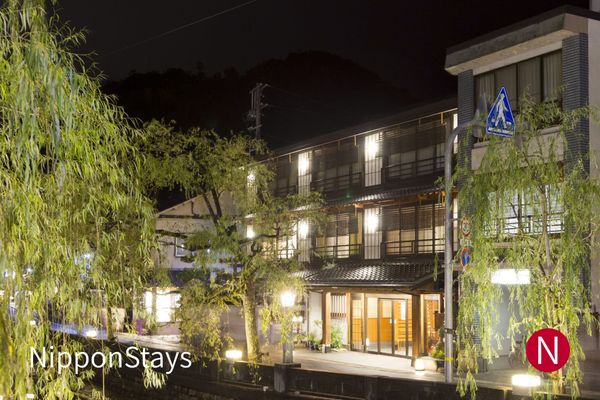
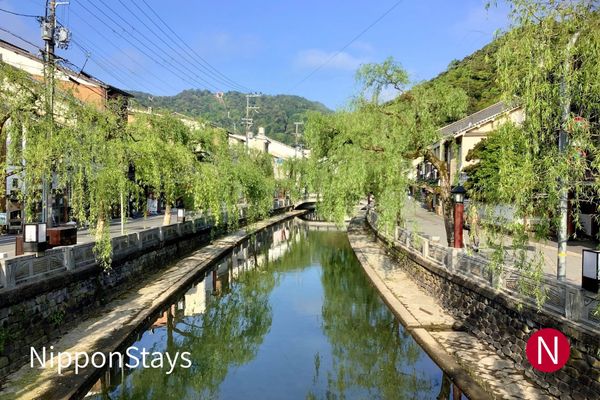
Kinosaki Onsen is the only one of the three towns you reach by a single direct limited express from both Kyoto (the Kinosaki service, about 2h20) and Osaka/Shin-Osaka (the Kounotori service, about 2h40–2h49). I made this same trip by limited express from Kyoto about twenty years ago, and it took roughly two and a half hours then too — longer than the shinkansen from Tokyo to Kyoto. The line still runs single-track west of Sonobe, which is the reason the journey hasn't gotten meaningfully faster since: the Kyoto–Sonobe stretch was double-tracked in 2010, but Sonobe onward never was. Kinosaki is also the only one of the three built for walking: the ryokan district sits along a canal, most inns are a 5- to 15-minute walk from the station, and guests move between the seven public baths (sotoyu) in yukata and geta rather than driving or shuttling between them. The crab here is Matsuba-gani, and the town's own tagged catch — landed at Tsuiyama fishing port — carries a premium over untagged crab of the same species. Ryokan such as Kinosaki Tsuruya sit a short walk from the station and run crab-kaiseki plans through the season; Nishimuraya Honkan, a Relais & Châteaux member founded in 1854, sits at the top of the town's price range. Full detail on plan timing, tagged crab, and which ryokan to book is in our Kinosaki crab season guide; the outer-bath tattoo policy and family logistics are covered separately (linked in the FAQ below).
Echizen / Awara — the premium tag
Echizen-gani is the crab Japan's Imperial Household has historically been presented with each season, and it carries the country's oldest regional crab brand — a yellow tag identifying the boat and port of landing has been used at Echizen since the 1990s. The crab is landed along the Fukui coast, but there is no ryokan town at the port itself; the accommodation base for it is Awara Onsen, a ryokan district reached by a short bus or hotel-shuttle ride from Awara-Onsen Station. Reaching Awara from Kansai means one transfer regardless of starting point — the Thunderbird limited express to Tsuruga, then the Hokuriku Shinkansen to Awara-Onsen, roughly 2h40 total from either Kyoto or Osaka. Awara's ryokan run toward the traditional and the expensive: Grandia Housen offers a free shuttle from the station and runs seasonal crab-kaiseki plans, while Kofuyuden Beniya, a 1-Michelin-rated inn with private in-room hot-spring baths in all 17 rooms, sits toward the top of the town's price range. There is no walkable outer-bath circuit here — Awara is a ryokan town you shuttle around rather than one you stroll.
Tottori — the value option
Kaike Onsen (a seaside town of larger ryokan near Yonago) and Misasa Onsen (a small riverside gorge town with radium springs, about 40 minutes further inland) both serve Matsuba-gani — the same crab as Kinosaki — at a more affordable plan price than either Kinosaki or Awara. The trade-off is access: from Osaka, the Super Hakuto limited express reaches Tottori Station in about 2h35, then a further local transfer of 30–45 minutes is needed to reach Kaike or Misasa; from Kyoto the journey runs closer to three hours. There is no direct limited express from Kansai to either onsen town itself (see Tottori Prefecture's own access guide from Kansai for the full set of route options). What that extra travel time buys is a quieter, less internationally known crab destination — both towns run at a fraction of Kinosaki's visitor volume in winter. The full comparison between Kaike and Misasa, including which is better for families and which for a quieter soak, is in our Tottori crab guide.
And Kaga, briefly
Kaga Onsen in Ishikawa also sells Kano-gani (the prefecture's branded Zuwai crab) and is reachable from Kanazawa on the Hokuriku Shinkansen, but it is a different base-town decision from the three above — it splits across three districts (Yamashiro, Yamanaka, and Kanazawa itself), and we cover which one to book in a separate guide once it's live.
| Name | Town | Best for |
|---|---|---|
| Kinosaki Tsuruya | Kinosaki Onsen | Shortest trip from Kansai, walkable outer-bath access |
| Nishimuraya Honkan | Kinosaki Onsen | A splurge night inside a heritage Relais & Châteaux ryokan |
| Grandia Housen | Awara Onsen | Echizen-gani with a free station shuttle |
| Kofuyuden Beniya | Awara Onsen | In-room private onsen, 1-Michelin-rated |
| Izanro Iwasaki | Misasa Onsen | Quiet riverside gorge town, radium-spring soaking |
FAQ: Choosing a crab town
Which town is fastest from Kyoto or Osaka?
Kinosaki is fastest from both cities — a single direct limited express, about 2h20 from Kyoto Station or 2h40–2h49 from Shin-Osaka. Awara takes about 2h40 from either city but requires one transfer at Tsuruga. Tottori's Kaike and Misasa onsen towns are the slowest to reach: about 2h35 to Tottori Station from Osaka, then a further 30–45 minute local transfer.
Is Echizen-gani actually better than Matsuba-gani?
They are the same species — Zuwai crab — caught along adjoining stretches of the San'in and Hokuriku coasts. Echizen-gani carries Japan's oldest regional crab brand and typically the highest price ceiling of the three; Matsuba-gani (Kinosaki and Tottori) is priced lower for a comparable size and grade. Neither is objectively "better" seafood — the price gap is about brand and tagging history, not a verifiable quality difference.
How much does a one-night crab-kaiseki plan actually cost?
There is no single verified rate to quote across these ryokan — plan prices are set per property, per room grade, and per date, and they move most in the weeks around the season's November 6 opening and again over New Year. As a relative ranking rather than a quote: Tottori's Kaike and Misasa ryokan tend to run more affordable than Kinosaki's, and Echizen-gani plans in Awara typically sit at the top of the range. Check each ryokan's own plan page for your travel dates rather than relying on an average.
When should I book a crab-season weekend?
Book a weekend stay in any of these three towns at least two to three months ahead once the season opens on November 6 — the tagged, higher-grade crab plans at the better-known ryokan in Kinosaki and Awara are the first to sell out. A midweek stay, or a trip in late January through February after the New Year rush, is far easier to book on short notice.