Is Otaru Worth Staying Overnight? An Honest Guide (2026)
Is Otaru worth staying overnight? Honest breakdown of day trip vs one night: canal gas lamps, quiet mornings, and which base area works in winter.

Is Otaru worth staying overnight? For one night, yes, and the reason is the gas-lamp canal after dark, once the day-trip coaches have gone. Book Hotel Nord Otaru (from ¥10,560) for a canal-side room a 7-min walk from JR Otaru Station, or Hotel Sonia Otaru (from ¥10,700) if you want a natural hot spring in the building. The condition that changes the answer: if you are here for the glassworks and a sushi lunch, the 30–40 min train from Sapporo does the job — the last southbound service leaves past 11 pm.
Some links in this guide are affiliate links. If you book through them, we may earn a commission at no extra cost to you.
Otaru sits 30–40 minutes from Sapporo on the JR Hakodate Line. The train is cheap, runs regularly, and the last southbound departure from Otaru Station leaves past 11 pm. A day trip is genuinely workable, and most first-time visitors do exactly that.
The main reason to stay is the canal after dark. The gas lamps along the canal promenade and the Ironai stone warehouses light up at dusk. Tour coaches leave by early evening. The city quiets considerably. If that night view is on your list, one night is worth the cost. If you are here for sushi and a browse through the glassware shops on Sakaimachi Street, the train back to Sapporo is fine.
Of the 4 overnight options covered in this guide, 3 sit within a 10-min walk of JR Otaru Station and 1 — Ginrinsou — is a 15-min taxi ride away on the Hiraiso coast, starting from ¥16,500 per person; the two canal-area picks start from ¥10,560 and ¥10,700 respectively (checked July 2026).
The short answer: day trip vs overnight in Otaru
The table below gives a representative option from each base area — full context on each follows in the sections below.
| Name | Area | Price range | Best for |
|---|---|---|---|
| Hotel Torifito Otaru Canal | Between station and canal — 7-min walk from JR Otaru Station, 5-min walk to canal | Check rates, varies by season | Easy rail access, budget travelers, winter arrivals with luggage |
| Hotel Nord Otaru | Canal area — 7-min walk from station | from ¥10,560, varies by season — check rates | Canal night view, retro-character hotel |
| Hotel Sonia Otaru | Canal area — 8-min walk from station | from ¥10,700, varies by season — check rates | Canal view rooms, in-house natural hot spring |
| Ginrinsou | Hiraiso, coastal clifftop — about 15 min by taxi from JR Otaru Station | from ¥16,500/person, varies by season — check rates | Luxury onsen ryokan, private outdoor baths, couples |
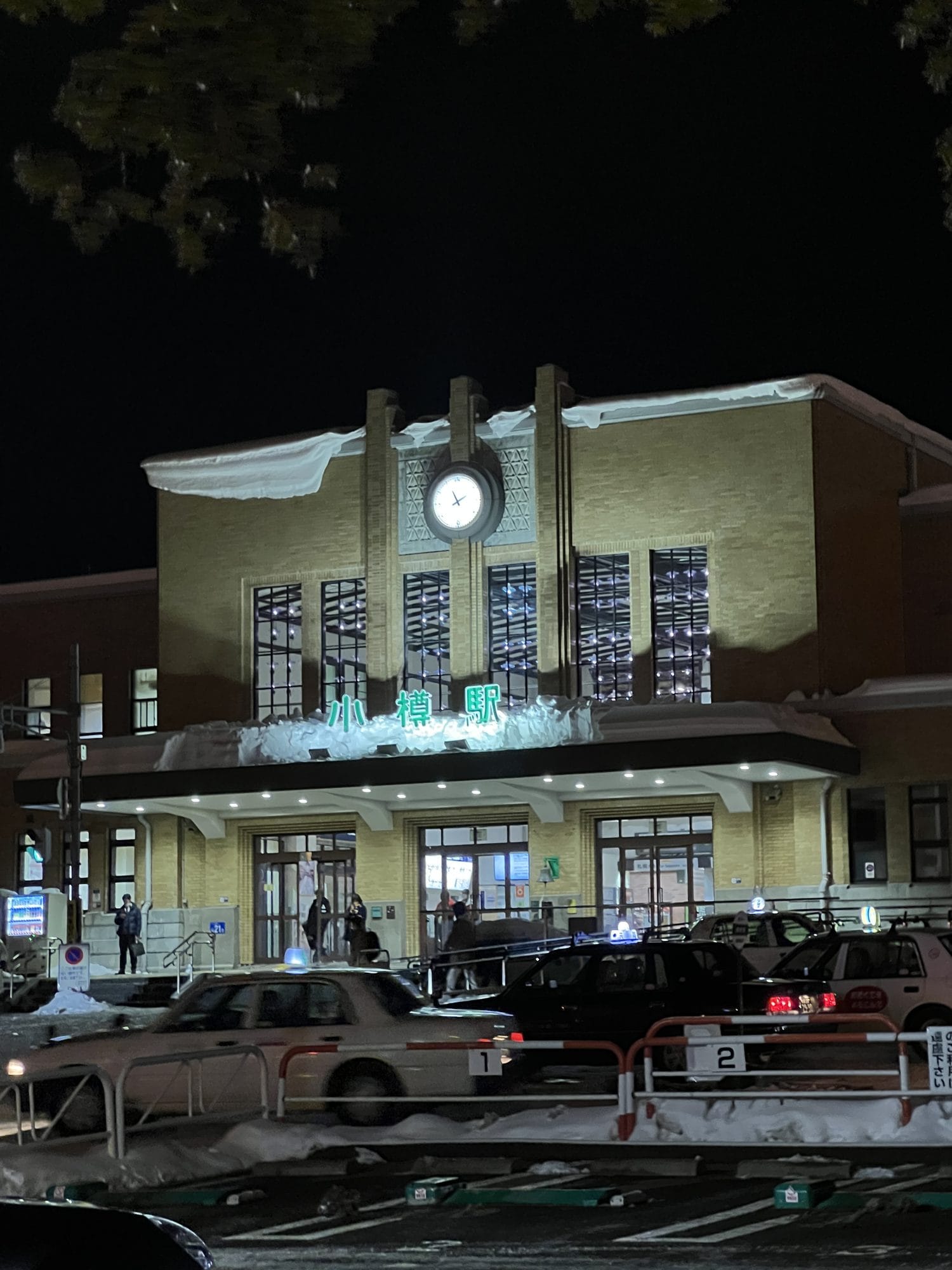
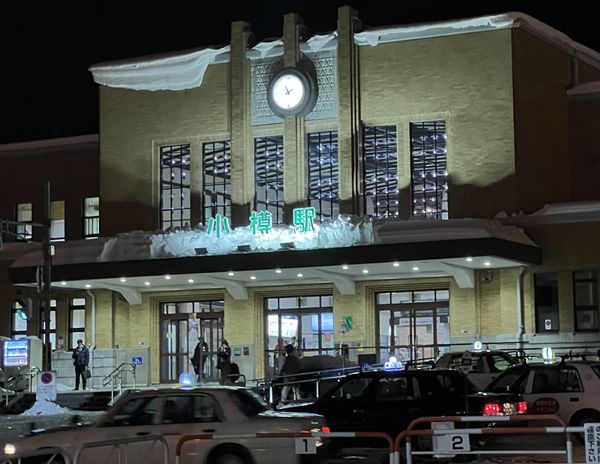
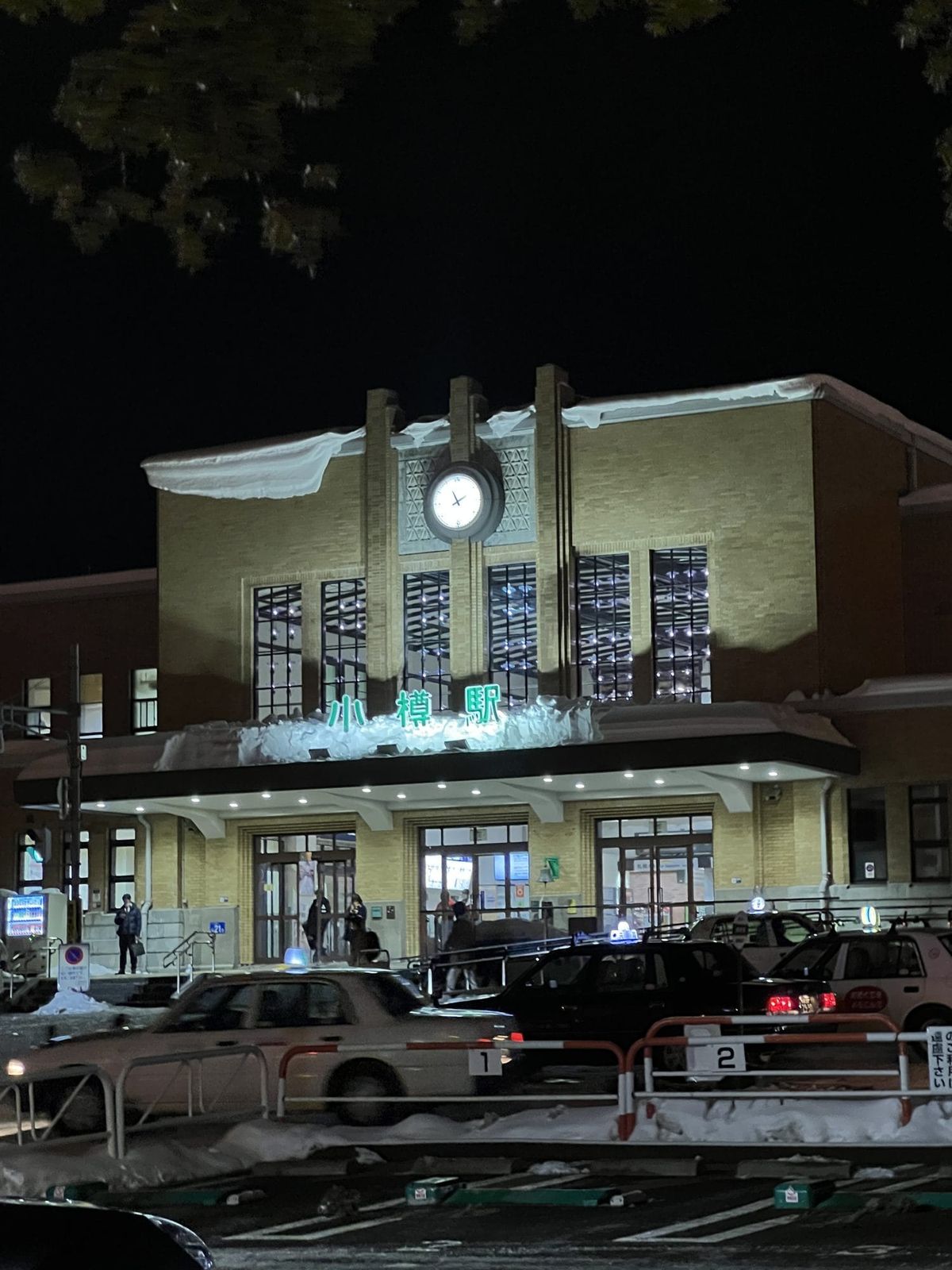
Otaru Station on a winter night
What you miss on a day trip
Day-trippers from Sapporo typically arrive around 10–11 am and catch a return train by 5–6 pm. That window covers the canal in daylight, Sakaimachi Street's shops, and a sushi lunch. Here is what falls outside it.
The gas-lamp canal after dark. The cast-iron gas lamps along the main canal promenade light up at dusk — the timing shifts with the season, earlier in winter. The amber glow reflected on the water and the historic warehouse facades is the image that fills most Otaru posts online. Day-trippers on a standard schedule miss it almost entirely.
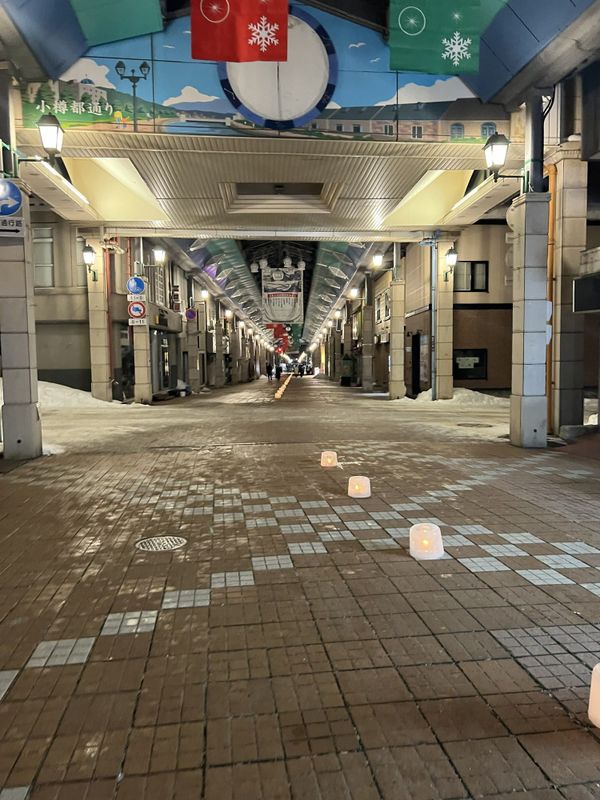
Quiet mornings on Sakaimachi Street. The glassware and music-box arcade before 9 am has no crowds. You can walk the canal promenade without other people in your frame and browse the Ironai bank buildings properly. Once the day-trip coaches arrive around mid-morning, the character of the street shifts fast.
First seatings at top sushi counters. Several of Otaru's most-booked sushi restaurants open at 11 am and fill quickly. Staying overnight lets you walk in at opening and finish before the noon rush peaks. For where to book an evening table, see our winter dinner guide to Otaru. Day-trippers arriving from Sapporo at that hour often find the same counters already full.
The case for one night
Beyond the canal lights, two things specifically reward an overnight stay.
The city before the crowds arrive. Otaru between 7 and 9 am is markedly quieter than the rest of the day. The brick facades and curved kuriyose storefronts along Sakaimachi are easier to appreciate and photograph. Staying one night gives you that window without needing a pre-6 am train from Sapporo.
Asarigawa Onsen. Otaru has a hot-spring district about 25 minutes by bus from the city centre — the Asarigawa Onsen area, in the hills southeast of town. If a ryokan night with kaiseki dinner and an open-air bath is a goal, you will need to base there. Otaru Asarigawa Onsen Kourakuen, with private open-air baths in most of its rooms, is the best-known option. Separately, Ginrinsou — a historic ryokan with origins in the herring-fishing era — sits on Cape Hiraiso above the coast, about 15 min by taxi from JR Otaru Station. For a full guide to the area, see our Asarigawa onsen ryokan page.
One night is enough for most itineraries. Two nights works if you want both the canal district and a separate onsen stay without feeling rushed.
Who should just day-trip from Sapporo instead
A day trip makes more sense if:
- You are on a tight budget and accommodation in Sapporo is already sorted.
- The canal at night is not a priority — sushi and the craft shops are the main draw.
- You are traveling with young children and a late-evening canal walk is not on the cards.
- You are visiting in summer: daylight runs long, and you can watch the gas lamps turn on and still catch a late train back, since Otaru Station departures for Sapporo run past 11 pm on most days.
If you are still weighing Otaru against Sapporo as a Hokkaido base, our comparison guide covers the full tradeoffs: Otaru vs Sapporo as a base.
How many nights and where to base in Otaru
One night is by far the most common choice. Here is how the three main base areas compare.
Station area. Hotels within a 1–5-min walk of JR Otaru Station are the most practical option for rail travelers. The ground around the station is flat, luggage storage is available inside the station building, and the JR connection back to Sapporo is immediate. Hotel Torifito Otaru Canal is about a 7-min walk from the station and about 5-min from the main canal stretch — a clean middle ground between convenience and canal access. For a full rundown of station-area options, see our hotels by Otaru Station guide.
Canal area. The canal district is roughly 7–10-min walk downhill from the station. Hotel Nord Otaru sits directly beside the canal — as close to the night-view position as a hotel room gets. Hotel Sonia Otaru is just across the canal with rooms overlooking it, and it has an in-house natural hot spring. The walk back up to the station is fine in dry conditions; in winter with luggage, factor in extra time and icy surfaces. For canal-area picks in depth, see our canal-side hotels for the night view guide.
Asarigawa Onsen. The hot-spring area is about 25–35 minutes from JR Otaru Station by city bus — the onsen district sits in the hills southeast of the city centre, and bus is the main connection. If the ryokan experience is the primary goal, basing there makes sense. If you plan to spend most of your time near the canal and Sakaimachi Street, staying in town and taking a day trip to the onsen is also workable. For the full area breakdown, see our which area to base in Otaru guide.
Winter reality check: slopes, ice and why staying near the station wins
Otaru in winter — December through March — adds a layer of practical complexity. The slope between the canal district and the station area, and general street ice, are a real consideration when choosing where to base.
- The canal-to-station slope. The 7–10-min walk from the canal area back up to the station runs slightly uphill on streets that are icy after dark. With a suitcase in January, that walk feels much longer than it looks on a map. A hotel within a 1–2-min walk of the station removes the problem entirely.
- The canal promenade. The main canal path is generally treated for ice, but the side streets feeding into it are not always fully cleared. Waterproof boots with grip are worth the bag space for any winter Otaru visit.
- Winter events near the canal. The Otaru Snow Light Path festival and related canal illumination events are concentrated near the water. If those are your reason for visiting in winter, canal-area hotels are worth the slightly longer station transfer — just allow extra time for station departures with bags on icy streets.
The practical argument for the station area in winter is straightforward: flat approach, covered access to the platform, and no ice-laden slope when you leave with luggage in the morning.
At-a-glance: representative overnight stays by type
The same picks organised by traveler type, for quick reference. All prices vary by season and room type.
| Name | Area | Price range | Best for |
|---|---|---|---|
| Hotel Torifito Otaru Canal | Station area | Check rates, varies by season | Budget travelers, winter arrivals, easy Sapporo rail connection |
| Hotel Nord Otaru | Canal area | from ¥10,560, varies by season — check rates | Canal night view, couples, photography |
| Hotel Sonia Otaru | Canal area | from ¥10,700, varies by season — check rates | Canal view rooms, in-house onsen, photography |
| Ginrinsou | Shukutsu coast — about 15 min by taxi from JR Otaru Station | from ¥16,500/person, varies by season — check rates | Luxury ryokan, private outdoor baths, full kaiseki experience |
Verdict and next steps
One night in Otaru is worth it if the gas-lamp canal view or a ryokan onsen stay is your reason for coming. A day trip from Sapporo covers the daylight highlights — sushi, glassware, the canal in good light — without the accommodation cost. Staying overnight adds the evening canal, quiet morning streets, and the ability to time a ryokan visit without being rushed back to the station.
The itinerary that works for most Hokkaido visitors: one night in Otaru (canal area if the night view is the priority, station area for convenience and winter travel), with Sapporo as the main base. If Asarigawa Onsen matters, add a separate night there.
- Not sure which Otaru area suits your trip? See our full which area to base in Otaru guide.
- Want the canal view from your room window? See our picks for canal-side hotels for the night view.
- Prioritising a ryokan and onsen night? Our Asarigawa onsen ryokan guide covers the options.
- Weighing Otaru against Sapporo as your primary base? See the full Otaru vs Sapporo as a base comparison.
If the answer is yes, the station side is where most first stays land, and one hotel there has been checked over a long run rather than a single night. Our Authent Hotel Otaru review is written from about 100 self-funded nights across seven winter seasons: a 5-min walk from JR Otaru Station, from ¥11,000 a room, with on-site dining and a public bath. The trade-off it sets out is the one that matters here — station access against a canal view, not price.
FAQ: Is Otaru worth staying overnight?
What does an overnight stay in Otaru add that a day trip does not?
The main additions are the gas-lamp canal after dark and quiet mornings on Sakaimachi Street before the day-trip coaches arrive. The cast-iron gas lamps along the canal promenade light up at dusk; day-trippers on a standard Sapporo–Otaru schedule typically leave before this happens. Staying overnight also lets you reach the first seating at top sushi counters — several open at 11 am and fill before noon — without needing to rush from Sapporo.
What is the best area to stay in Otaru for one night?
For the night view, book a canal-area hotel such as Hotel Nord Otaru (from ¥10,560) or Hotel Sonia Otaru (from ¥10,700), both about 7–8 minutes' walk from JR Otaru Station. For convenience and winter travel with luggage, the station area is more practical — Hotel Torifito Otaru Canal is a 7-min walk from JR Otaru Station and 5 minutes to the canal. If a luxury onsen ryokan stay is the priority, Ginrinsou on the coastal clifftop is about 15 minutes by taxi from the station, starting from ¥16,500 per person.
Is one night in Otaru enough, or should I stay two nights?
One night covers the core Otaru experience for most visitors: the evening canal, a quiet morning, a sushi breakfast, and the Sakaimachi shopping street. Two nights makes sense only with a specific second reason — most often an Asarigawa Onsen stay, which is a 25-minute bus ride from the city centre and effectively a separate destination. Without that second anchor, one night with Sapporo as the main base is the itinerary that works for most Hokkaido trips.
What is the last train back to Sapporo from Otaru?
The last JR southbound departure from Otaru Station toward Sapporo runs at around 23:00–23:30, giving you the full evening in Otaru if you are on a day trip. The journey takes approximately 30 minutes. Check the current timetable on the JR Hokkaido website or via Navitime before your visit, as service times can vary by day and season.
Trip Essentials for Otaru
Things worth booking before you land, all in English:
- eSIM — Airalo's Japan eSIM: install it at home and data works as soon as you switch off airplane mode at New Chitose.
- Airport transfer — Klook covers bus, train, and private transfers from New Chitose.
- Tickets and day trips — Klook covers Otaru canal-area activities and Sapporo day trips; booking ahead skips the ticket-window line.
Information audit: Last fact-checked July 2026 · Prices checked July 2026 (all rates are “from” floors that vary by season) · How this guide was researched: hotel facilities, prices and access details are verified against official and primary sources; we have not personally stayed at every property listed. The author stays in Otaru every winter as a Kiroro-commute base · How this site verifies information: About NipponStays.