Arima Onsen Ryokan: Best Hot-Spring Inns Near Kobe
Best Arima Onsen ryokan near Kobe: kaiseki inns, mid-range picks, gold vs silver springs explained. Prices and how to get there in 30–40 min.
Of the Arima Onsen ryokan in this guide, Arima Grand Hotel (from ¥16,000) is the lowest-priced option with both kinsen and ginsen springs on site, and Taketoritei Maruyama (from ¥40,000) adds private bath access with no extra fee for either spring. First-timers who want a central location without a large-resort feel should book Arima Gyoen (from ¥18,000) instead. For a villa-style stay reserved for special occasions, Arimasansoh Gosho Bessho (from ¥80,000) is the splurge pick.
Of the 6 ryokan in this guide, 4 draw from both kinsen and ginsen springs — Taketoritei Maruyama, Arimasansoh Gosho Bessho, Arima Gyoen, and Arima Grand Hotel — while Hyoe Koyokaku and Hanamusubi are primarily kinsen (checked July 2026).
Best Ryokan in Arima Onsen at a Glance
Arima Onsen ryokan are some of Japan's finest hot-spring inns, set in a mountain town about 30–40 minutes north of Kobe city center by train. The properties here are among the highest-rated in Kansai — and the prices reflect that. The table below gives you a fast read on the main options before you dig into the detail.
Some links in this guide are affiliate links. If you book through them, we may earn a commission at no extra cost to you.
| Name | Spring type | Price range (per person, 2 meals) | Best for |
|---|---|---|---|
| Hyoe Koyokaku | Kinsen (gold) | from ¥30,000 | Classic kaiseki experience, large public baths |
| Taketoritei Maruyama | Kinsen + Ginsen | from ¥40,000 | Private bath access without extra fees |
| Arimasansoh Gosho Bessho | Kinsen + Ginsen | from ¥80,000 | Villa-style seclusion, special occasions |
| Hanamusubi (Miyukiso) | Kinsen | from ¥22,000 | Mid-range, private kinsen baths available |
| Arima Gyoen | Kinsen + Ginsen | from ¥18,000 for two | Central location, first-timers on a tighter budget |
| Arima Grand Hotel | Kinsen + Ginsen | from ¥16,000 | Large-scale resort, observatory bath, wider room types |
All rates are per person per night, include dinner and breakfast, and vary by season. Check rates for exact availability.
Where Arima Is: 30–40 Minutes from Kobe, Not the City Center
Arima Onsen sits in the Rokko Mountains on the northern slope, separated from Kobe's downtown by a ridge. It is not a Kobe neighborhood you can walk to from Sannomiya Station — the journey takes 30–40 minutes depending on your route, and involves at least one train transfer.
The clearest way to frame it: Arima is a self-contained resort town where you arrive, check in, and stay put for a night or two. Most guests come specifically for the onsen, eat kaiseki dinner at the ryokan, and leave the next morning. That's the intended rhythm here.
It is also not a standard Kobe day trip add-on if you're carrying luggage. If your primary base is Kobe city, plan a one-night or two-night detour. If you're based in Osaka, Arima is equally reachable (roughly 50–60 minutes via Sannomiya by express train and subway). For a full overview of where Arima fits within a Kobe trip, see our Kobe accommodation guide.
Gold Spring (Kinsen) vs Silver Spring (Ginsen): The Basics
Arima has two distinct hot-spring types, and knowing the difference matters when comparing ryokan.
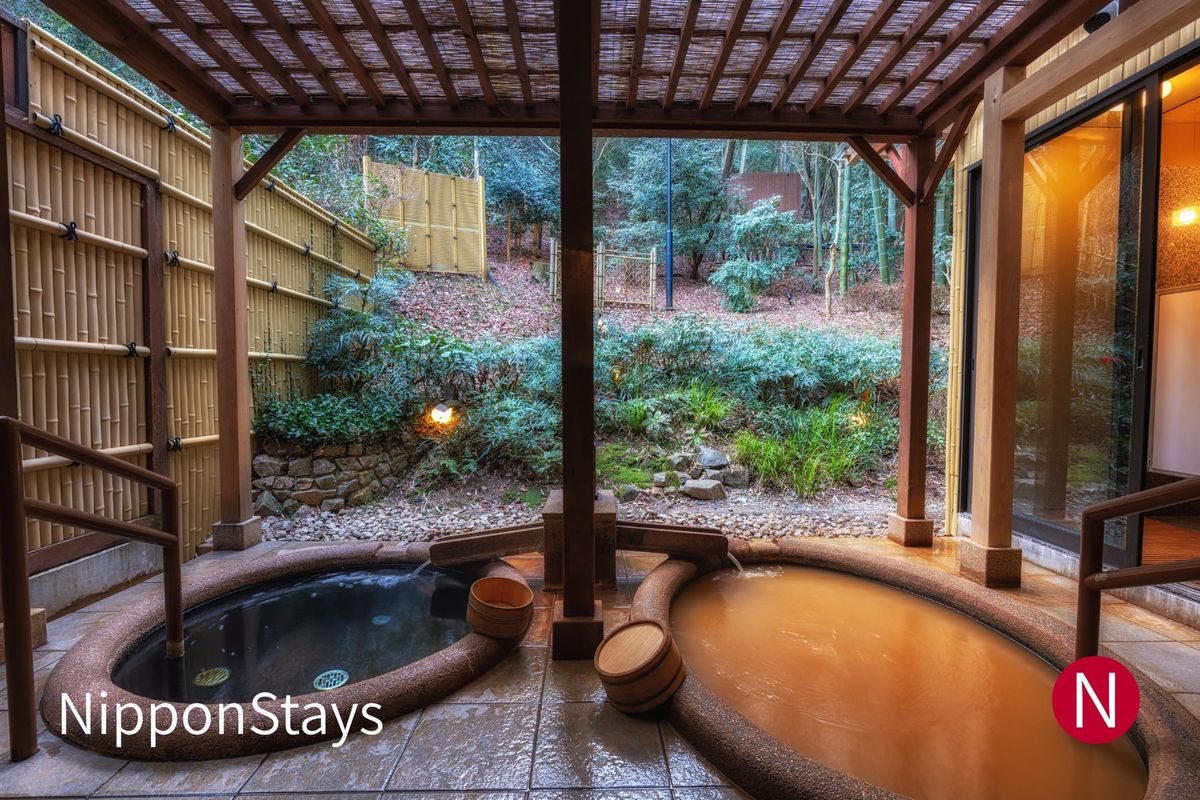
Kinsen (gold spring) is iron- and salt-rich. When the water hits the air it oxidizes and turns a reddish-brown. It is warm to hot, and the high salt content means it clings to your skin after you get out. Most guests describe it as the more dramatic experience — the color alone is striking if you've never seen it.
Ginsen (silver spring) is a carbonated radium spring. The water is colorless and clear. The effect is gentler and the carbonation creates a faint tingling on the skin. Some ryokan have both; others focus on one type.
A few practical notes:
- Kinsen stains light-colored swimwear and towels. Most ryokan provide dark-colored bath towels for kinsen use.
- Ginsen is generally considered easier on sensitive skin.
- Neither spring is heated artificially at the better ryokan — flow rates are disclosed on their websites.
Classic Ryokan with Kaiseki Dinner and Public Baths
Hyoe Koyokaku is the name that comes up first when anyone researches Arima Onsen, and the reputation is earned. The ryokan has operated on this site for several centuries and was selected as one of Japan's five-star ryokan by the Kanko Keizai trade publication for multiple consecutive years. Japanese-style rooms face the garden or the central grounds. The main public baths draw directly from Arima's kinsen source, and the water level and flow are managed so the bath changes throughout the day. Kaiseki dinner features Rokko Wagyu alongside seasonal Hyogo ingredients. Check-in is typically from 15:00; check-out by 11:00. Check rates at Hyoe Koyokaku.
Arima Grand Hotel takes a different approach — it's a large resort-style property rather than an intimate inn, with an observatory bath ("Unkai") on the upper floors that offers a wide view of the mountains. If you want variety (multiple bath floors, both kinsen and ginsen, a range of room types from Japanese to Western-style), this is the option. Rates start lower than the smaller ryokan and the property suits groups or travelers who prefer a bigger common space. Check rates at Arima Grand Hotel.
If your priority is having access to both spring types and the option of a private bath without paying a separate surcharge, look at Taketoritei Maruyama. All eight private baths — drawing from both kinsen and ginsen — are available to guests at no extra cost throughout the stay. You reserve time slots at the front desk on arrival. Check rates at Taketoritei Maruyama. (Taketoritei is also a top pick in our guide to Arima ryokan with private open-air baths.)
Mid-Range Ryokan That Still Deliver the Full Experience
Arima is expensive relative to city hotels, but not every ryokan here costs ¥50,000 a night per person. Two properties offer the core experience — yukata, tatami rooms, in-house onsen, and a set dinner — at a more accessible price point.
Hanamusubi (Miyukiso Hanamusubi) sits about 5 minutes from Arima Onsen Station and operates a free shuttle for guests. The property has five room types with private kinsen open-air baths, plus shared indoor and outdoor baths. Meals use Hyogo black beef and seasonal vegetables. The rooms are on the smaller side compared to the luxury tier, but the onsen quality is the same water. Check rates at Hanamusubi.
Arima Gyoen is in the center of the onsen town, a short walk from the main street shops and Arima Onsen Station. Rooms are traditional tatami with futon, and some have private onsen baths. Meals include wagyu and Kobe beef options. It's a sensible first-time Arima stay if you want to orient yourself by walking the town in the evening rather than being sequestered in a hillside property. Check rates at Arima Gyoen.
What's Included: Meals, Yukata, and Bathing Hours
Most Arima ryokan package rates include:
- Dinner and breakfast — kaiseki or set-menu dinner served in the dining room or your room, Japanese-style breakfast the next morning. Some properties allow à la carte upgrades.
- Yukata and slippers — the cotton kimono provided for wearing around the ryokan and (in some onsen towns) the streets, though Arima is less informal about street yukata than some other resort towns.
- Access to public baths — large indoor and outdoor communal baths, typically open from morning until late evening with a cleaning break mid-afternoon. Hours vary by property; the reception desk will give you the day's schedule on check-in.
- In-room amenities — towels (including dark-colored ones for kinsen), toiletries, and usually green tea and wagashi sweets on arrival.
Private bath time slots (kashikiri) are included at Taketoritei Maruyama and can be reserved for a fee at many other properties. If privacy is your main reason for coming, see our private-bath ryokan guide for a focused comparison.
Day-use (higaeri) plans — onsen access plus lunch or dinner without an overnight stay — are available at several properties including Hyoe Koyokaku. These are worth checking if you want to experience the onsen as a day trip from Osaka or Kobe without committing to an overnight stay.
Compare the Ryokan
| Name | Spring type | Price range (per person, 2 meals) | Best for |
|---|---|---|---|
| Hyoe Koyokaku | Kinsen | from ¥30,000 | Multi-century ryokan, strong kaiseki pedigree |
| Taketoritei Maruyama | Kinsen + Ginsen | from ¥40,000 | 8 free-to-reserve private baths, both spring types |
| Arimasansoh Gosho Bessho | Kinsen + Ginsen | from ¥80,000 | Secluded garden villas, 100m²+ suites, special occasions |
| Hanamusubi (Miyukiso) | Kinsen | from ¥22,000 | Mid-range with private kinsen option, free shuttle |
| Arima Gyoen | Kinsen + Ginsen | from ¥18,000 for two | Central town location, first-time Arima visitors |
| Arima Grand Hotel | Kinsen + Ginsen | from ¥16,000 | Large resort format, observatory bath, wider price range |
Prices are per person per night, 2 meals included, and vary by season and room type.
Practical Tips: Getting There, Check-In, and Day Use
Getting to Arima from Kobe Sannomiya:
- By train: Take the Kobe Municipal Subway (Seishin-Yamate Line) from Sannomiya Station toward Tanigami (about 15 minutes, Exit 1 or 2 at Sannomiya). Transfer at Tanigami to the Shintetsu Arima-Sanda Line toward Arima-guchi, then switch to the Arima Line for one stop to Arima Onsen Station. Total journey: about 35–40 minutes.
- By express bus: West Japan JR Bus runs a direct service from Sannomiya Bus Terminal to Arima Onsen roughly every 30–60 minutes. Journey time is about 30 minutes on a clear day; allow more during peak weekends. Tickets available at the terminal.
- Scenic Rokko route: Take the Rokko Cable from Rokko Cable Shita Station, cross the ridge by Rokko Sanjo Bus, then descend by the Rokko Arima Ropeway. This takes longer overall but gives you mountain views. It's a weekend excursion option, not the practical access route.
Check-in and check-out: Most ryokan in Arima open check-in from 14:00–15:00. Check-out is typically 10:00–11:00. Unlike city hotels, arriving significantly early is not always possible — call ahead if you have an early train. Luggage storage is generally available from the morning.
Day use (higaeri): Several properties offer day-use plans with public bath access and a meal. These typically run from around 11:00 to 18:00 and cost less than an overnight stay. Advance reservation is required; walk-in day use is rarely available on weekends.
Booking timing: Arima fills up on Japanese long weekends (Golden Week, Obon, autumn foliage season in October–November) well in advance. If your dates are firm, book two to three months ahead for the better properties. Midweek stays in January–February often have more availability and lower rates.
For travelers deciding between a Kobe city stay and an Arima overnight, the where to stay in Kobe guide covers the full picture. If you want seclusion and your own private bath, the private-bath Arima ryokan page narrows it further. For the top luxury tier with kaiseki as the focus, see our luxury Arima ryokan guide.
FAQ: Arima Onsen Ryokan
What is the difference between kinsen and ginsen at Arima?
Kinsen (gold spring) is iron- and salt-rich water that turns reddish-brown on contact with air — it clings to the skin and is the more dramatic of the two. Ginsen (silver spring) is a clear, mildly carbonated radium spring that is gentler on sensitive skin. Properties like Taketoritei Maruyama and Arima Gyoen draw from both; Hyoe Koyokaku and Hanamusubi are primarily kinsen.
How far is Arima Onsen from Kobe and Osaka?
From Kobe Sannomiya, the train journey takes roughly 35–40 minutes via the Kobe Municipal Subway and Shintetsu Arima Line. From Osaka, allow 50–60 minutes total via Sannomiya. A direct express bus from Sannomiya Bus Terminal takes about 30 minutes. Arima is not walkable from any major city — it sits on the northern slope of the Rokko Mountains and requires a dedicated transfer.
Do Arima ryokan rates include meals?
Yes — most ryokan in Arima sell package rates that include kaiseki dinner and Japanese-style breakfast. Prices listed throughout this guide are per person per night on that two-meal basis. The range runs from around ¥16,000 per person at the larger resort-format properties to ¥80,000 or more at the most secluded villa-style inns. Rates vary significantly by season; Golden Week, Obon, and autumn foliage weekends in October–November book up months in advance.
Can you visit Arima Onsen as a day trip without staying overnight?
Yes. Several ryokan, including Hyoe Koyokaku, offer day-use (higaeri) plans that include public bath access and a meal without an overnight stay. These typically run from around 11:00 to 18:00. Advance reservation is required; walk-in day use is rarely available on weekends. The public day-use facilities are a practical option if you want to experience Arima's onsen on a Kobe or Osaka itinerary without adding a full overnight stay.
Trip Essentials for Kobe
Things worth booking before you land, all in English:
- eSIM — Airalo's Japan eSIM: install it at home and data works as soon as you switch off airplane mode at Kansai Airport.
- Airport transfer — Welcome Pickups runs fixed-price door-to-door pickups from Kansai Airport; Klook sells the airport bus and train tickets if you'd rather ride.
- Luggage storage — arriving before check-in? Radical Storage takes bags at shops near Sannomiya Station for a flat daily rate.
- Tickets and day trips — Klook covers Kobe attractions and Osaka day-trip tickets; booking ahead skips the ticket-window line.
Information audit: Last fact-checked July 2026 · Prices checked July 2026 (all rates are “from” floors that vary by season) · How this guide was researched: hotel facilities, prices and access details are verified against official and primary sources; we have not personally stayed at every property listed. The author has traveled in this area personally; original photographs on this site are from those trips · How this site verifies information: About NipponStays.